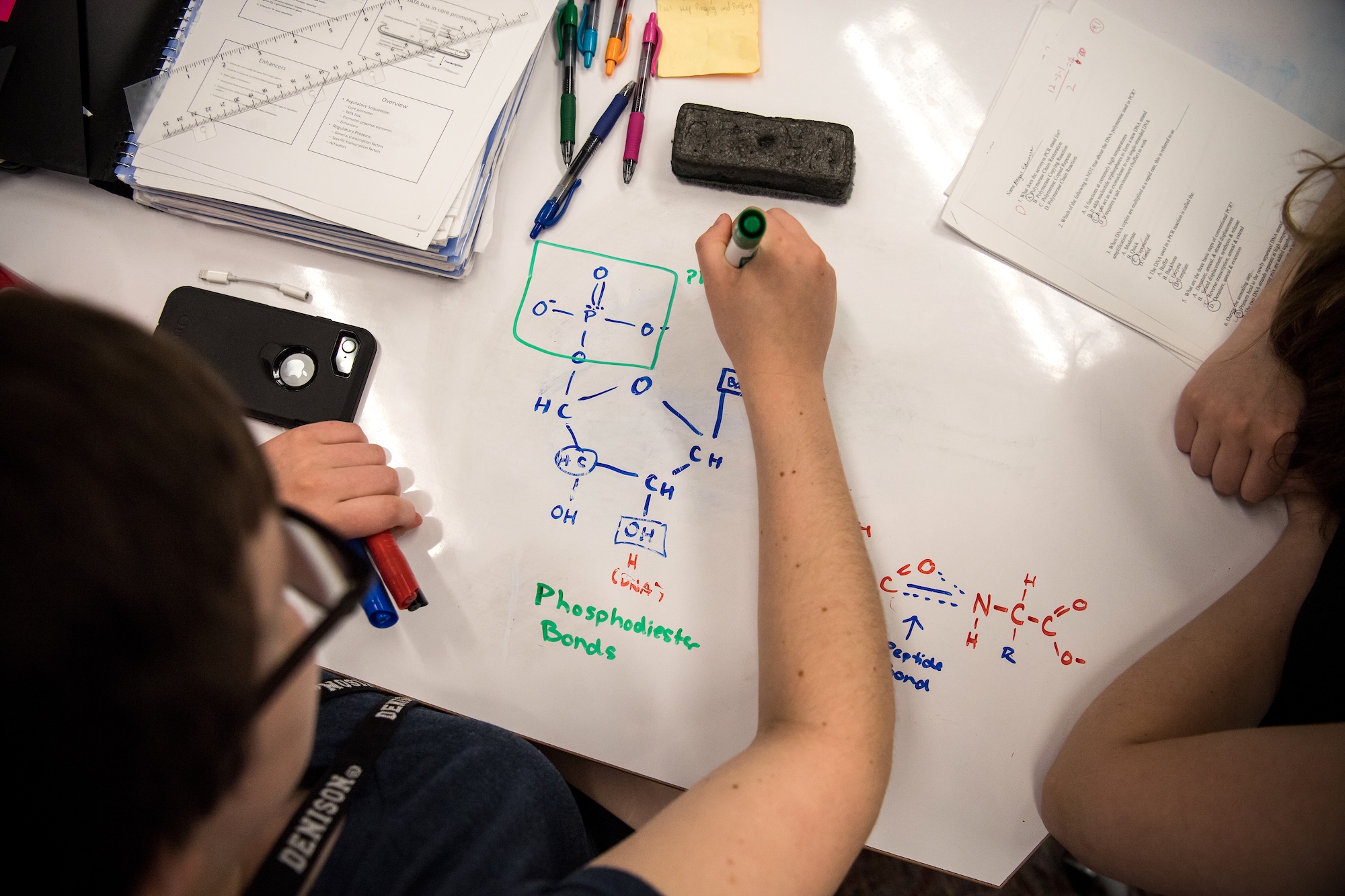
Home to the Department of Chemistry and Biochemistry, Ebaugh Labs contains laboratories equipped with a nuclear magnetic resonance spectrometer, ultraviolet-visible spectrometer, and a computer-controlled gas chromatograph.
Originally built in 1966, Ebaugh, which is connected to Herrick Hall, was renovated and expanded in 2011. The building includes teaching laboratories, research space, and instrumentation rooms on each floor, creating modular spaces for experiential teaching and cross-disciplinary collaboration among biologists, chemists, and physicists.
Dedicated lab spaces accommodate joint faculty and student research as part of Denison’s noted Summer Scholars program, departmental honors projects, and students’ preparation for post-graduate pursuits. About 60 percent of Denison’s chemistry and biochemistry majors go on to earn graduate degrees at major research universities around the nation and the world.
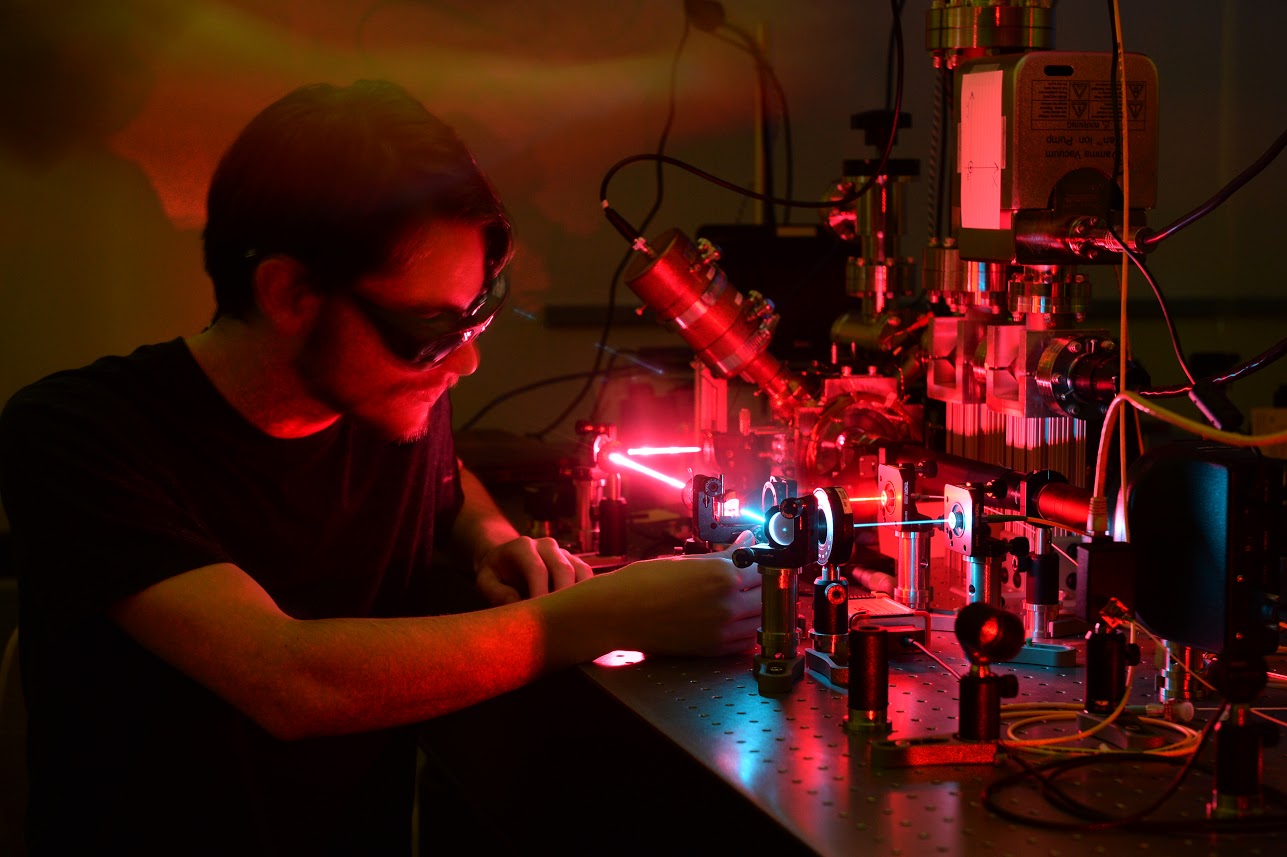
Built in 1994, this building is home to the departments of physics, astronomy, geosciences, and mathematics. Faculty based in Olin conduct cutting-edge research across disciplines, unraveling scientific mysteries on the atomic level, deep inside the Earth, and in the farthest reaches of space.
Funded by a $6.1 million grant from the F. W. Olin Foundation, Olin is home to the Marilyn P. McConnell Planetarium. The building also features a computerized Zeiss projector, a laser spectrometer, computer clusters, and an enormous collection of minerals, rocks, and fossils.
Planetarium
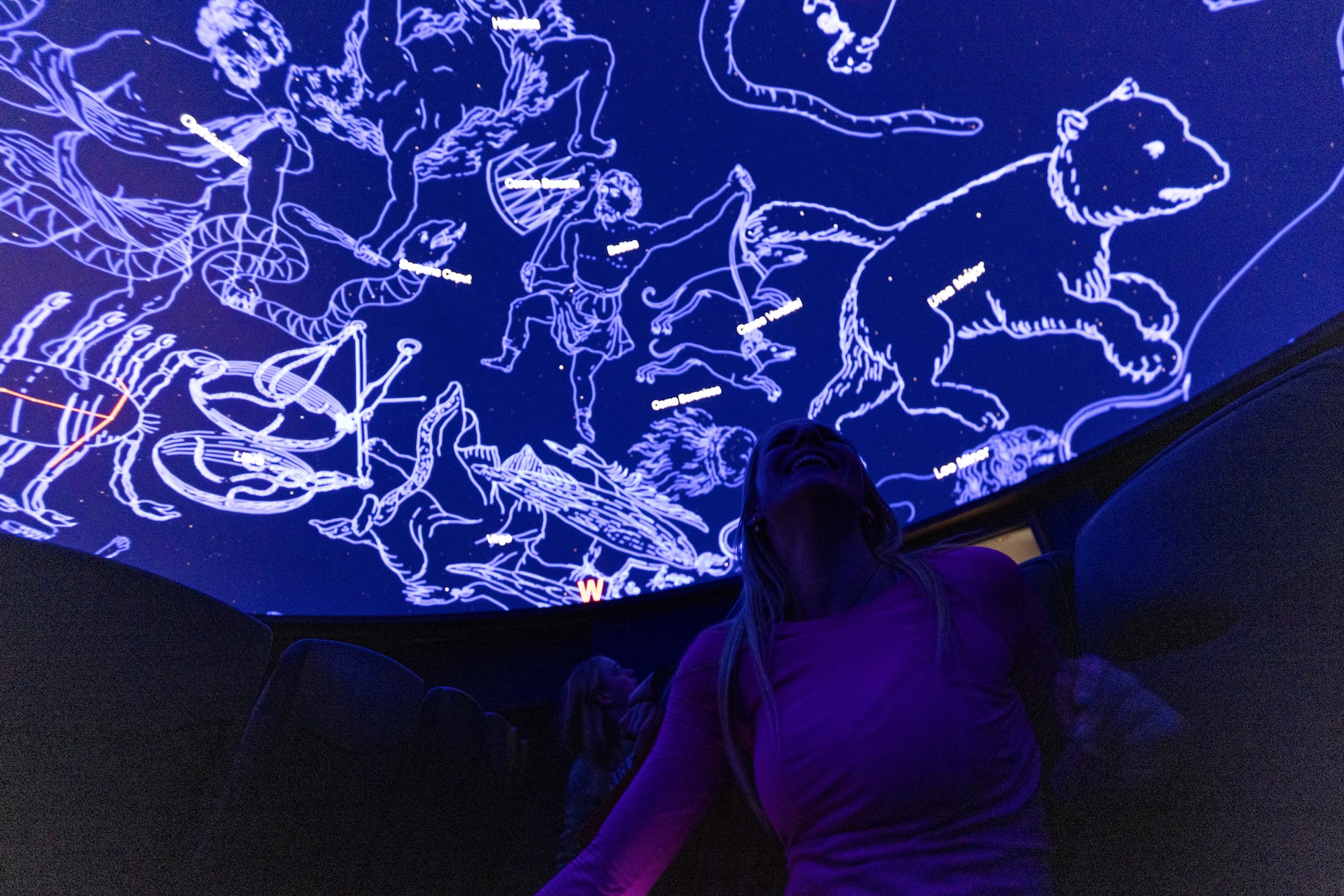
The Marilyn P. McConnell Planetarium is a 45-seat facility featuring an all-digital, state-of-the-art dual-projection system with advanced imaging software, displayed on an 8-meter (26-foot)- diameter dome.
The recently renovated planetarium provides an immersive experience, transporting audiences across the cosmos. The upgrades to the facility also expand its academic uses beyond astronomy by offering captivating experiences and data across a variety of other subjects. The planetarium is frequently used as a teaching resource in our astronomy classes. Additionally, faculty regularly present live planetarium shows to students, alumni, and the community.
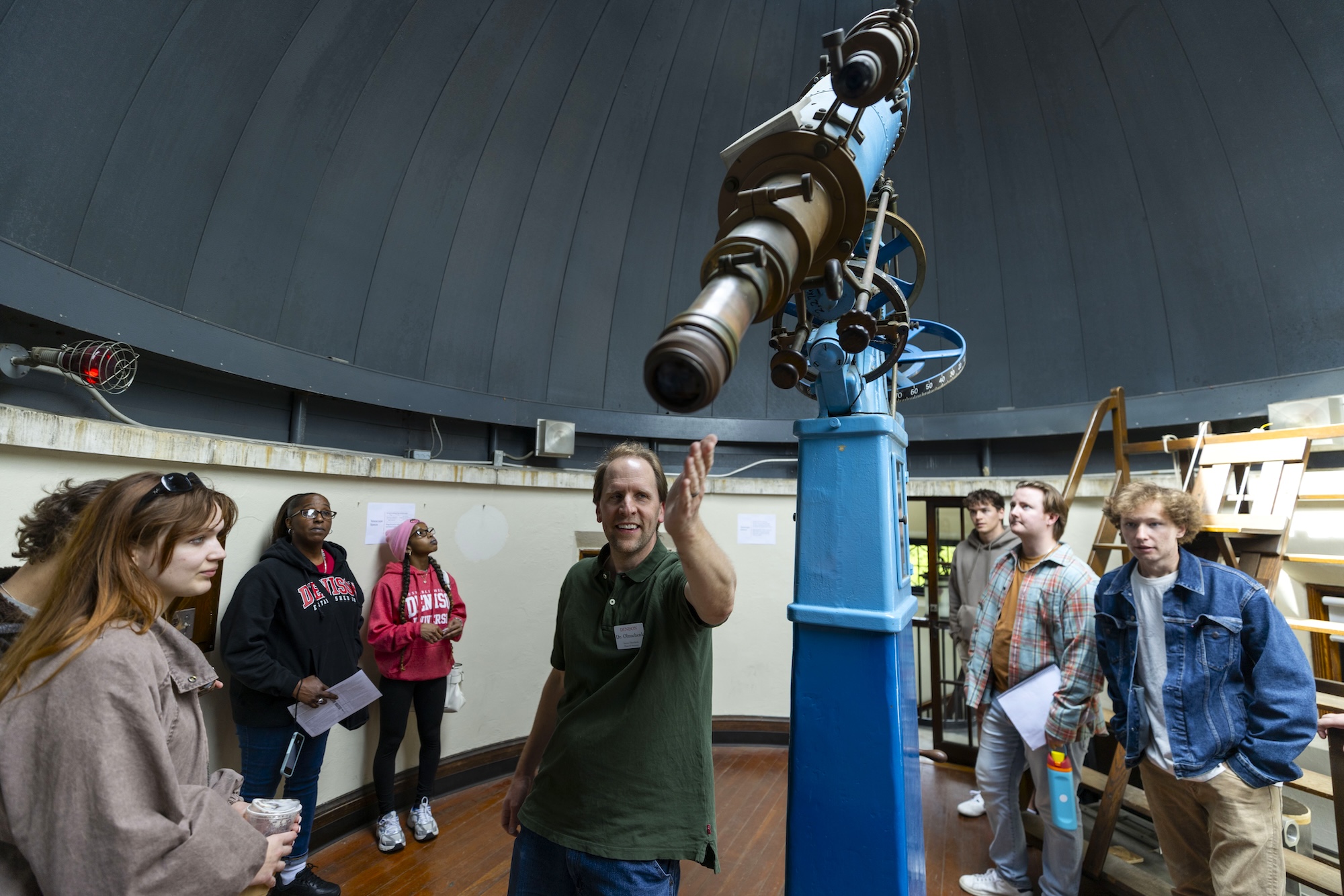
In 1909, Denison University Trustee Ambrose Swasey contributed the funding to build an observatory, which he also furnished with its original astronomical equipment. At that time, his firm, the Warner & Swasey Company of Cleveland, had manufactured many of the world’s finest and largest telescopes. Built of white Vermont marble, the interior was renovated and the outer dome replaced circa 1970.
Today the observatory still houses the historical 9-inch refracting telescope; modern 8-inch and 10-inch reflecting telescopes are also regularly used for astronomical observations from a rooftop viewing platform renovated in 2025. Swasey Observatory continues to be used as a student educational facility and for public outreach. Open houses are hosted by the Department of Physics and Astronomy during the academic year.
Constructed in 2003, Talbot Hall is a state-of-the-art facility that houses the Department of Biology. Its name honors Denison’s fifth president and the former Talbot Hall, an early campus building that stood on the site of Knapp Hall for nearly 100 years.
The advances in molecular biology and biochemistry that are part of the modern curriculum are reflected in the building’s laboratories, which are designed to facilitate faculty and student research projects. Teaching, research, and office spaces sit side by side throughout the building, creating an integrated experience for students and faculty alike.
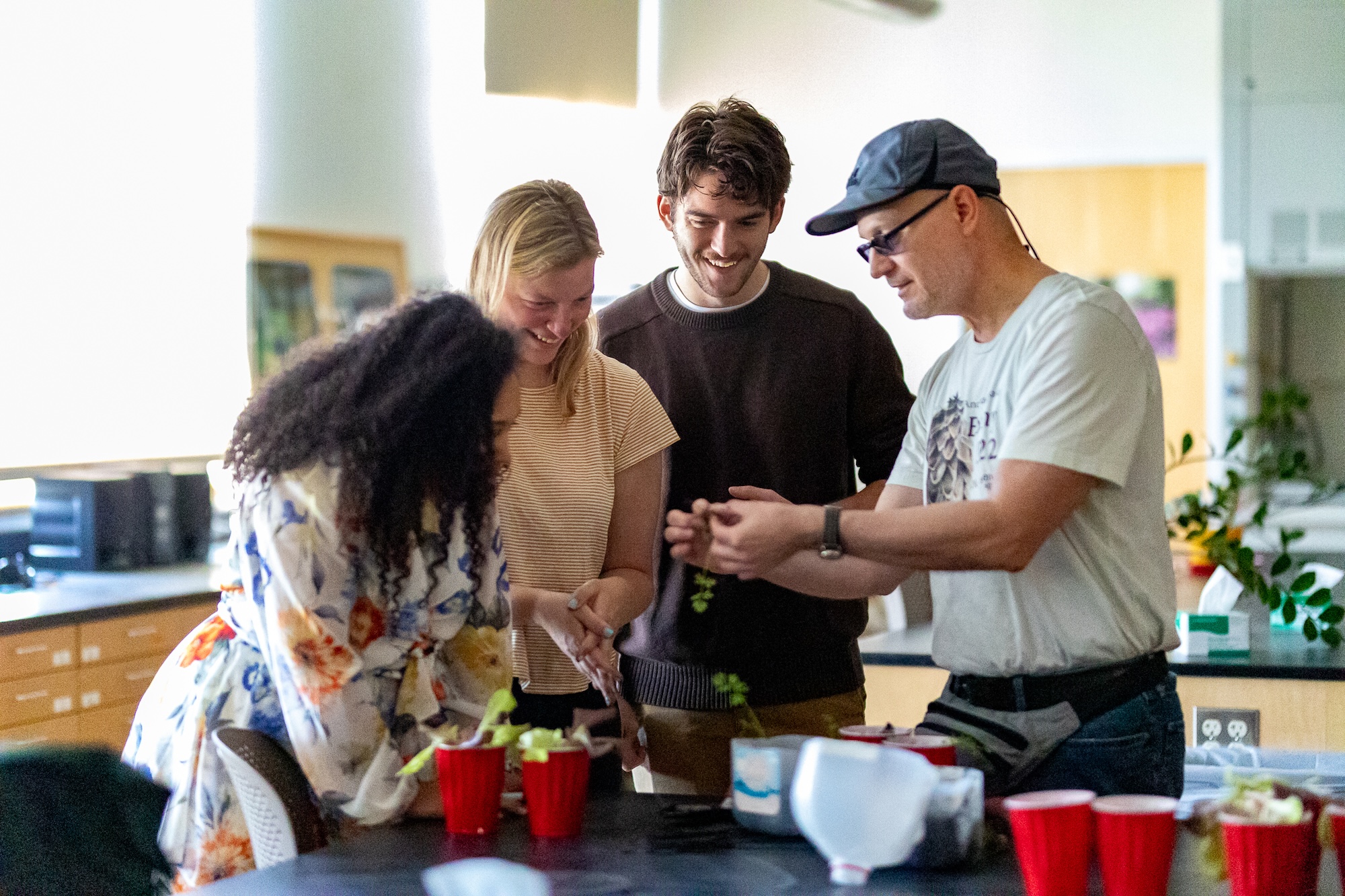
Since every course in the Biology Department has a laboratory component, there are six well-equipped teaching labs where students conduct experiments ranging from gene rearrangement to ecosystem modeling. Each faculty member has a dedicated research lab and access to shared equipment and resources within the department.
Biology Greenhouse
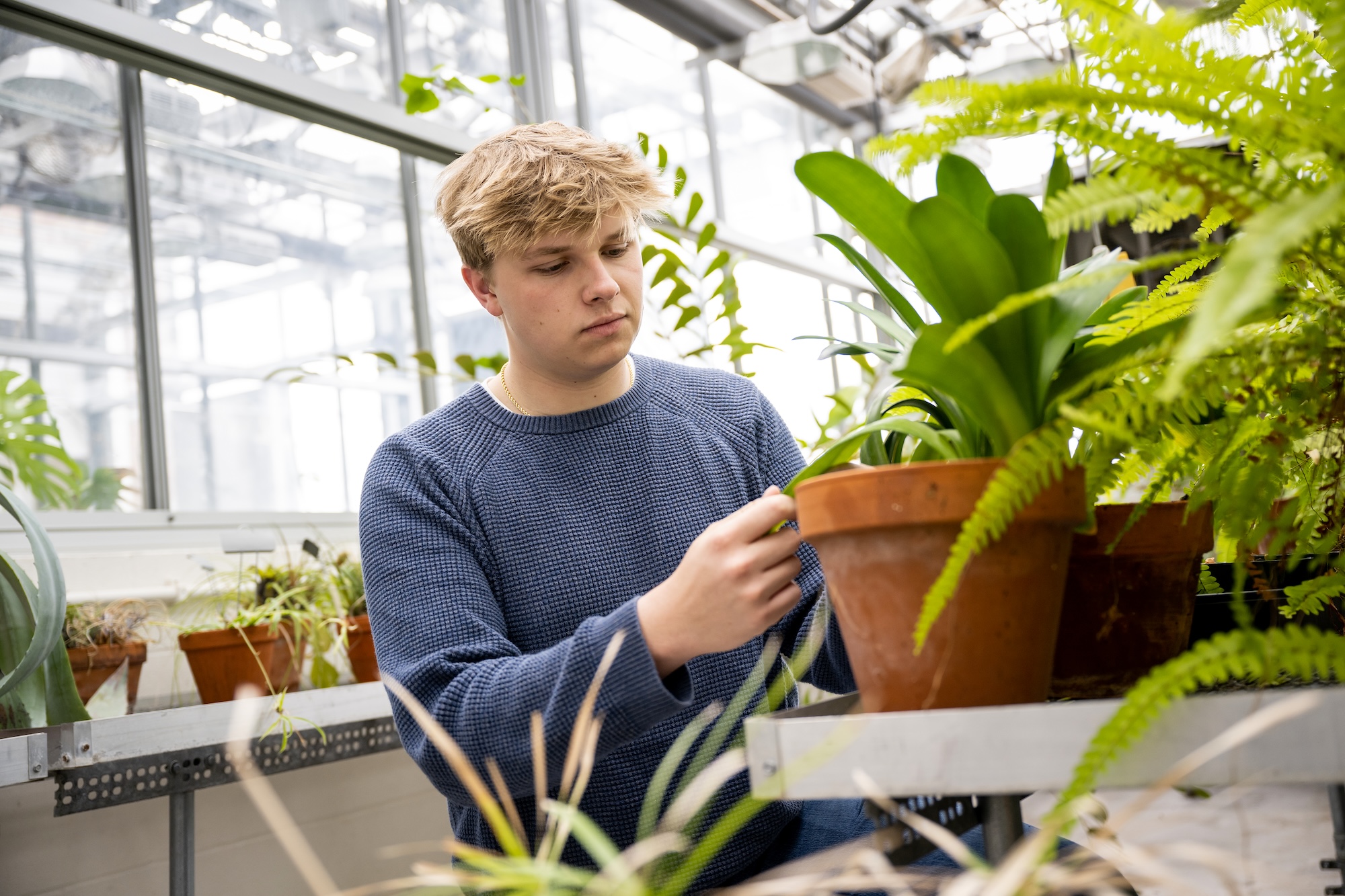
The greenhouse, located on the sixth floor of Talbot Hall, houses a permanent teaching collection grown in different controlled environments. The greenhouse is divided into a head house and four separate greenhouses: The Desert Room, The Tropical Room, The Temperate Room, and The Experimental Room.
In addition, professors of the departments of Biology and Chemistry & Biochemistry use the greenhouse to grow plants of particular research interest. The greenhouse is used for biology courses that focus, at least in part, on some aspect of botany and is maintained by student employees under the supervision of faculty.
Denison’s Biological Reserve was established by the Board of Trustees in 1966 through the efforts of Professor Robert Alrutz, who served as director until his retirement in 1990. The Bio Reserve, on the north end of campus, encompasses 350 acres across three contiguous sections within easy walking distance.
The purpose of the Bio Reserve is to enhance students’ education in biology and the environmental sciences through their coursework and independent research. Students frequently conduct field experiments and learn about field techniques and land management.
The Polly Anderson Field Station, established in 1995, houses a large laboratory for class meetings and research space for students and faculty. Astronomy students use the telescope mount at the station for night viewing.
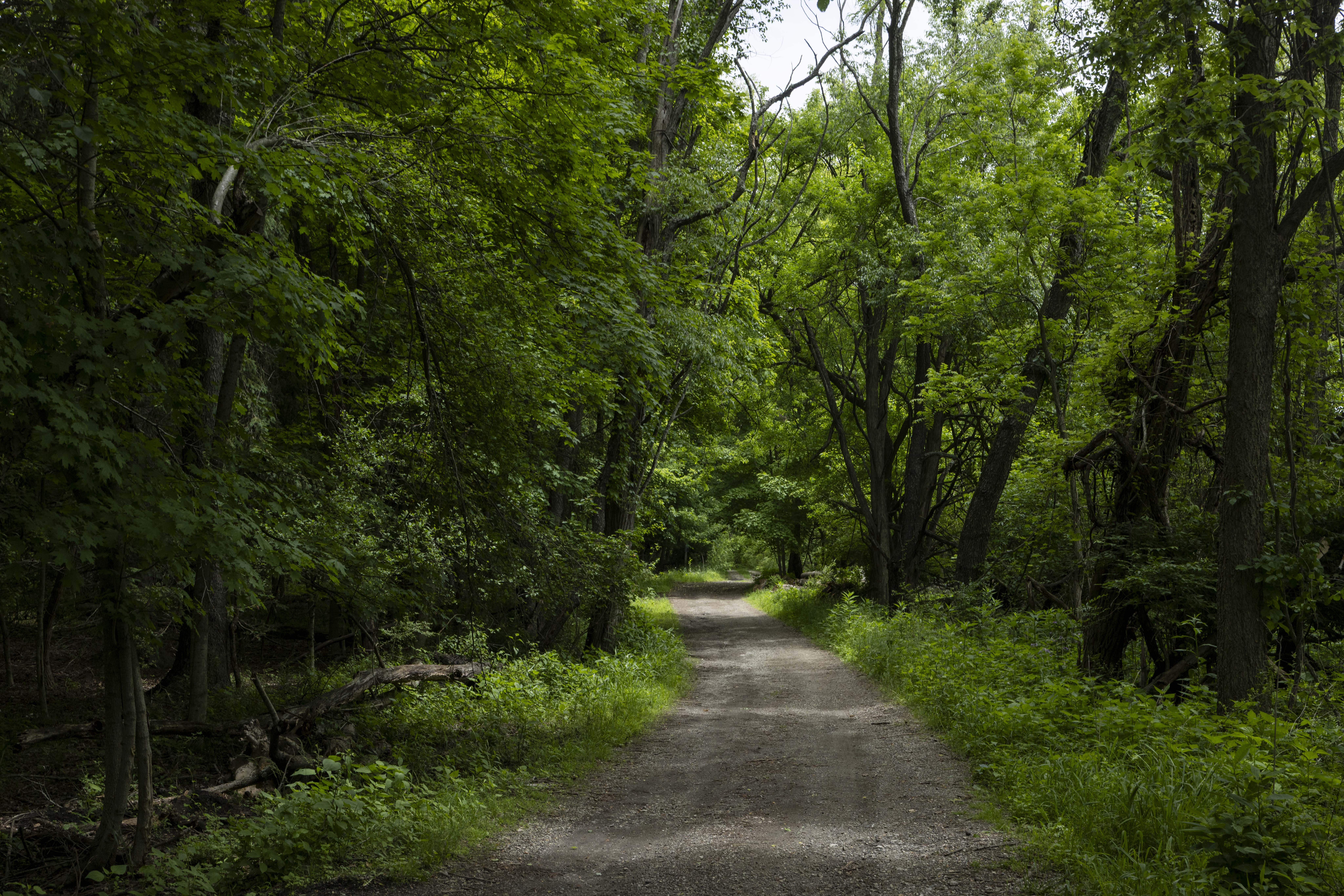
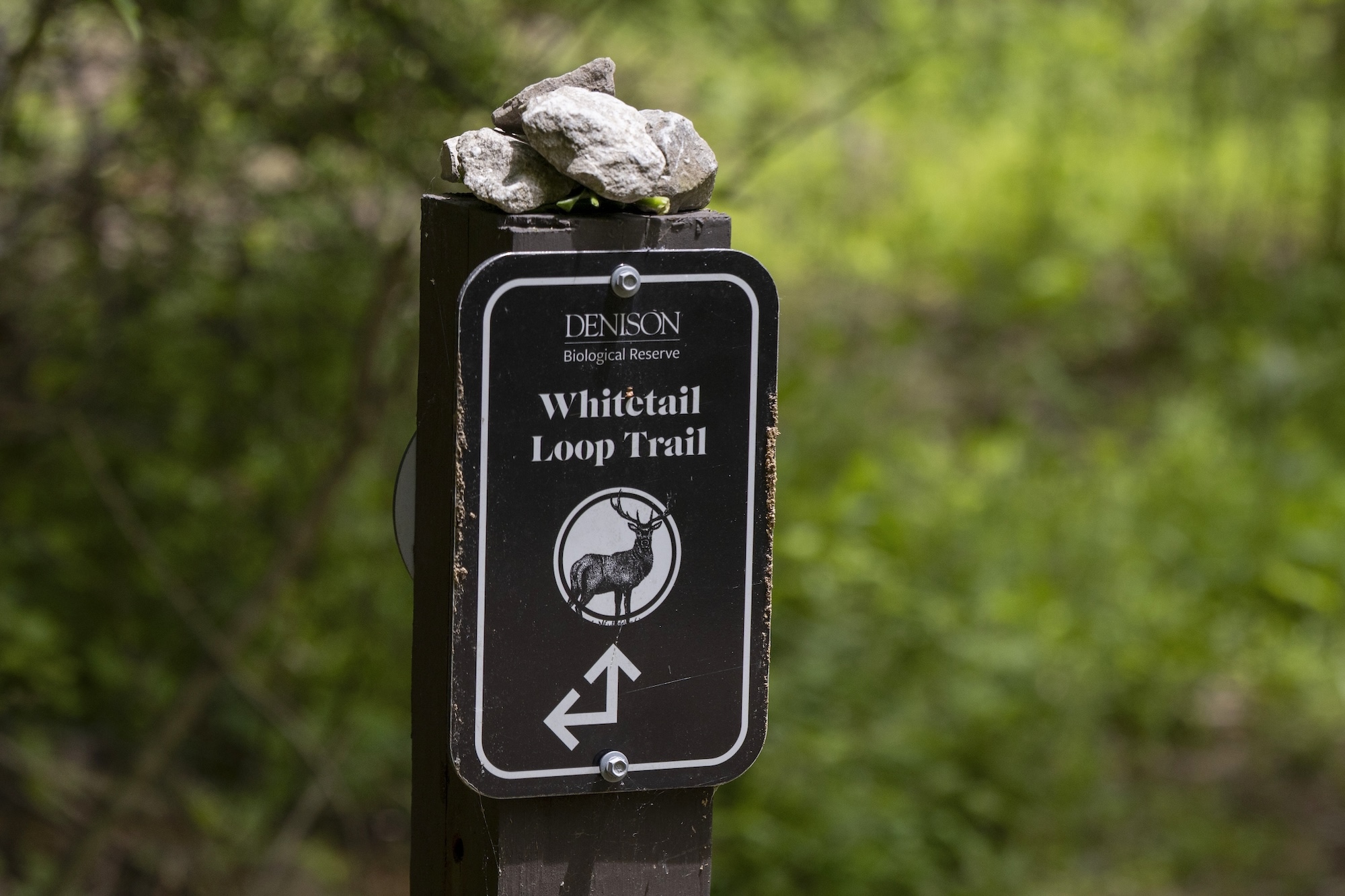
The Bio Reserve also provides a haven for members of the Denison and Granville communities who enjoy walking in natural surroundings. The Bio Reserve is open to the public from dawn to dusk every day. A well-marked trail system has been established, allowing visitors to explore a variety of habitats and terrain. Hunting, firearms, campfires, camping, horseback riding, and disturbance of natural features are prohibited. Trail bikes are permitted on certain trails during the summer and fall. The Bio Reserve is maintained year-round with the assistance of student employees.
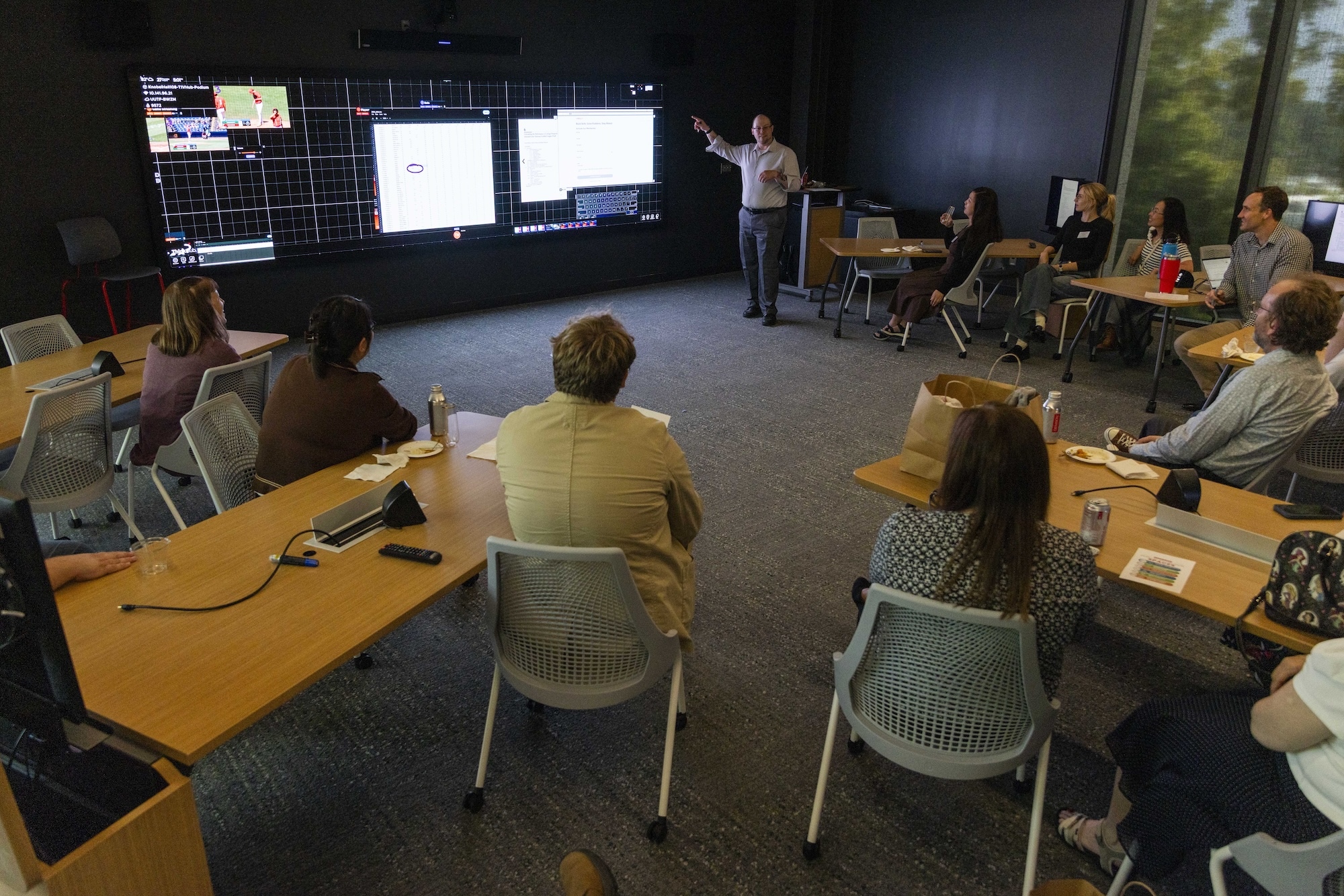
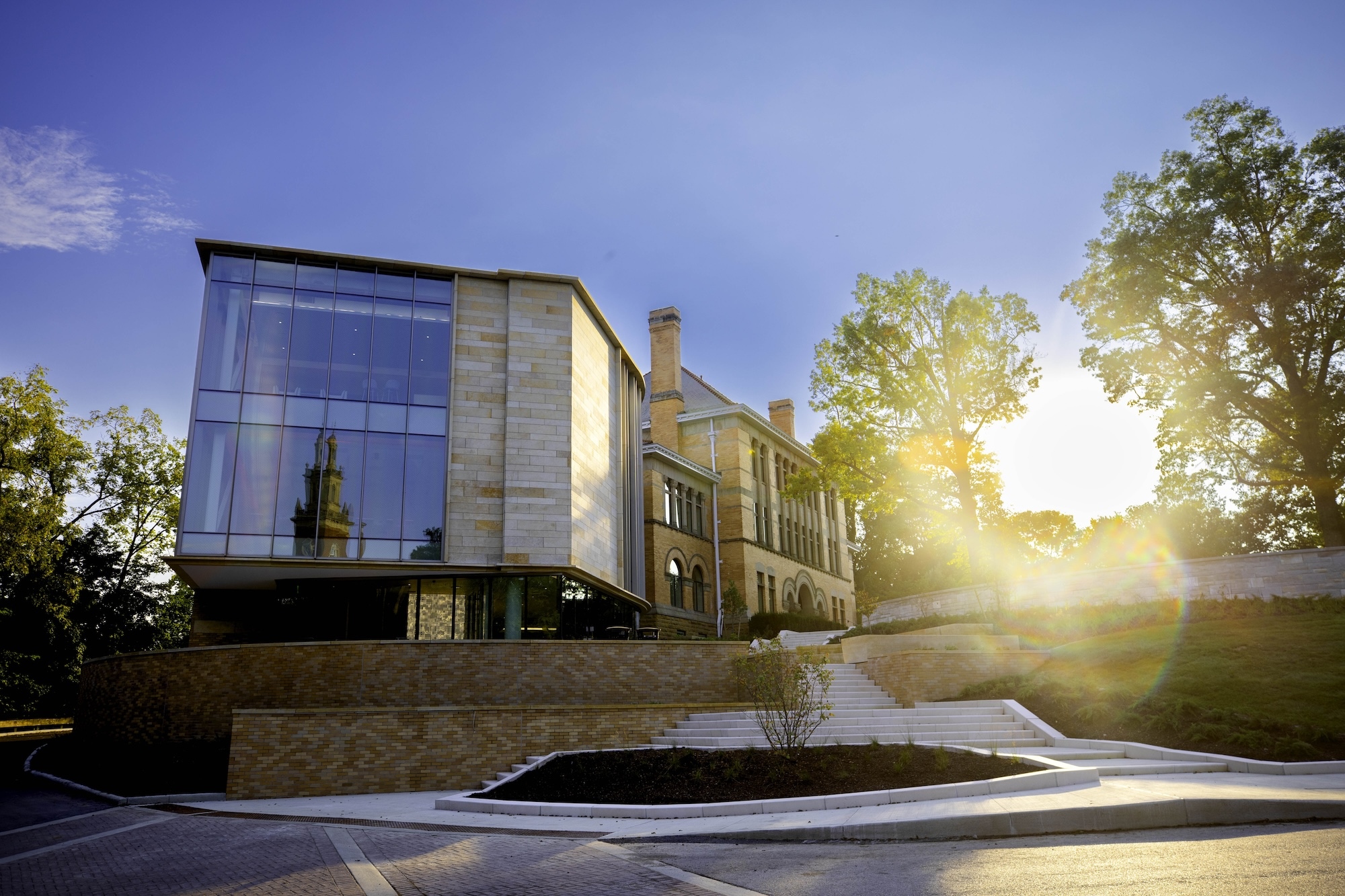
Knobel Hall, renamed to honor President Emeritus Dale Knobel and his wife, Tina, in recognition of a lead gift from the Sherman Fairchild Foundation, houses the departments of computer science, data analytics, and data for political research.
Emily Hauser King ’63 and Robert E. King established the King Center for Data & Innovation. The new center empowers Denison students to thrive in a world increasingly shaped by data while staying true to the liberal arts tradition that grounds their education.