
The thrum of construction that surrounded Knobel Hall and the King Center for Data & Innovation this summer was superseded Thursday, Aug. 27, 2026, by a chorus of voices — as faculty and students settled into a building filled with cutting-edge technology and designed to foster the interdisciplinary collaboration that is a Denison hallmark.
The grand opening of Knobel and the King Center was the result of years of visionary discussions, detailed planning, and significant support from donors who ensured the project was funded before the college broke ground.
The building’s completion is an academic milestone for Denison, making it the first liberal arts college with a dedicated center for integrating data and AI literacy across the student experience.
At the grand opening, President Adam Weinberg said the project provides Denison’s top-flight faculty with the resources they deserve, and students with the resources and skills they need to launch quickly and successfully into their lives and careers.
“This building touches many of the aspects that I love most about Denison,” he said.
“Knobel Hall looks and feels like a building for the future,” said Denison Provost Alisa Rosenthal. “And that is exactly what it should be. But as exciting as that is, I think the most important thing about this building is what it preserves.
“At a time when so much of the world is becoming more distant, more artificial, more separate, this building is designed around being together,” she said.
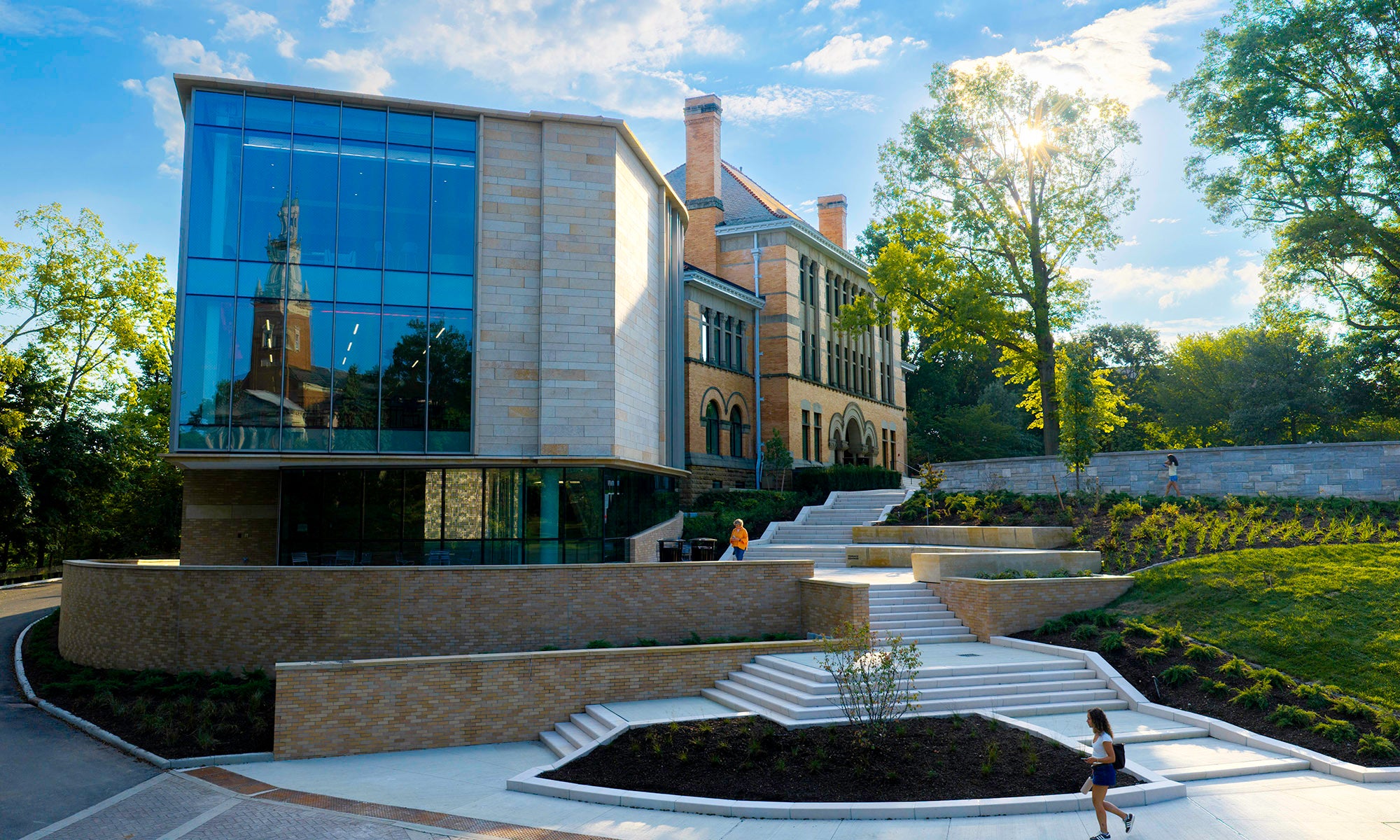
The reimagined and revitalized Knobel Hall was renamed to honor President Emeritus Dale Knobel and his wife, Tina, in recognition of a lead gift from the Sherman Fairchild Foundation.
It houses the departments of computer science, data analytics, and data for political research.
Emily Hauser King ’63 and Robert E. King established the King Center for Data & Innovation within Knobel Hall. The new center empowers Denison students to thrive in a world increasingly shaped by data, while staying true to the liberal arts tradition that grounds their education.
Facilities equipped with the latest technology expand student learning possibilities through extended reality, data visualization, machine learning, and robotics:
- An XR lab transforms abstract concepts into immersive experiences: Students can create a solar system, walk through ancient Roman ruins, or manipulate molecular structures with their hands.
- In a machine learning and robotics lab, students can move beyond theory to hands-on experimentation with AI and robotics systems, building the practical skills that top tech companies demand.
- A data visualization lab turns complex datasets into visual stories that students can explore, manipulate, and decode.
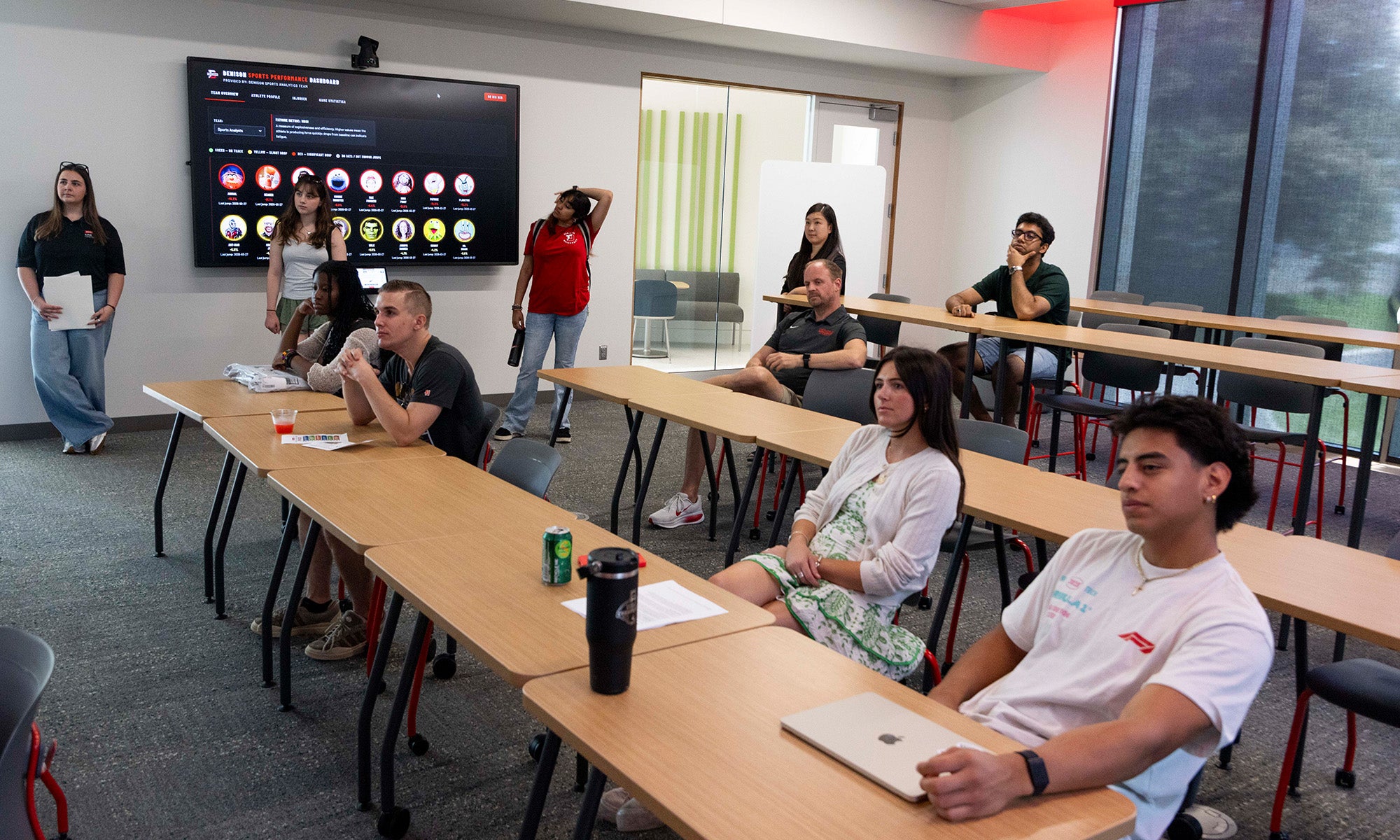
- Throughout the building are tech-enhanced classrooms equipped with interactive displays and collaborative tools.
- Changing digital displays showcase faculty and student research, as well as upcoming events.
Knobel and the King Center are the embodiment of Denison’s belief that all students need to work confidently with data, whether studying economics, environmental science, theatre, or philosophy.
By connecting theory with application, students gain exposure to the tools and techniques used across a wide range of industries and understand how data and technology are used to address real-world challenges.
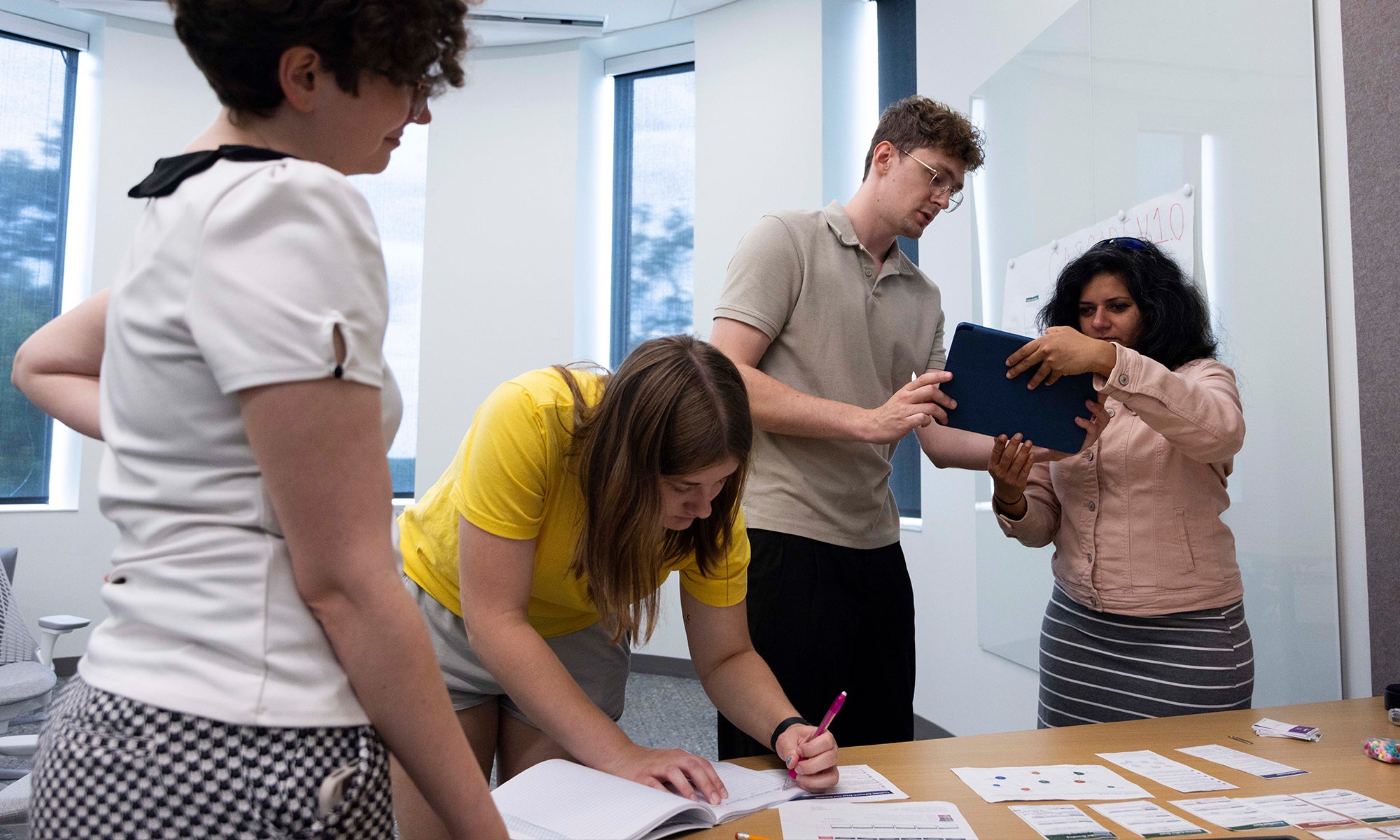
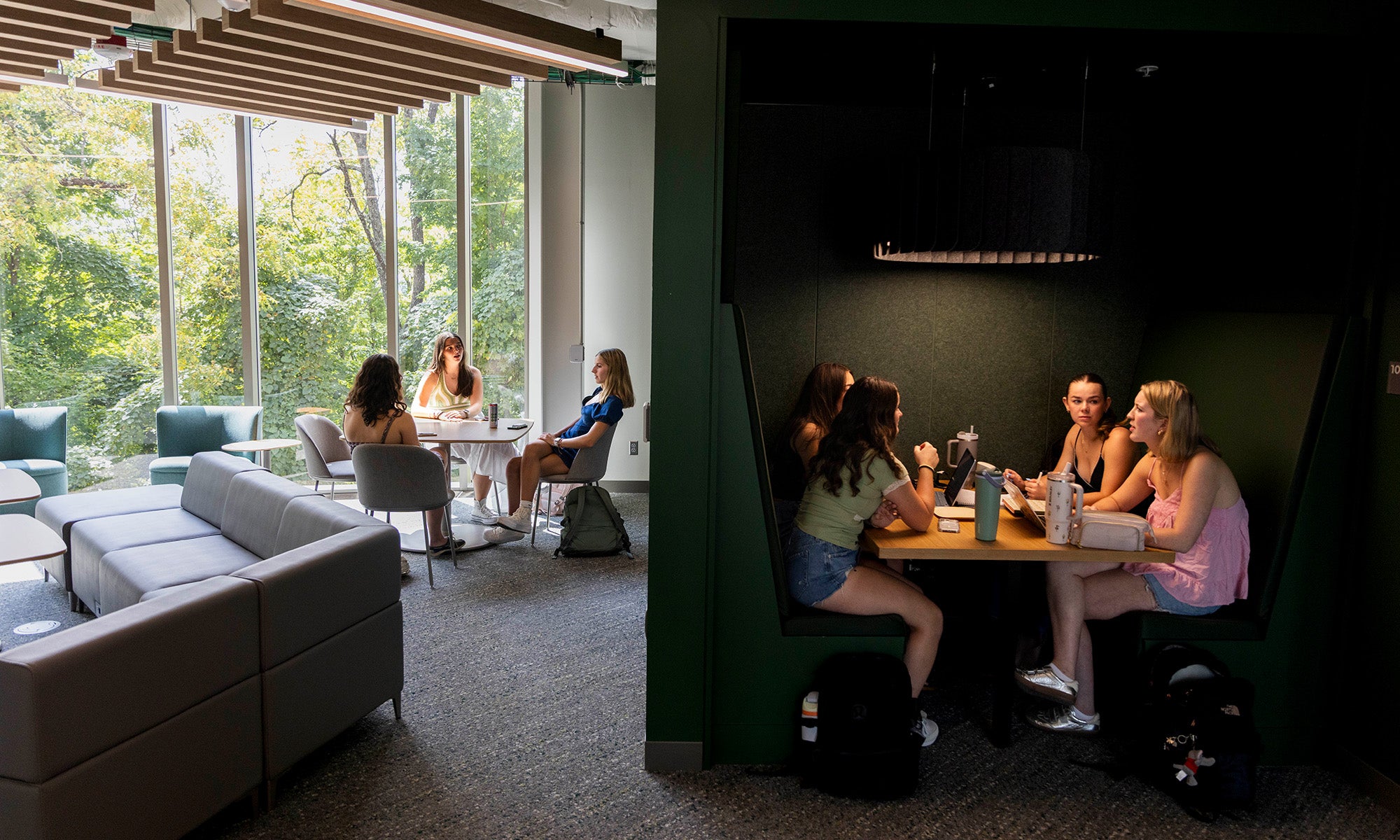
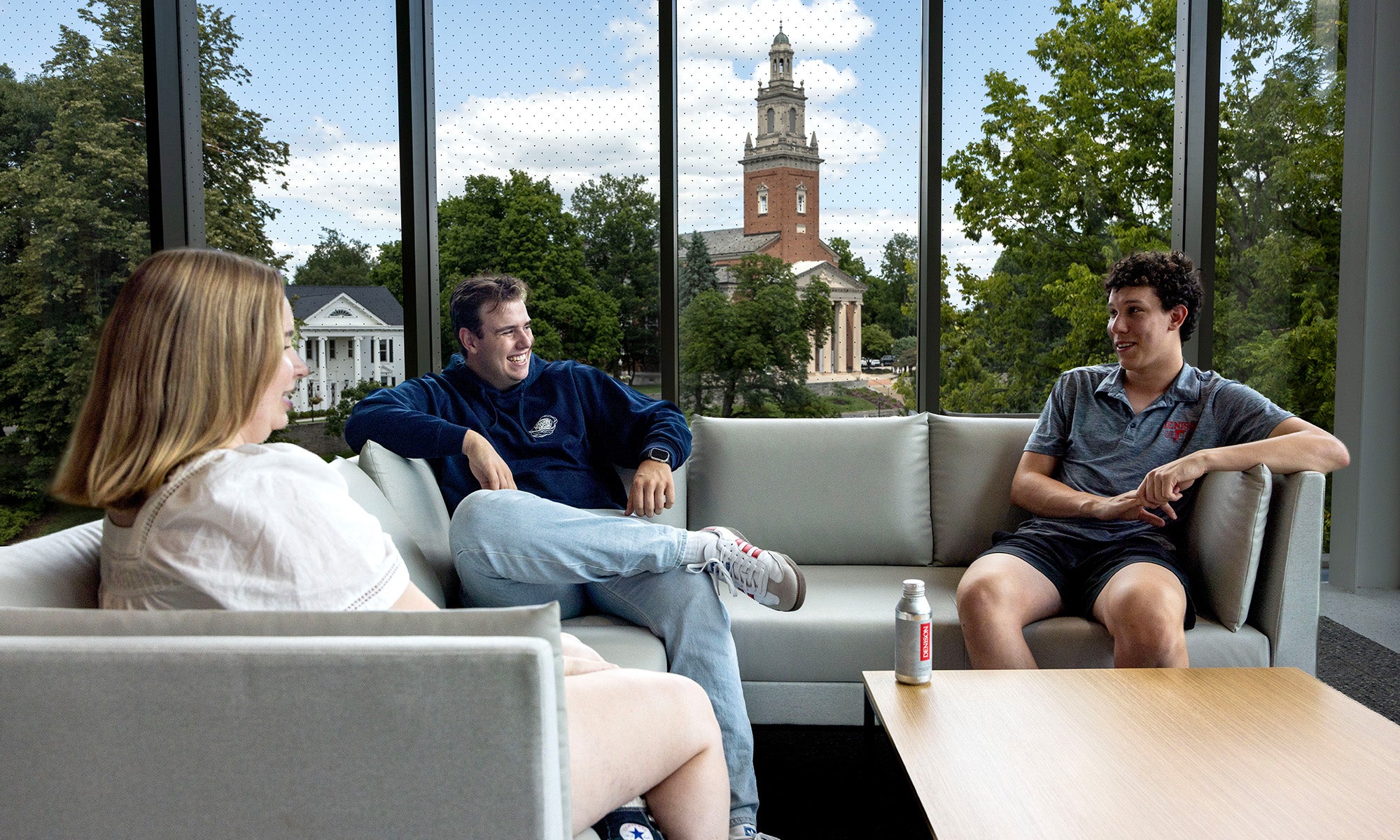
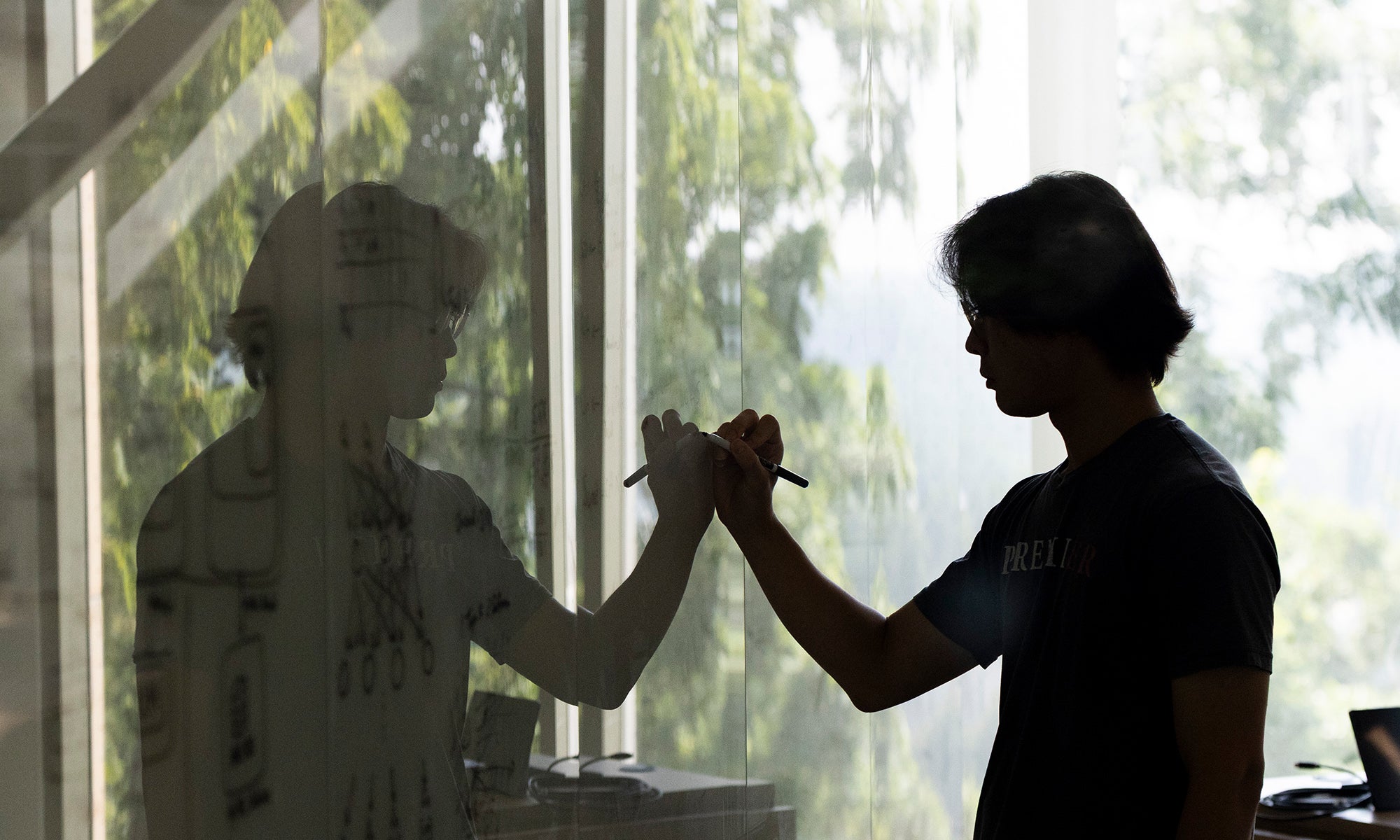
“This building is intentionally designed to connect Denison to the world beyond campus,” Rosenthal said. “Spaces for industry partners and executives-in-residence will bring new perspectives and experiences directly to our students. They’ll hear how ideas are being applied in the world, test their own thinking, and build relationships with professionals in fields they may one day enter.
“So, yes, this building is about the future and preparing our students for theirs,” she said. “But that preparation isn’t achieved by chasing every new technology or trend. It’s achieved by giving our students the tools to understand and shape that future.”
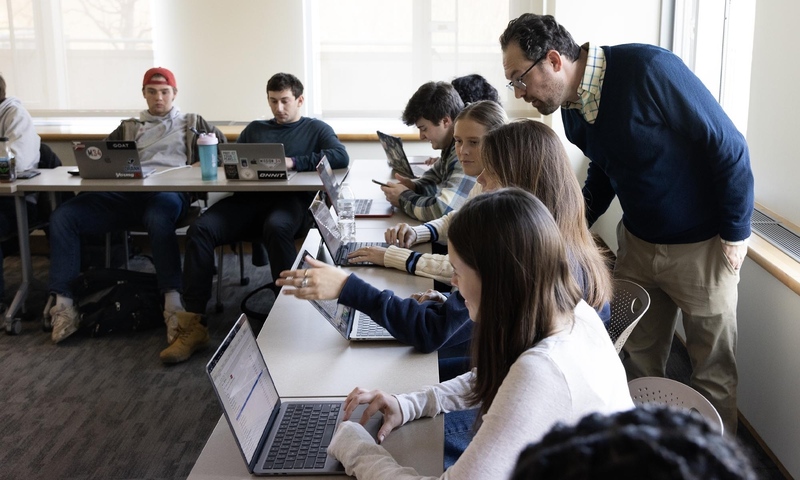
Associate Professor of Data Analytics Anthony Bonifonte said students took to the building immediately on the first day of classes, finding favorite spots to study and exploring the new technology that fills the building from top to bottom.
“Everyone is excited,” he said.
“The energy has just been sizzling all day,” agreed Professor Matt Kretchmar, chair of the computer science department and director of the machine learning & artificial intelligence program. “It’s been electric, and you can feel it.”
Associate Professor of Economics Emily Marshall ’10, the director of the King Center, said students from departments across campus signed up for tours on the first day or visited the open house events.
“We had over 150 students coming in during those times,” she said. “We’re really trying to get faculty and students into the building to see, visualize, and explore the opportunities and potential applications of data and technology to a variety of different fields.”
“Everyone really sensed the potential for involvement, collaboration, and openness of the building,” Marshall said. “And that is so uniquely Denison. A lot of campuses would isolate or elevate one particular department over another, and that’s just not how we operate.
“The opportunities here to engage in different forms of pedagogy and to provide really authentic learning experiences for all students are just so much greater,” she said.
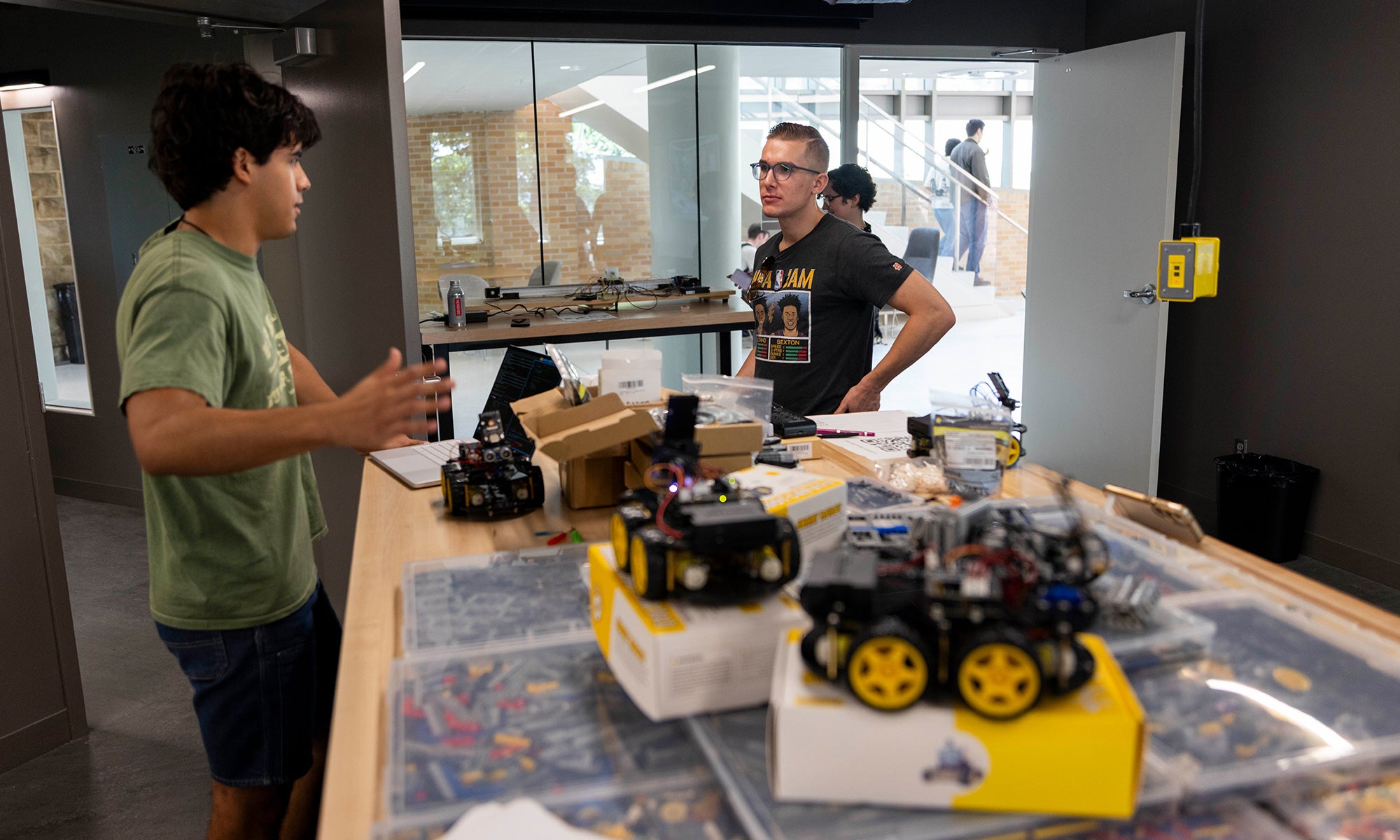
Joel Singh ’28 of Orlando, Florida, was among the students providing tours of the building on the first day. A computer science major and department fellow, Singh is also president of the Coding Club and vice president of the Robotics Club.
He’s excited that Knobel provides a home for his department, professors, clubs, and departmental events.
“Knobel is an actual space for computer science majors, which we didn’t really have before,” Singh said. “There’s also a lot of nice touches. For instance, the robotics club has a couple thousand dollars worth of different parts, and we used to just keep that in our dorm rooms. Now with Knobel, we have space for all that.”
Having spent the summer on campus and seeing the project come to completion, he also took note of the little things.
“When they were still finishing the last bit of construction, like putting up the chairs, I remember there was one specific chair on the second floor I sat down on,” he said, laughing. “It was so soft and so unmarred, I could tell I was the very first person to actually sit there.”