Olivia Nach ’28 admits to some initial internal conflict about her Summer 2026 internship plan.
The Denison University junior is a double major in vocal performance and biology, with her eyes on medical school after graduation. So while a five-week performance internship at a French opera festival sounded amazing to Nach, she also second-guessed its usefulness for a future doctor.
“I was a little nervous that I wasn’t following the ‘right’ path for a pre-med student,” Nach said.
With the encouragement of her family to go for it, and some soul-searching of her own, Nach — along with four other Denison students and a recent alum — took the opportunity to spend five weeks with Denison Voice Instructor Emily Noël in Villefranche-de-Rouergue.
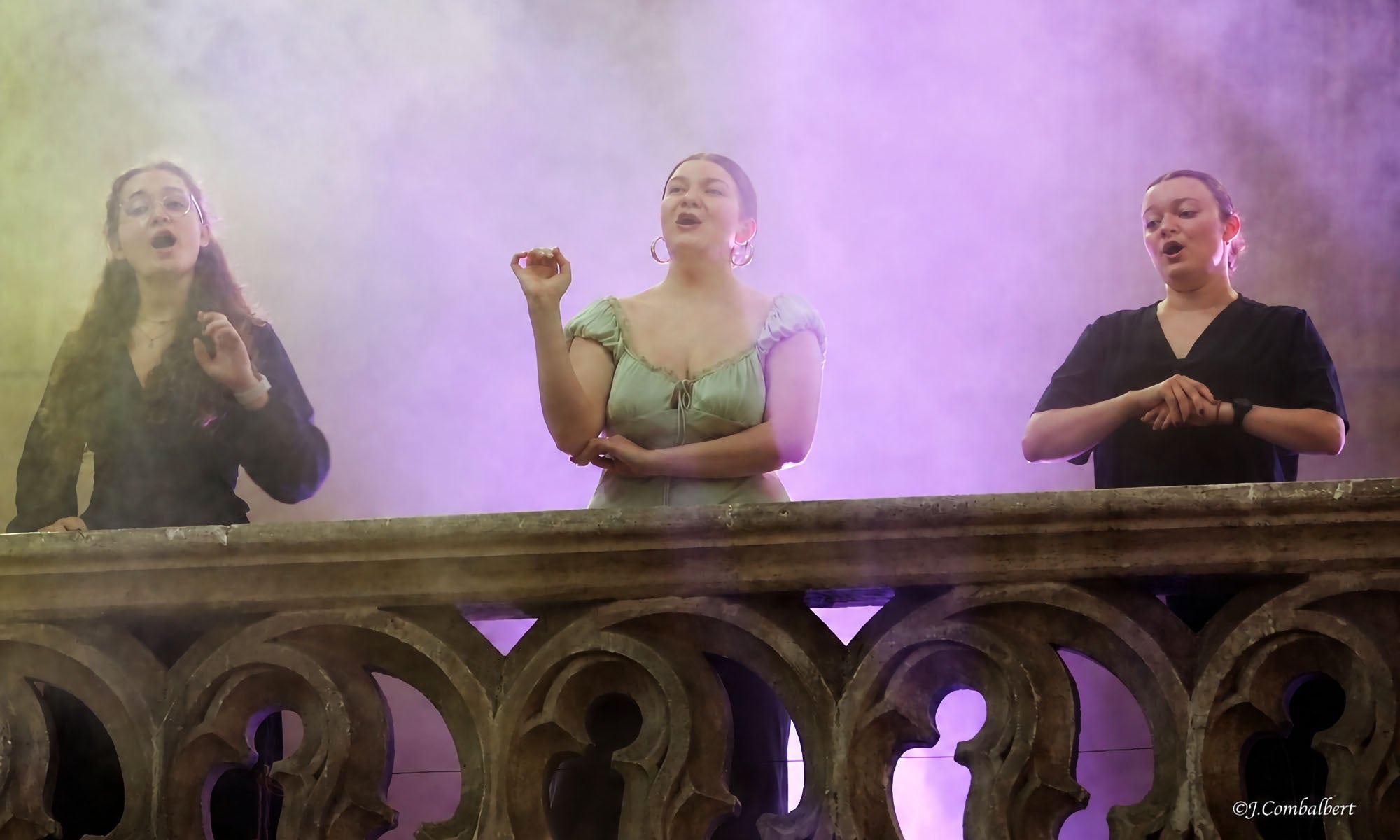
There, they worked in various performance, production, and arts administration roles with Lyric Arts France’s company in Festival Opéra Bastide.
Noël, who recently started an opera ensemble at Denison, had gone to France for six weeks of professional development in the summer of 2025, serving as assistant director for a production of Carmen with Opéra Bastide.
The connections she made there yielded an offer to direct again in Summer 2026 — this time a production of Orphée et Eurydice — and also opened doors for students. Five current students — Nach, Alexis Spangler ’27, Gwen Goodney ’29, Gabby Belmonte ’27, and Lucy Hays ’28 — and alum Katie Kress ’25 made the trip to work in various aspects of the festival.
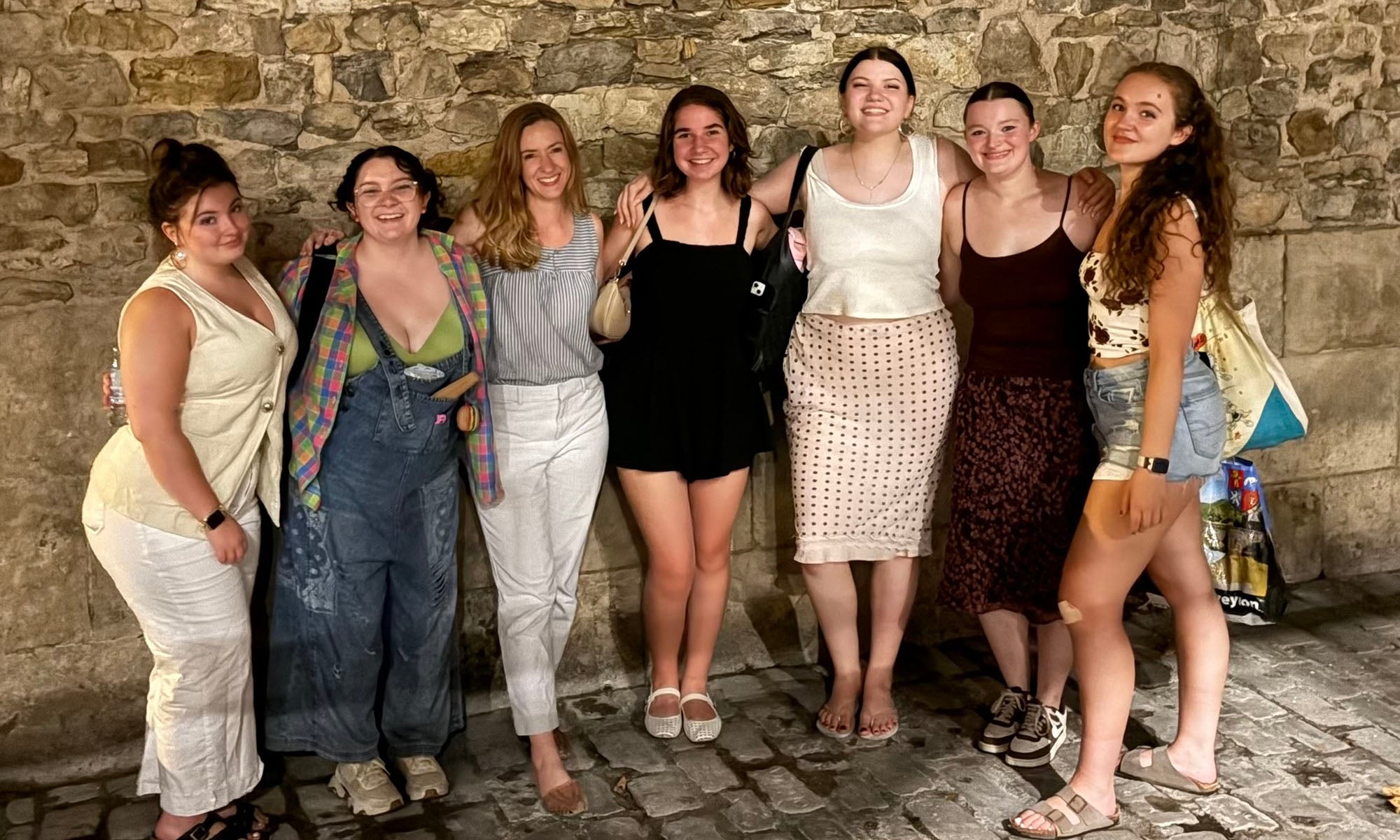
Left to right: Alexis Spangler ’27, Gabby Belmonte ’27, Emily Noël, Katie Kress ’25, Gwen Goodney ’29, Olivia Nach ’28, and Lucy Hays ’28
“Having Denison students with me at Opéra Bastide this year was incredibly meaningful,” Noël said. “They became an invaluable part of our production of Orphée et Eurydice, and they had the opportunity to work alongside high-level, pre-professional, and professional singers in a very different kind of artistic environment than they experience on campus.”
“These Denison students weren’t simply visitors to the festival,” she said. “They were part of the artistic community we created there, and their contributions mattered immensely to the success of Orphée et Eurydice.”
Despite her initial internal conflict about the internship, Nach said she came away with no regrets. It was a once-in-a-lifetime opportunity, she said, and she suspects it will help her stand out in her medical school applications.
“Being a part of this program gave me so many skills which I plan to carry with me into my career in medicine: community-building, teamwork, flexibility, cultural awareness, and so much more,” she said.
The production of Orphée et Eurydice included a realistic death scene, Noël said, and Nach used her skills as a trained EMT to coach the other singers on how to safely and properly use a gurney, lift a body onto it, and perform a convincing medical examination onstage.
“It was ironic because this opera was actually my first time wearing scrubs, but I will probably be wearing scrubs for the rest of my career, as I plan to pursue emergency medicine,” Nach said. “I find it fitting that my first time in scrubs was for a musical production, as that pretty much sums me up as a hodgepodge of passions that come together in surprising ways!”
“It was a fun example of a student bringing expertise from an entirely different part of her life into the artistic process,” Noël said.
“I was able to learn classical repertoire at a professional level surrounded by mentors excelling in the field,” Nach said. “Living abroad, I was able to live, study, and perform in an entirely new culture, which allowed me to experience a way of life different than my own.”
Such perception shifts are essential for students, regardless of their majors, Noël said.
“One of the most valuable things about an international experience like this is that students get to see what the work actually looks like outside of a university setting,” Noël said. “They were immersed in an intensive, conservatory-level environment, working alongside singers at more advanced stages of their training and careers, while also being asked to adapt quickly, contribute to the production, and take responsibility for their own work.
“And they certainly learned that making opera requires resilience,” she said. “We were rehearsing and performing during an intense European heat wave, often in spaces without air conditioning. It wasn’t always glamorous, but they experienced firsthand how much flexibility, stamina, and collaboration it takes to bring a production to the stage.”