School may have been out for summer, but June 2026 proved the perfect time for Denison faculty to hit the books.
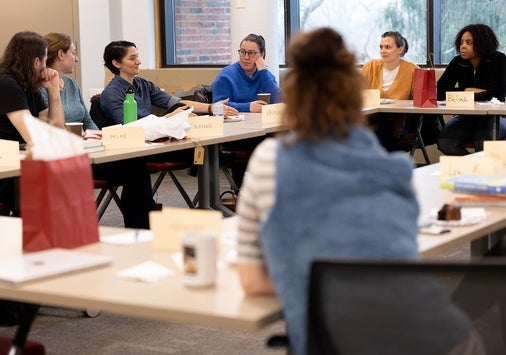
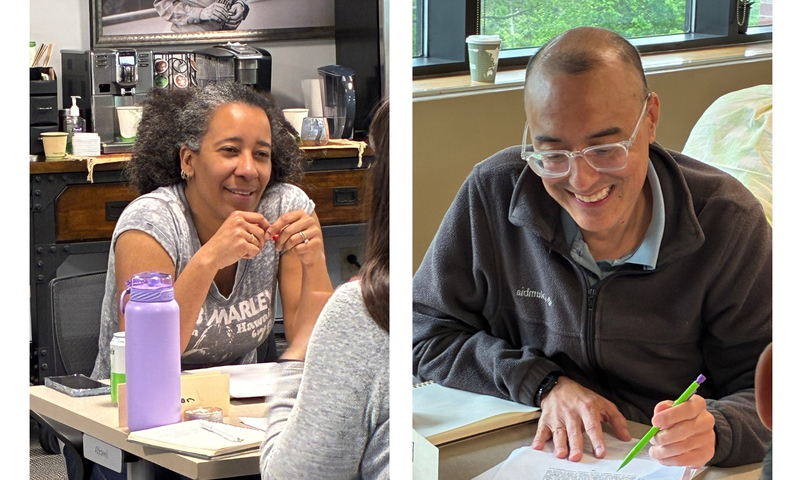
Summer book groups provided time and space for colleagues to read and think about learning and teaching together.
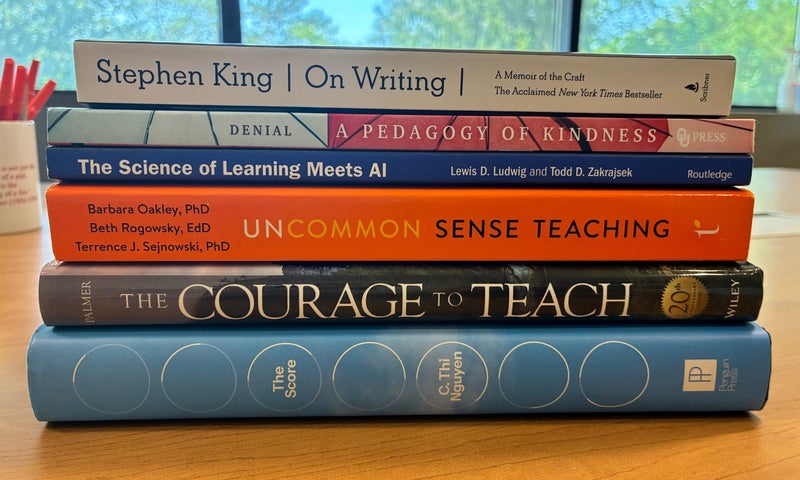
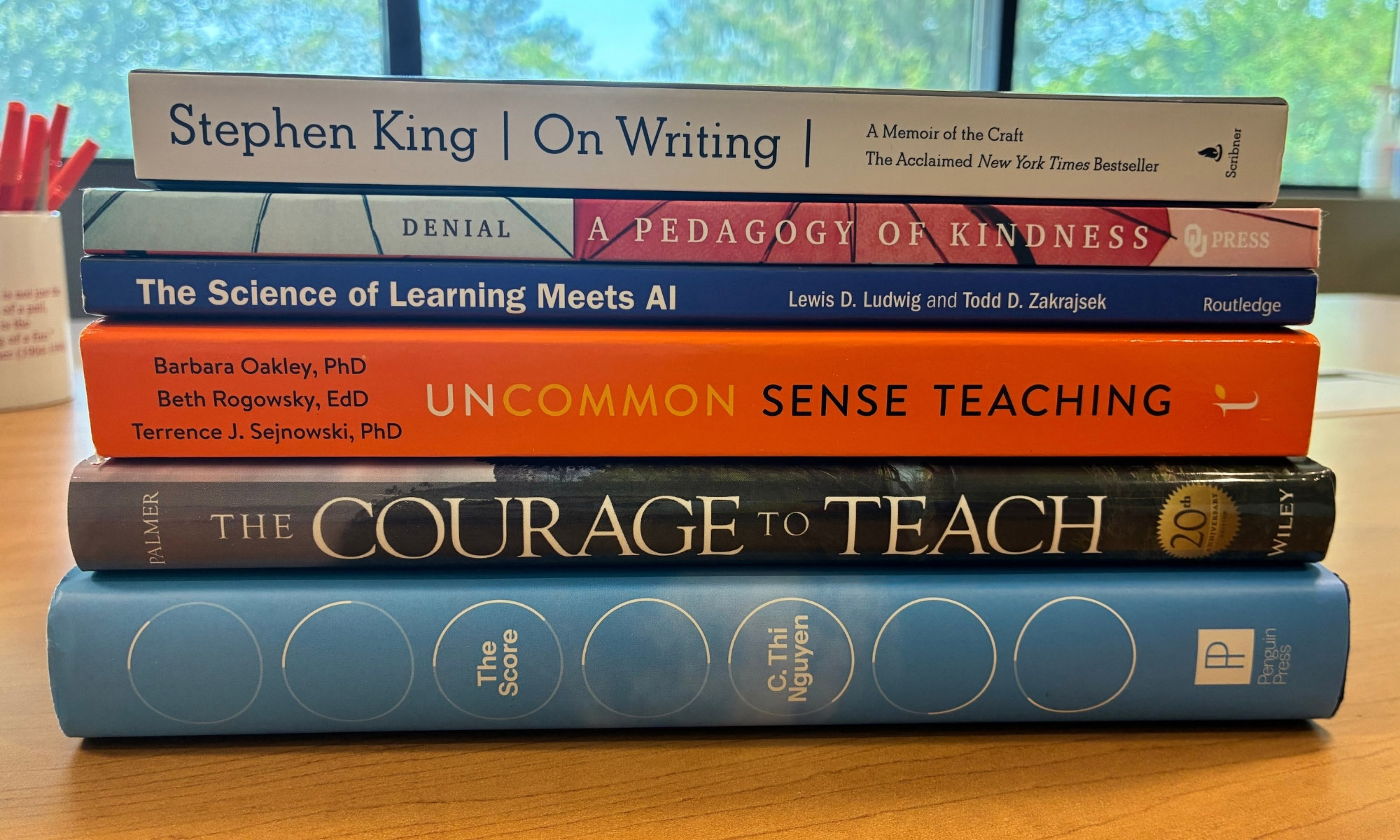
The Center for Learning and Teaching facilitated the opportunities, organizing 55 faculty into eight groups that met three times to discuss a book from the following list:
- The Courage to Teach by Parker Palmer
- On Writing by Stephen King
- Pedagogy of Kindness: Teach, Engage, & Thrive in Higher Ed by Catherine Denial
- The Science of Learning Meets AI by Lew Ludwig & Todd Zakrajsek
- The Score: How to Stop Playing Somebody Else’s Game by C. Thi Nguyen
- Uncommon Sense Teaching: Practical Insights in Brain Science to Help Students Learn by Barbara Oakley, Beth Rogowsky, and Terrence Sejnowski
Each book provided fodder for rich discussions for colleagues who explored different approaches to teaching, learning, and mentoring together, learned from one another’s perspectives, argued about authors’ approaches, gained insight into themselves as teachers, and walked away with inspiration for their fall courses.
“Any opportunity to learn from colleagues who are thoughtful and really care about their teaching and about student learning is highly valued by me,” said Associate Professor Cody Brooks of the psychology department.
Participating professors shared other takeaways from the experience:
- “Teaching can be isolating if you let it, but learning communities are always such a wonderful way to normalize the struggle and get good ideas!” Visiting Assistant Professor Kristina Slagle, of the sustainability & environmental studies department.
- “The book helped us remember why we became teachers in the first place,” Visiting Associate Professor Anne Sokolsky, modern languages/women’s & gender studies.
- “Writing everyday is an undefeated habit to cultivate,” Assistant Professor Aaron Yates, Black studies.
- “Kindness is not ‘niceness;’ it is intentionally building and maintaining classroom practices that fully acknowledge — and see — students and help them build foundations for success. And I can do more to make my syllabi more inviting,” Professor Jeff Kurtz, communication & media studies.
- “The group had people with very different levels of engagement with AI. The book was very helpful in creating various on-ramps so that novices and experts (or skeptics and enthusiasts) all found useful ideas,” Associate Professor John Soderberg, anthropology.
- “My two biggest takeaways from The Score are, first, the benefits of metrics (scalable, accessible, applicable, transferable), and second, how they shape our understanding of ourselves and the world. Making the metrics that we carry into different contexts salient is key to enriching our understanding of how we engage with our environment,” Associate Professor Chloe Armstrong, philosophy.
- “I learned a lot about myself as a learner, and how I tend to be very focused on getting from point A to point B. However, the book and its discussions have highlighted the value in being slow, methodical, and intentional, not just in learning but in everyday life,” Assistant Professor Michael Chavrimootoo, computer science.