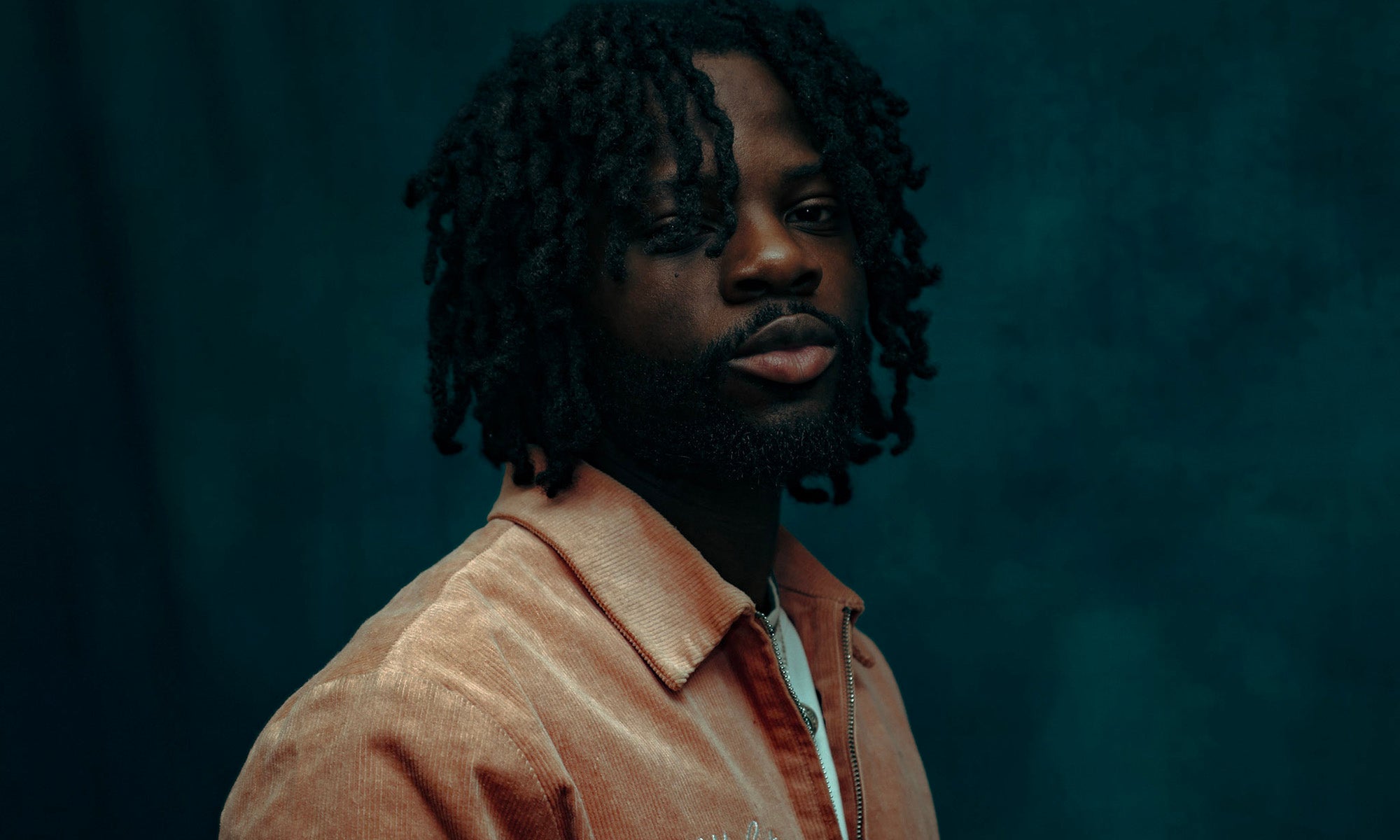
As part of Denison’s celebration honoring the Rev. Martin Luther King Jr. earlier this semester, Chicago rapper and educator Femi “Femdot“ Adigun led three sessions of his workshop, Bars, Beats, and the Blueprint: Chicago Hip Hop as Cultural Archive. Adapted from his DePaul University course, Chicago Culture Through Hip Hop, the workshops approached music not as entertainment or illustration, but as an archive in which infrastructure, resistance, and lived experience leave a record of themselves.
The structure of the session was straightforward: lecture, guided listening, and discussion. Yet it unfolded with deliberateness, building toward the premise that music cannot be meaningfully separated from the conditions that shape it.
At first glance, a workshop centered on Chicago might appear geographically distant from Granville. As the hour progressed, however, it became clear that Chicago itself was less the destination than the method. The city functioned as a case study, a way of demonstrating how policy, planning, and history shape daily life, and how those contours echo in creative expression.
What emerged was not simply a lesson about one place, but a framework for examining any place.
Femdot began with Chicago’s past, revisiting King’s 1966 relocation to North Lawndale, where the civil rights leader and his family moved into a third-floor apartment to confront housing discrimination and expose slum conditions as part of the Chicago Freedom Movement. The move was not symbolic but an intentional decision to live and organize in the neighborhood most affected by discriminatory housing practices. King, Femdot said, entered neighborhood spaces such as pool halls, playing alongside local regulars. Such gestures underscored presence and relationship-building rather than performance. It wasn’t only King’s arrival that mattered here, but the kind of presence he practiced once he was there.
Femdot also highlighted historical practices that shaped Chicago’s West Side, including redlining, racialized urban renewal, highway construction that divided Black neighborhoods, and the creation of food deserts.
Femdot asked the room, “Now, what does all of this have to do with Lupe Fiasco?“
When Food & Liquor, Lupe Fiasco’s debut album entered the conversation, it did not arrive as an isolated artistic achievement but a primary text. When a city is structured in a particular way, it shapes the lives of those who dwell there. In that sense, Food & Liquor reads as a record of the conditions the West Side has been made to live with, including a reality that official narratives often overlook.
Femdot referenced other Chicago artists — Kanye West, Chance the Rapper— not to collapse them into a singular narrative, but to distinguish them.
“Their Chicago is not my Chicago,“ he said, noting that geography alone does not guarantee sameness. Two artists can share streets and neighborhoods, yet inhabit entirely different versions of the same place. Context complicates any claim to a monolithic community, and history resists flattening, he said.
By the time participants were invited to name their own album, the invitation felt consistent with everything that had preceded it. The prompt was simple: root the title in identity, in place, in the experiences that formed you. Suggestions surfaced quickly, Pride and Grudges. Subway Surface. Living the Dream. Party Store. 1994. Jungle Gym & Recess. Outside. Area Codes. Remnants.
Students leaned toward one another, asked clarifying questions, and offered brief explanations that layered memory with location and identity. Some titles signaled geography explicitly; others pointed to generational inheritance, perception, or contradiction. As students spoke, they were practicing the method they had just observed, placing themselves within context, recognizing how forces beyond individual choice shaped their own narratives.
The conversation moved into questions about Femdot’s own music, his influences, and the ways his experiences in Chicago inform his work. He spoke with quiet pride about those who had shaped him most: his siblings, and his mother, who had called him “Professor“ long before any institution did. What surfaced was a pedagogical stance. Femdot teaches through situated knowledge: proximity, lineage, and the lived conditions that structure daily life. His method consistently returned to context as an analytic foundation, inviting students to interpret cultural expression without reducing it to stereotype, exceptionalism, or flattened identity narratives.
Denison’s MLK programming for 2026 focused on hidden figures carrying King’s legacy forward, and the Femdot workshop offered a reminder that essential archives do not reside solely on monuments or in official records. They live in lyrics, in policy, in neighborhoods, and in the ways people narrate themselves when given the space to do so.
On the first morning of a new semester, hip hop functioned not simply as a genre but as a record, a disciplined, contextual way of tracing what built us and what we continue to build in return.
Femdot’s visit was supported by Denison Libraries, the Center for Belonging and Inclusion, and the Vail Series.