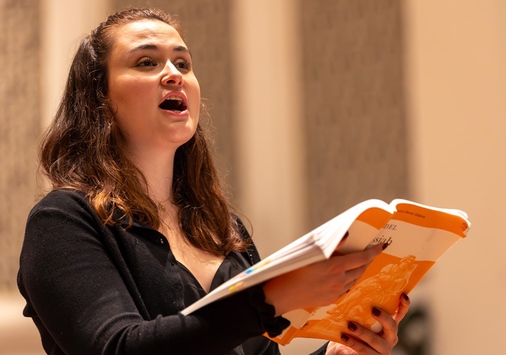
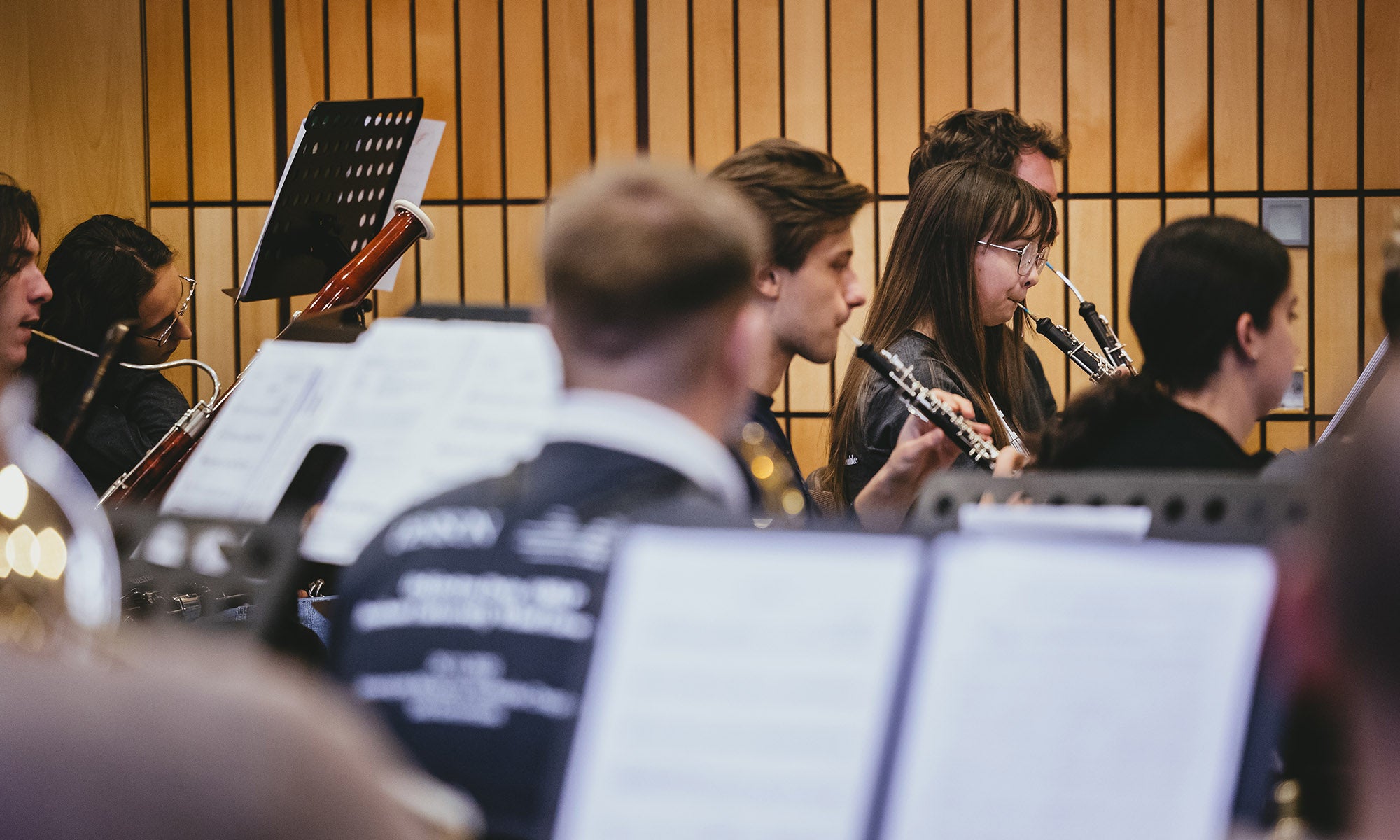
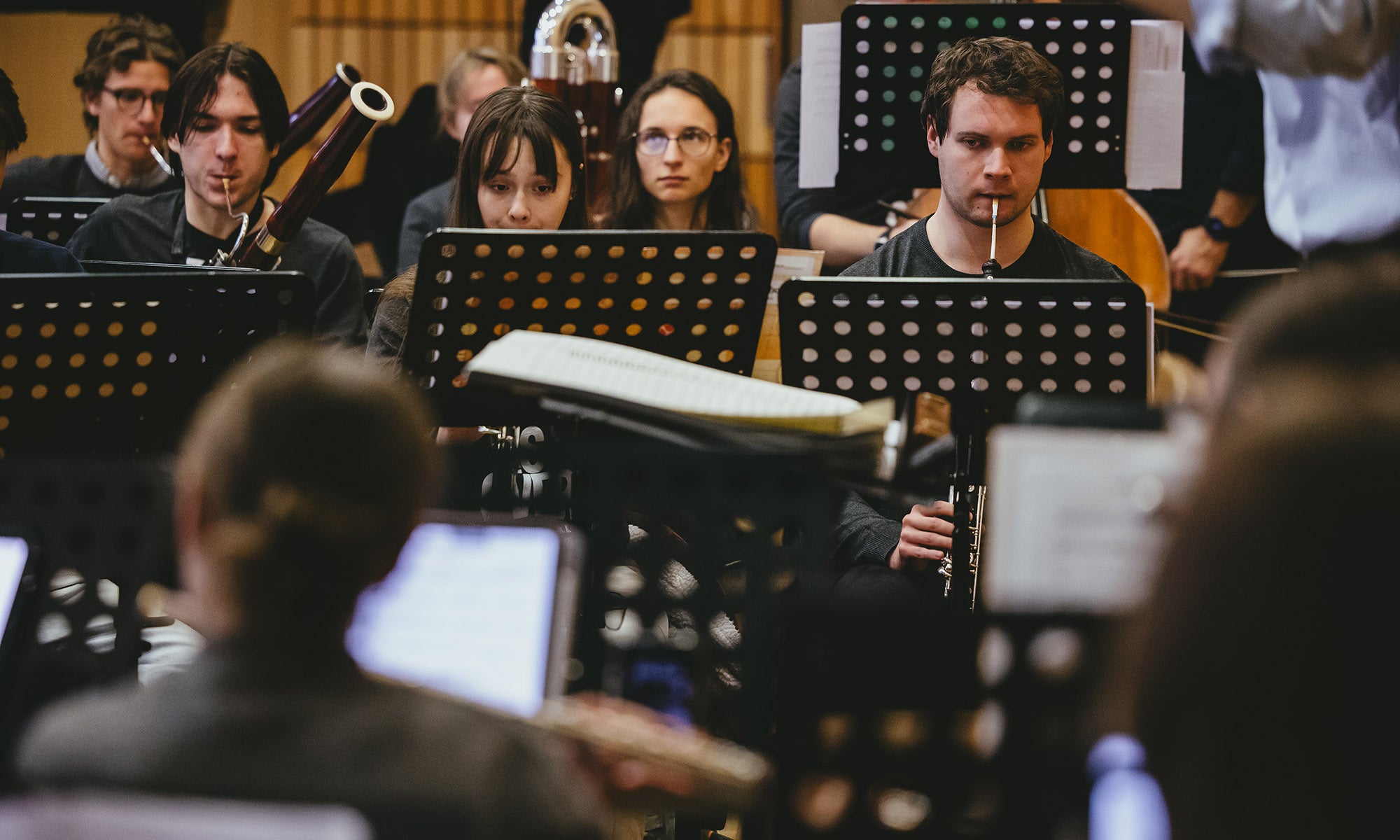
The English horn was playing a solo when Gigi Yakes ’26 saw an audience member crying.
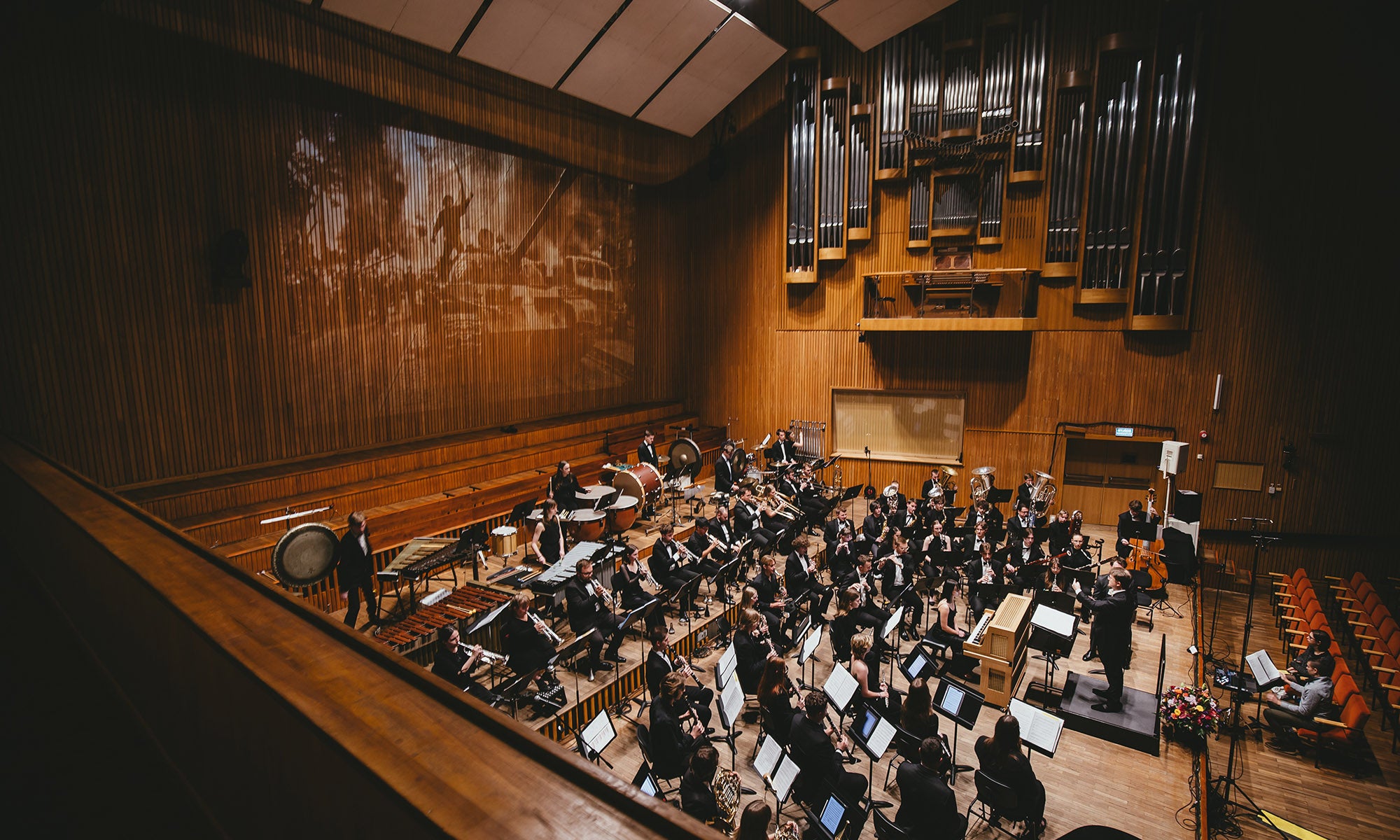
The Krzysztof Penderecki Academy of Music Wind Orchestra and 16 members of the Denison University Wind Ensemble were halfway through their Nov. 29, 2025, performance of “The War is Over,” a musical consideration of the wind-band and its relationship to music about war, that had a special meaning in the context of the Russian-Ukrainian conflict. For an instant, the audience member’s tear-streaked face took Yakes away from her playing.
“Sometimes you get so stuck in the music that you forget how it feels from the perspective of a viewer,” Yakes said. “You’re just focused on entrances, or ‘Am I in tune? Am I playing with my section?’ It was a reminder that this does actually mean something.”
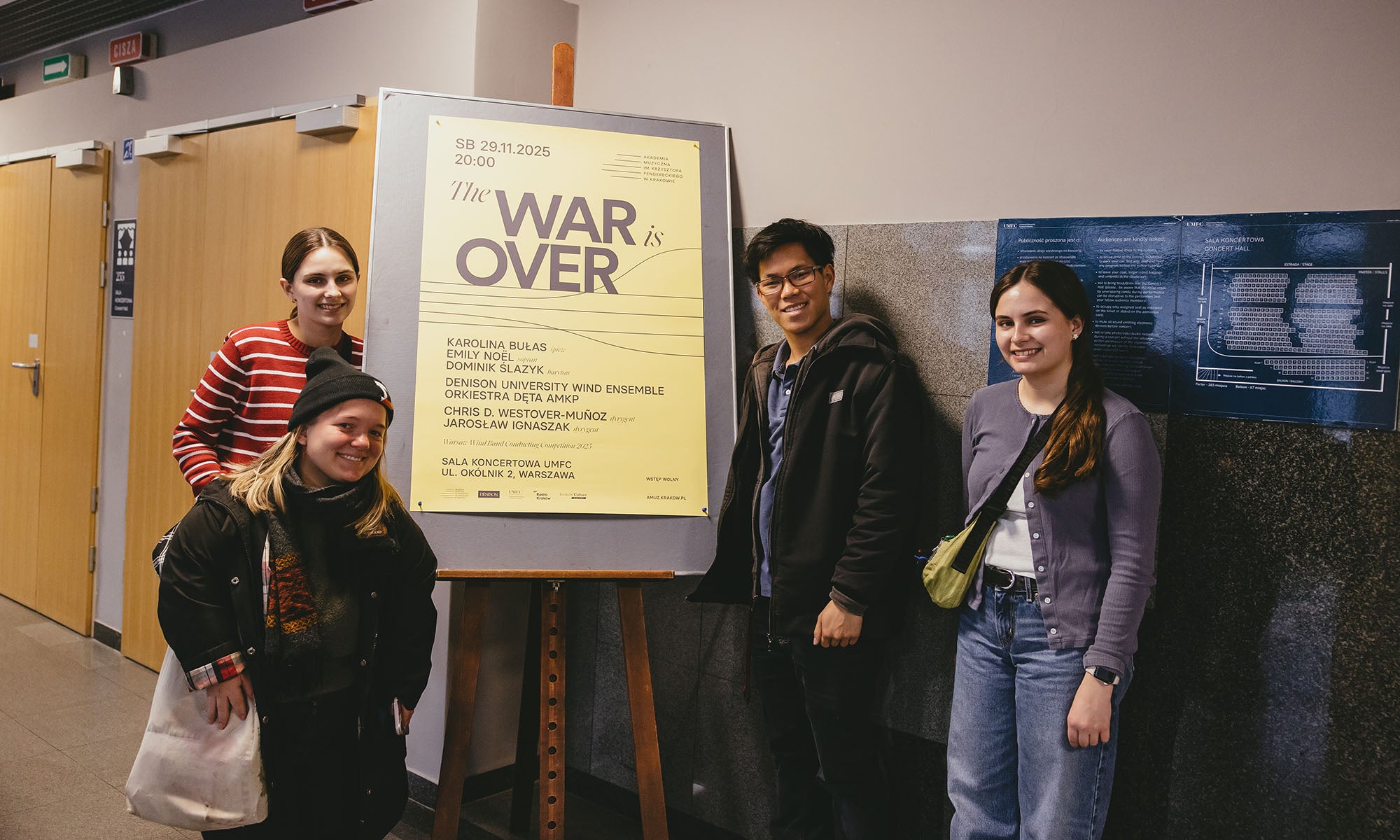
The Denison University Wind Ensemble wasn’t playing in the Eisner Center for the Performing Arts, either. Instead, they were in Warsaw, Poland, thousands of miles away. They had played a version of this program once before, but not alongside other students and not in its adapted version, making the performance unique.
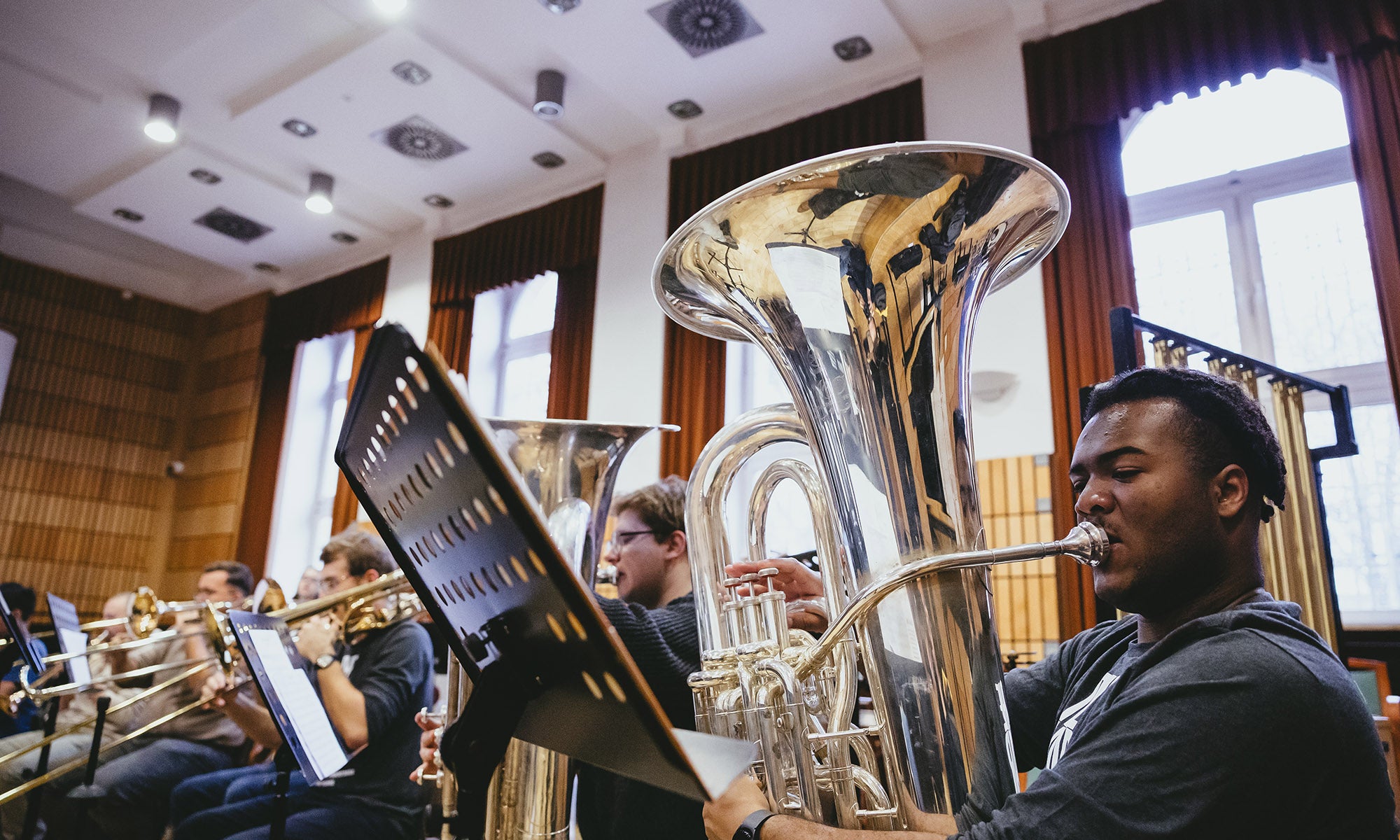
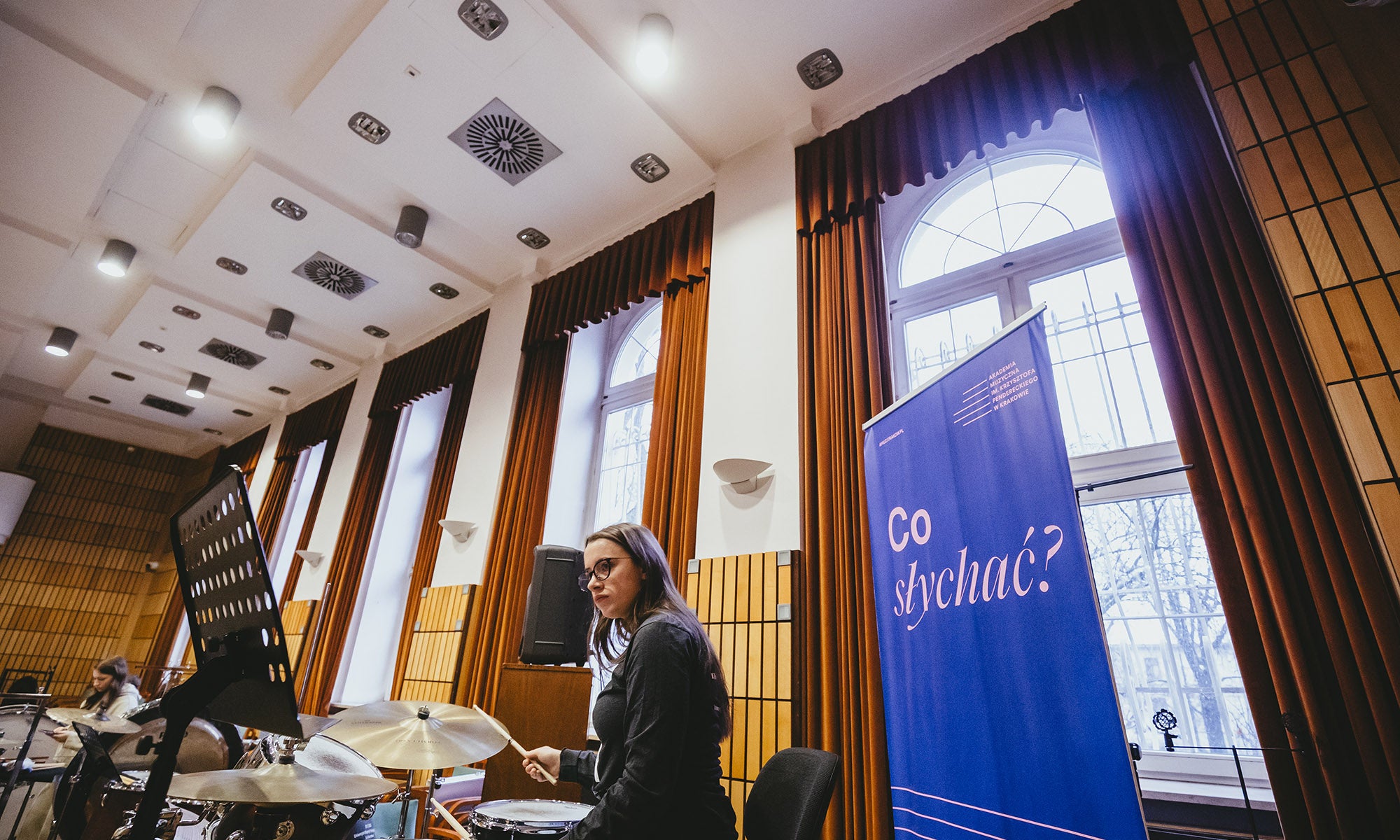
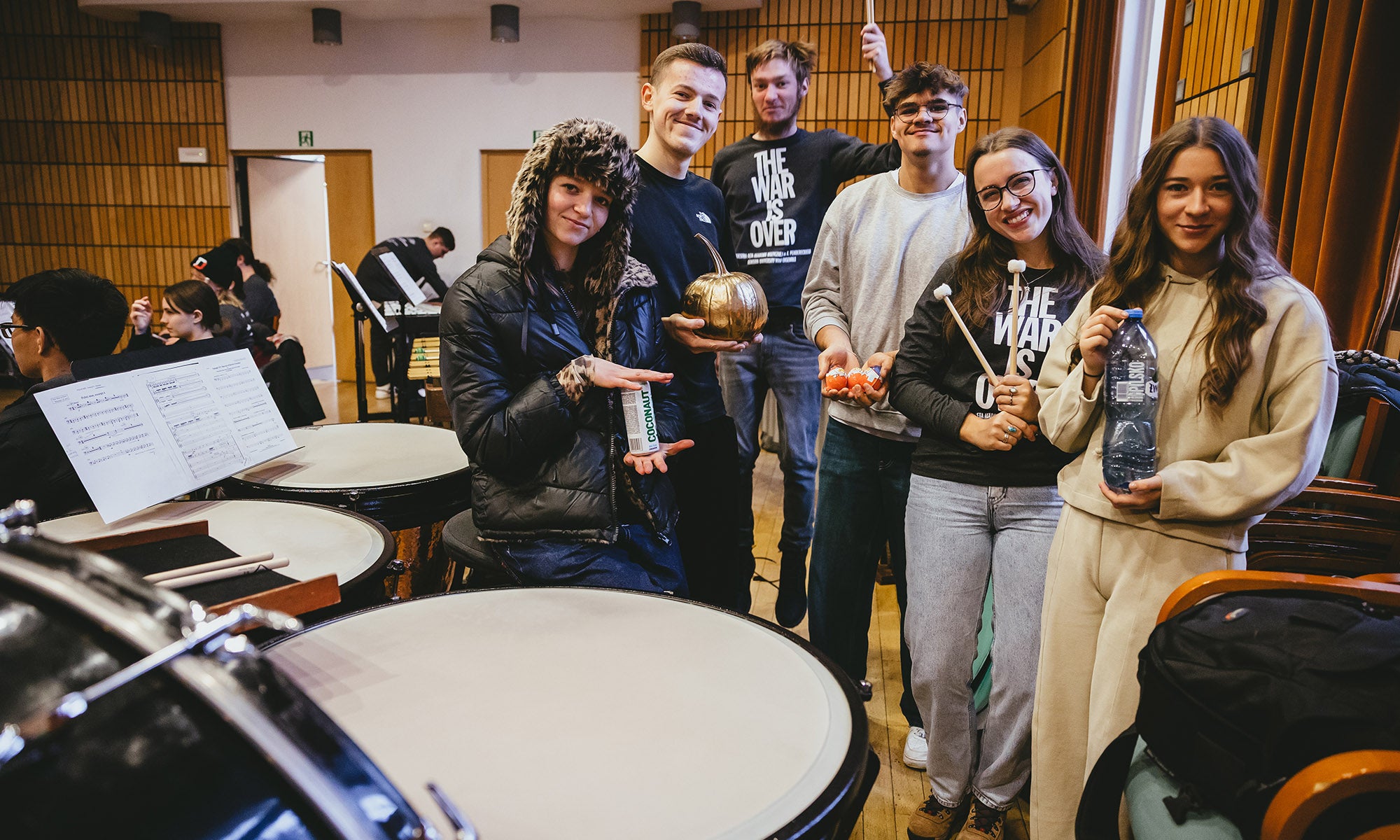
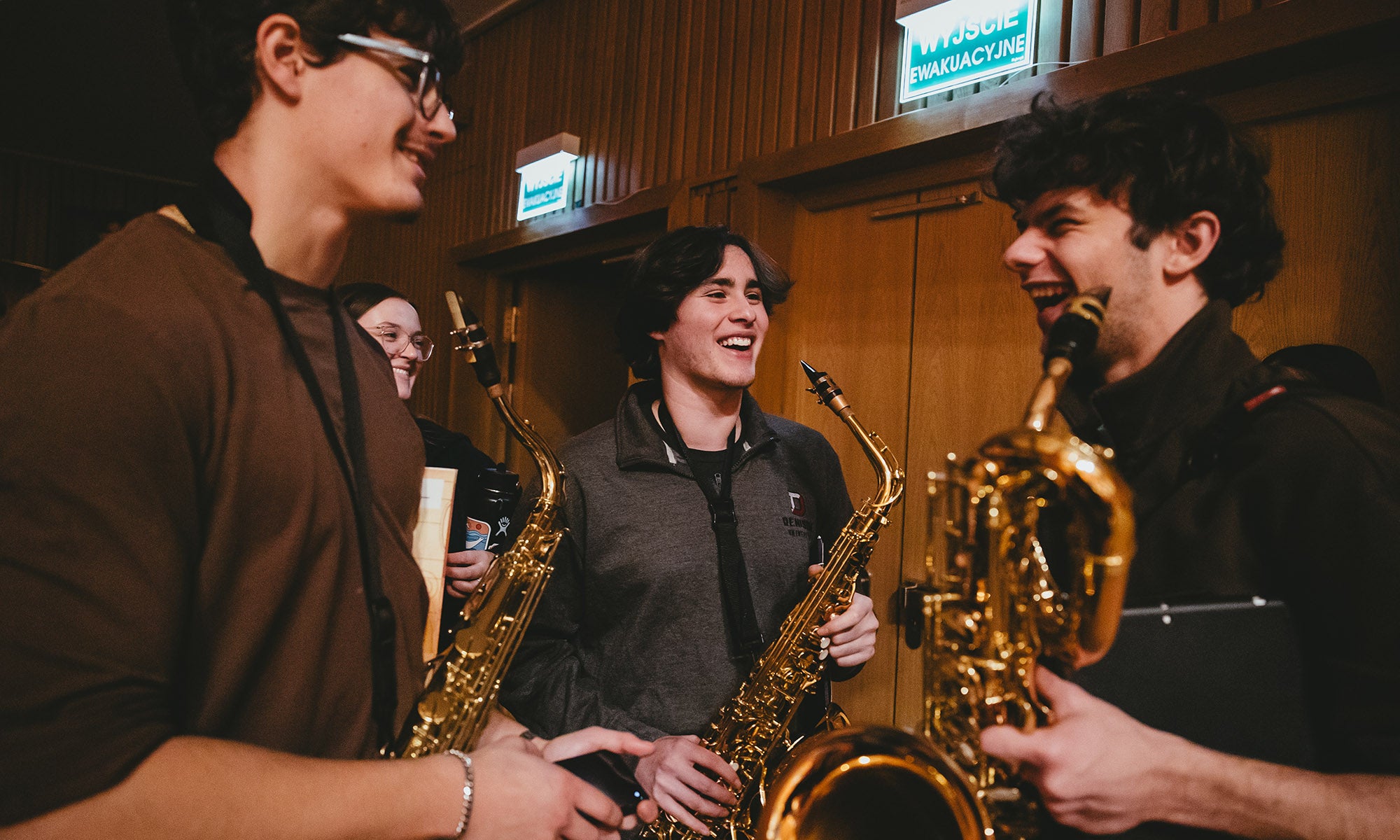
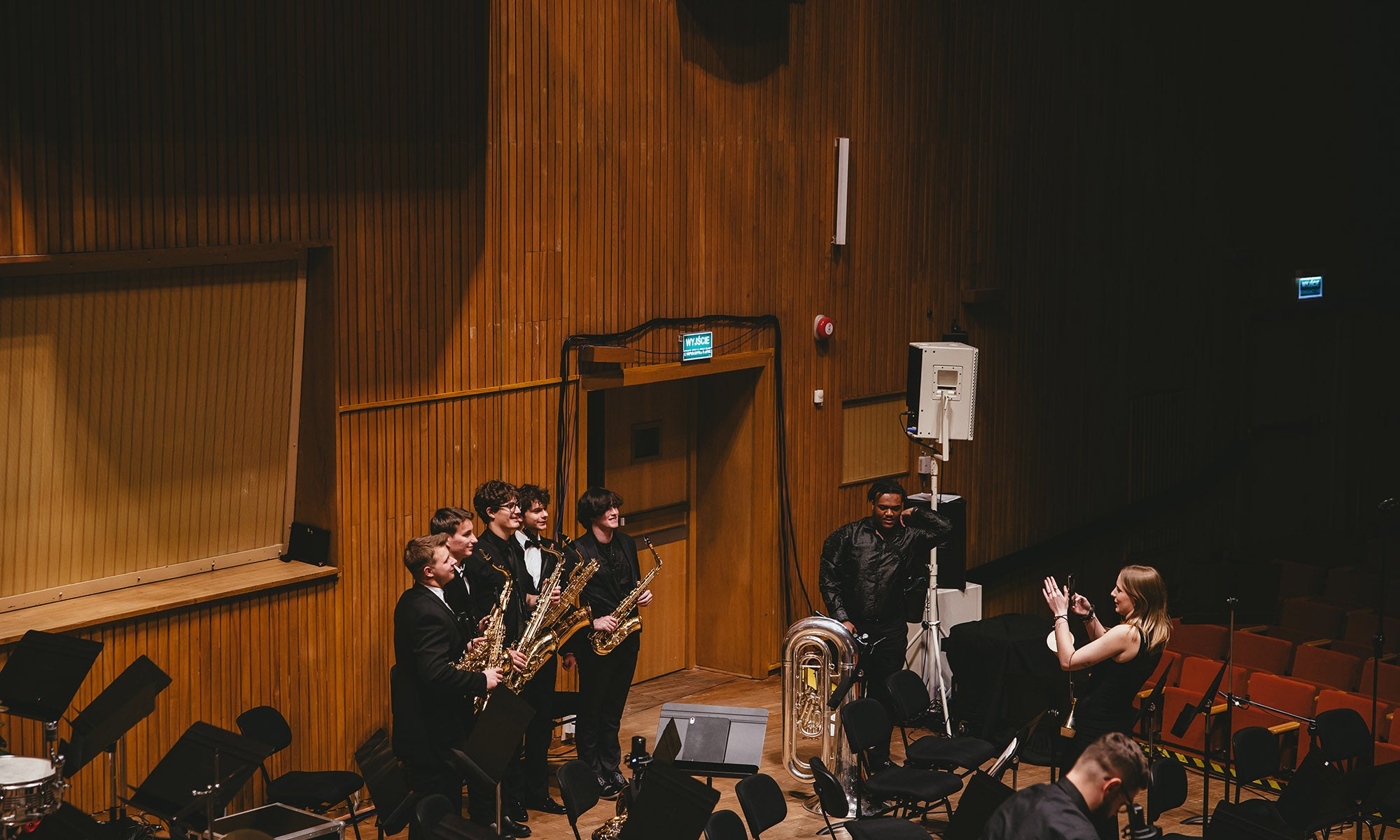
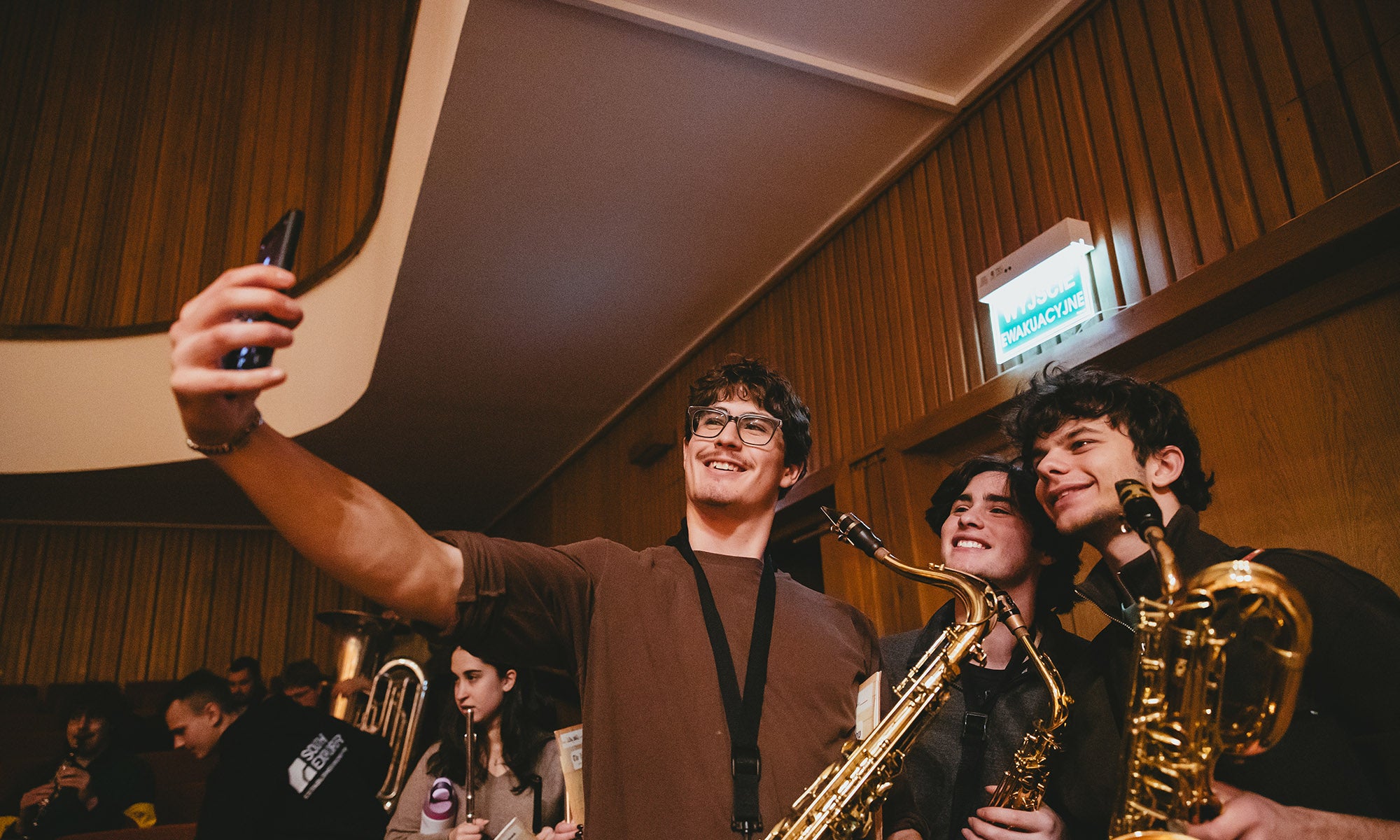
The trip was the ensemble’s first time traveling abroad. Spanning seven days, the group focused on connections with local students, which they formed as they rehearsed four hours a day to prepare for a final concert.
“It was a pretty remarkable experience,” Yakes said. “I had studied abroad the previous semester but just within the week that we went, it was very different because not only was I in a different place, but I was under the context of performing and preparing for a performance, side by side with musicians that I had never met before.”
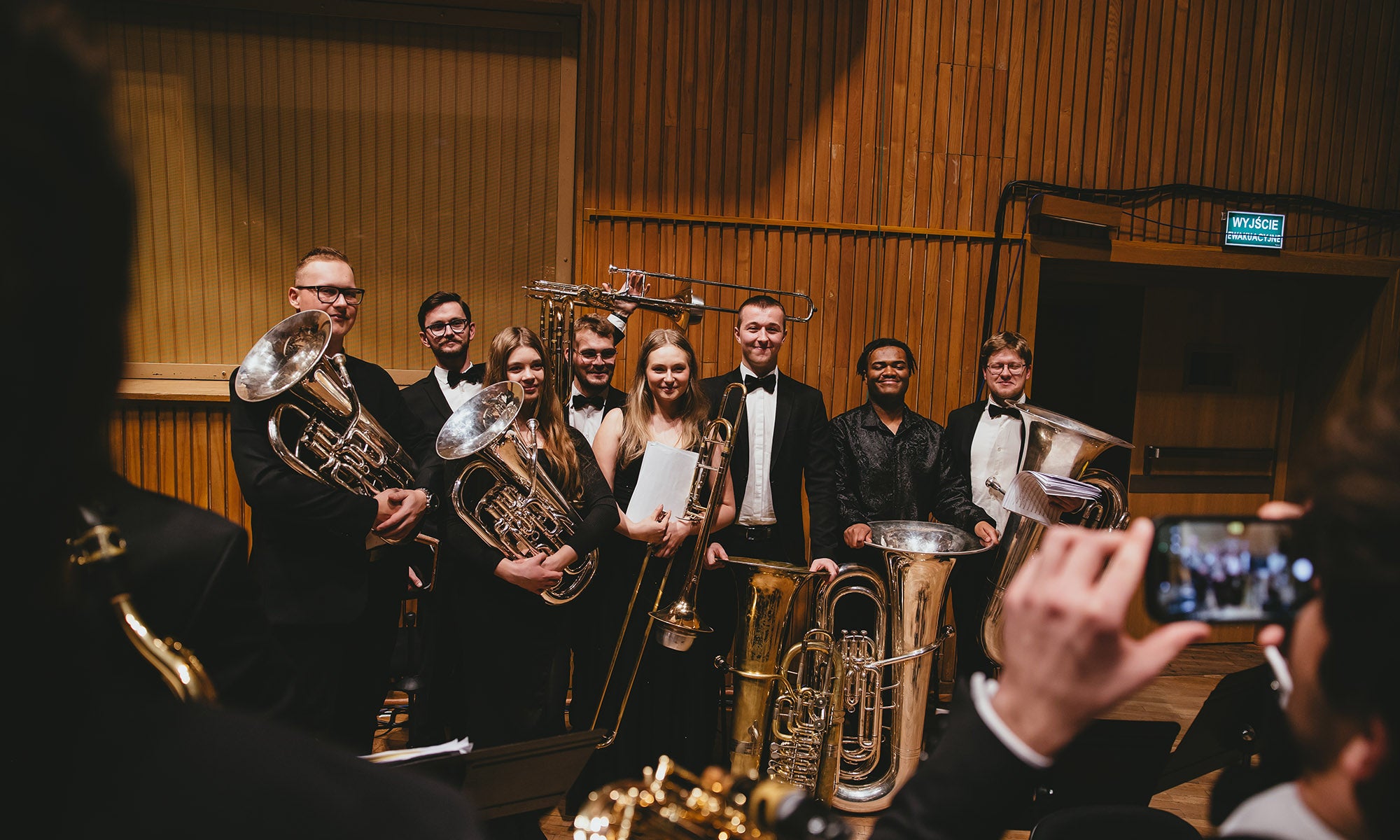
The players playing alongside the Denison ensemble were students from the Krzysztof Penderecki Academy of Music in Kraków. Most of their students’ sole focus is music, and typically they rehearse much more with their respective ensembles during the week than Denison students, filling the trip with music as the group made the most of rehearsal time.
“We had a very full program,” Yakes said. “Even though we had played a lot of those songs before, they were either in different keys or we were on different parts than we played previously, so we learned the program very quickly.”
Yakes is an oboist and said it was nice to meet other oboe players with different playing styles. Students at the conservatory have extensive experience playing their instruments, but she felt that she could still hold her own by the time they played in the final concert.
“I think near the end, we were able to play as one group, equal as individual groups, but also equal as one conjoined ensemble,” Yakes said. “Our final concert went really well.”
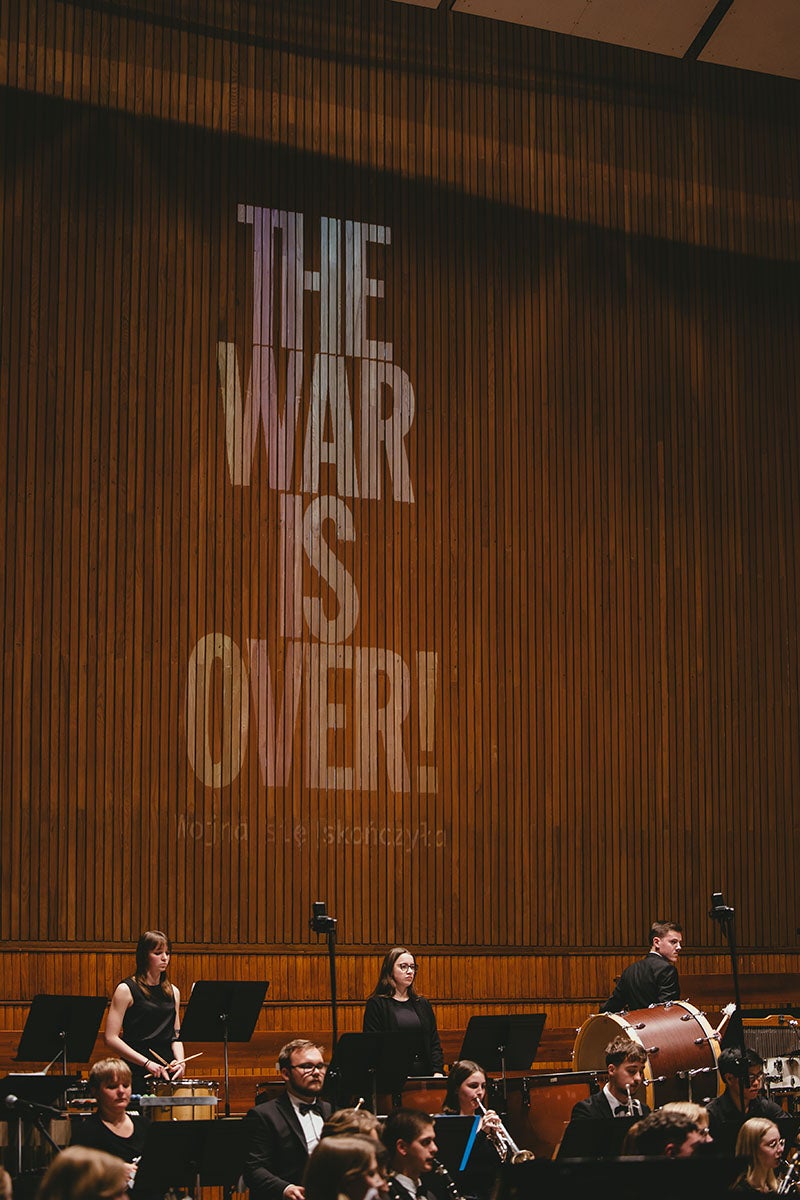
The concert’s pieces centered around defiance against war, or conflict, serving as a testament to the resistance against injustice which can result from armed conflicts. Many of the songs were reminiscent of marches, laments, war songs, and general noise or chaos. Yakes liked the blend of their final concert in Poland versus the one played at Denison.
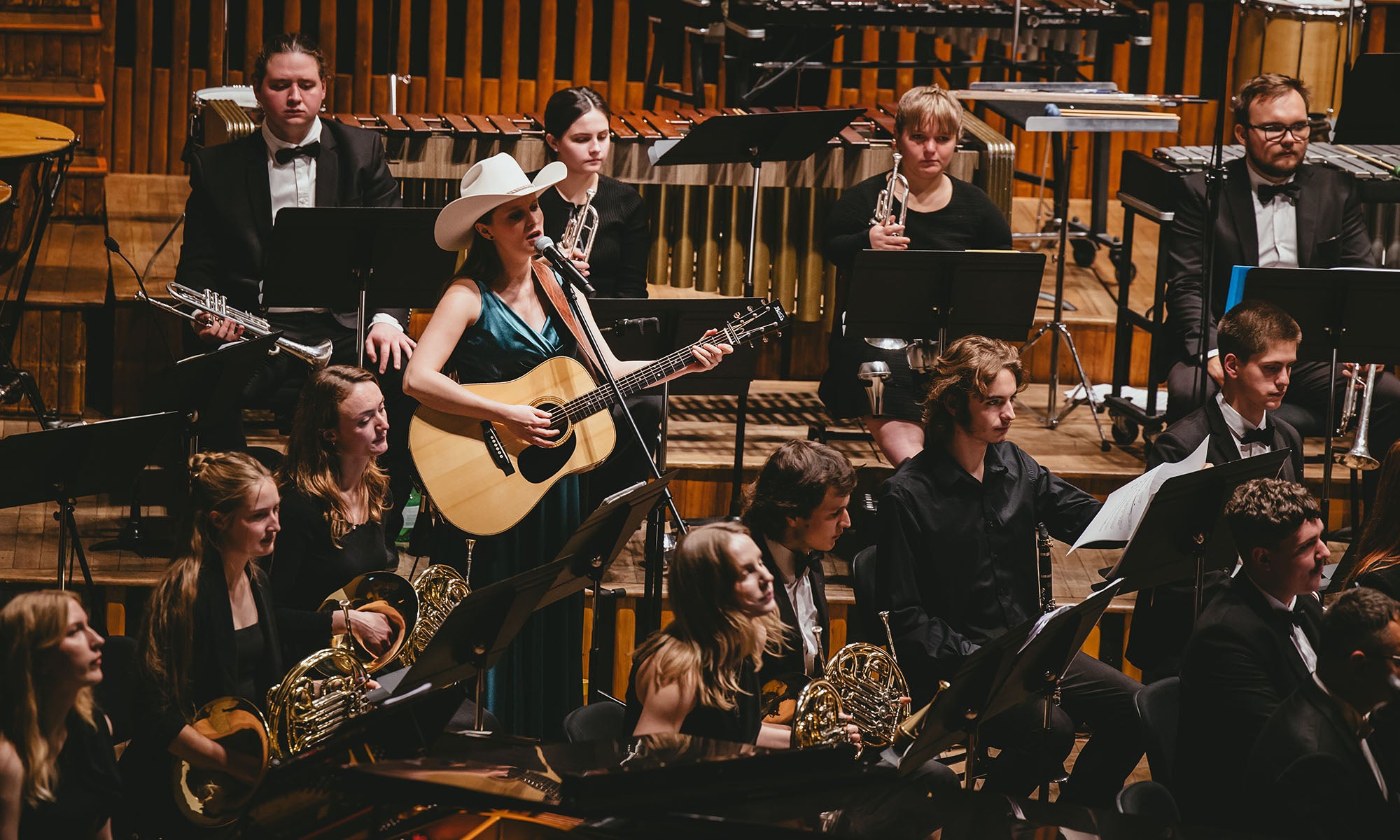
“We got to hear some of our old program, such as American folk songs, sung by a [Polish] folk artist who sings country-style folk … she brought her own little Polish spin to our folk music too,” Yakes said.
She was excited to play the program again and enjoyed performing it in a different country.
“Getting to play in an anti-war program, especially in Poland, was only something you could do here at Denison in a liberal arts setting,” Yakes said.
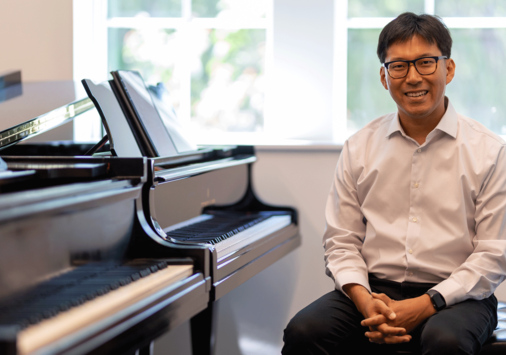
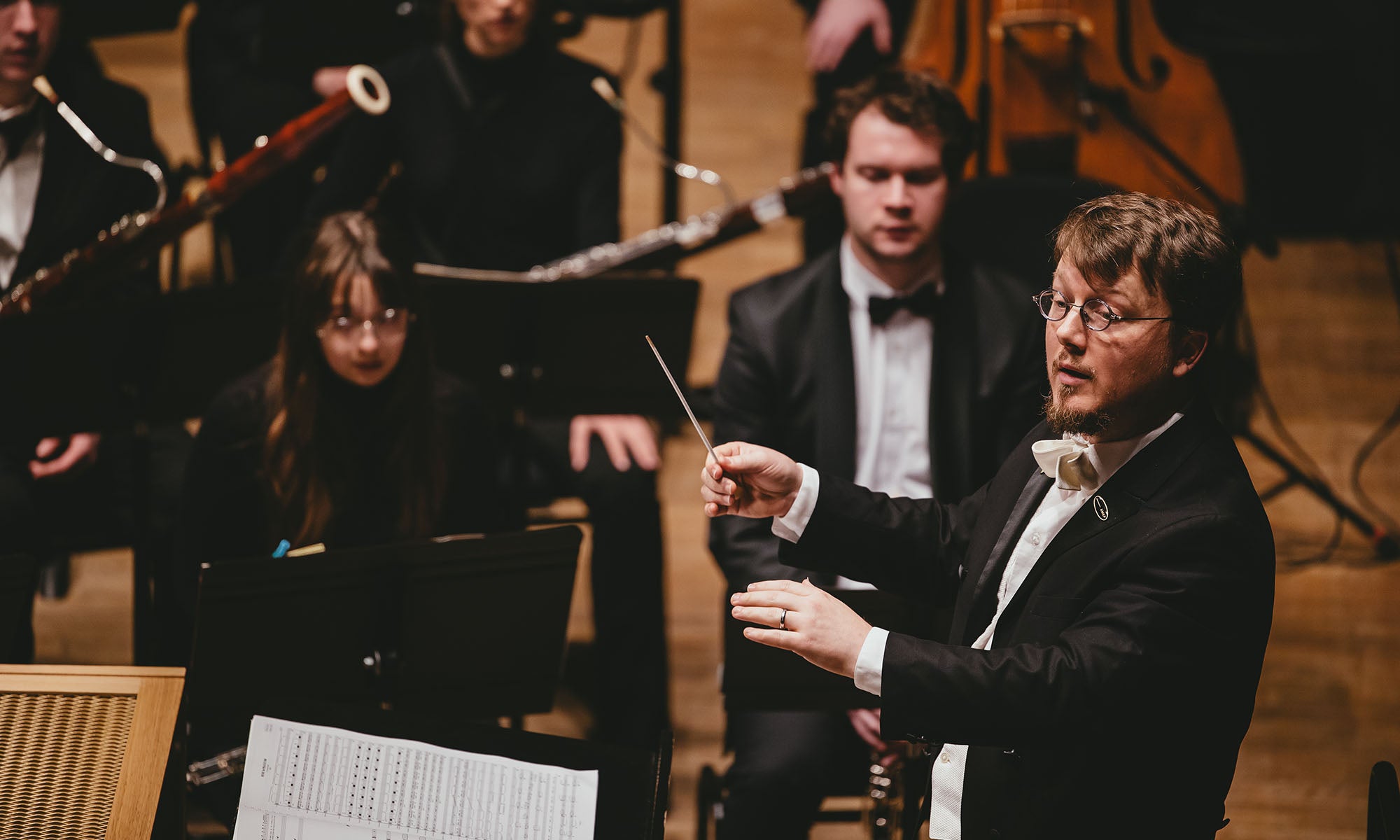
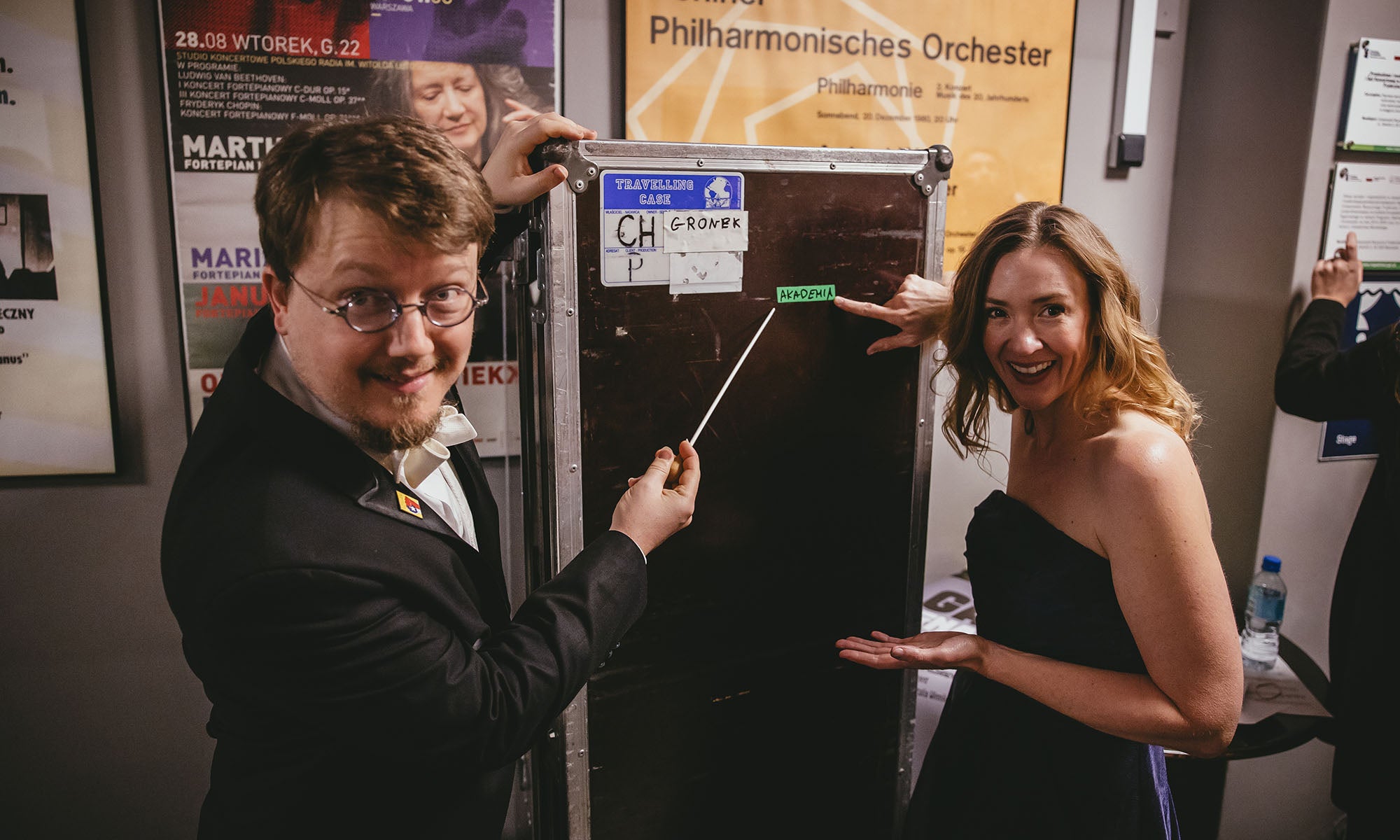
Chris David Westover-Muñoz, an associate professor and conductor of the Wind Ensemble was a driving force behind the trip. He helped initiate Denison’s connection with the conservatory after winning a conducting competition in Poland in 2019. Following this, he and a professor from Poland, Jarosław Ignaszak, visited each other’s schools for concerts and recently collaborated on a CD recording.
Westover-Muñoz thanked Denison for making the financial investment into the trip, saying the program was unique from other international experiences.
“This program was a special opportunity to go and spend four hours a day making music with other musicians,” he said. “That’s different from a tour where maybe you do lots of interesting cultural things, going to museums or even taking classes, but this kind of immersion is just a different thing.”
Given the different commitments of the Denison and Polish university students, Westover-Muñoz said the experience helped students eliminate some assumptions about their own playing level.
“It was cool to see the students play at a really high level, and realize that they’re there,” Westover-Muñoz said. “Sometimes there’s this perception that, because you’re at a liberal arts school, you’re not at the same level. I think our students saw that they could [play at that level].”
He also noted interesting differences in the academic schedule between a Polish conservatory student and a U.S. liberal arts student.
In Poland, the ensemble may put on a concert after only a week of rehearsals. Denison students spend a longer period of time with material, albeit with shorter rehearsals. The conservatory students “were really blown away” that Denison students were committed to a number of academic and artistic pursuits.
“Even the idea that you would do a double major was really shocking to the Polish students, and they were really interested in it,” Westover-Muñoz said.
He hopes Denison establishes deeper ties with the conservatory, furthering future off-campus study opportunities.
“I’m really grateful to our partners from AMKP who made this special collaborative project possible, Rector Prof. Dr. Mariusz Sielski and Vice-Rector for Art and Research Affairs Prof. Dr. Piotr Lato, and to my colleague Emily Noël for making the trip to sing with us,” Westover-Muñoz said. “I’m hoping that this is going to become a special relationship that isn’t a one-off. This is a place we can build a connection with.”
“It [went] by really fast,” Yakes said. “But I genuinely thought it was very, very rewarding. There were definitely struggles, but it’s an experience that is once in a lifetime.”