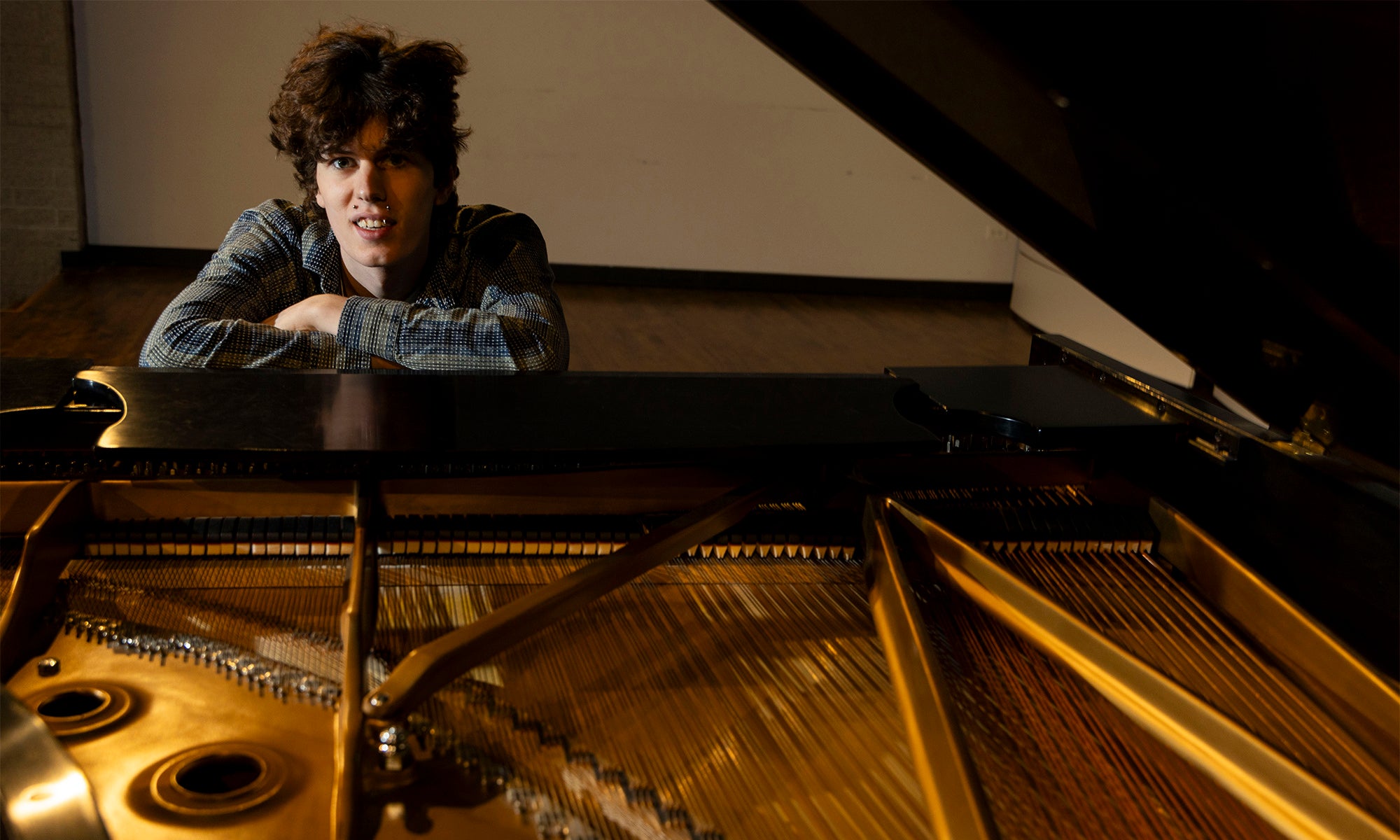
The parents of Cam Moore ’26 sit in Burke Recital Hall listening to their youngest son play a Steinway grand piano, the melodious works of great composers filling the auditorium.
It’s music the Denison senior could not have heard as a 4-year-old. It’s music, his parents were told, he might not enjoy once he regained his hearing through medical technology.
But as his nimble fingers glide across the keyboard, producing the vibrant sounds of Frederic Chopin and others, Geoff ’99 and Deanna Moore ’97 revel in their son’s perseverance and spirit. A child who first learned to communicate through sign language came to their alma mater and spent three years on the debate team.
“He’s never seen himself as a victim, or believed his hearing loss was a limiting factor in his life,” Geoff says. “I’ve never once heard him complain about it.”
Cam treats family, friends, and faculty members attending his senior recital to 45 minutes of classical works. Always the entertainer, he even plays an encore — something that Visiting Assistant Professor San Sung Aum says is rare.
“It took me years sitting through his piano lessons without crying every single time,” Deanna says.
Cam’s parents marvel at their son’s growth during his time at Denison, where he majored in communication and media studies and minored in piano performance. It’s on The Hill, his father says, where Cam met “his people, felt included, and became a happier kid.”
“Proud doesn’t even cover it,” Geoff says.
‘Do you hear that?’
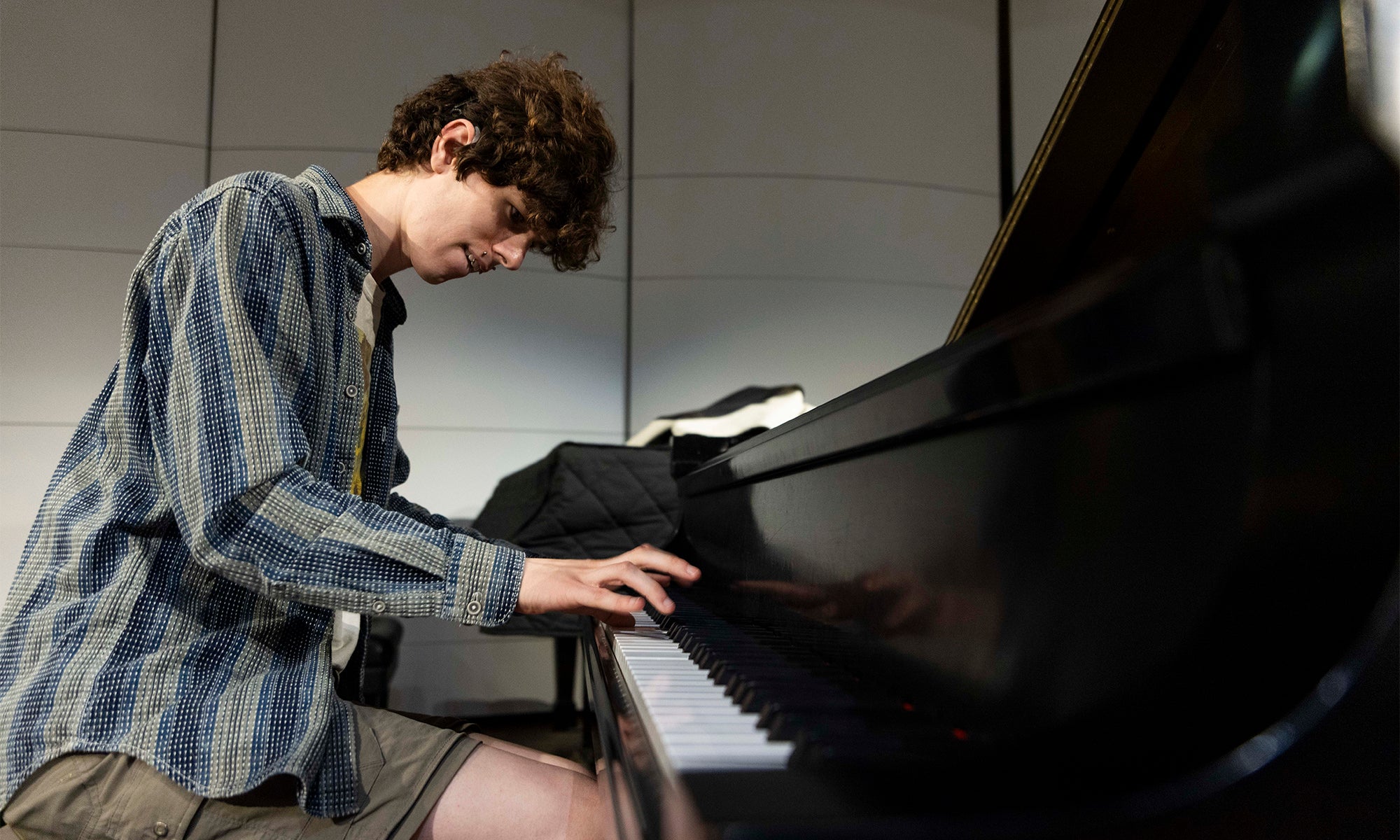
Seated behind a piano on stage in the recital hall, Cam describes his state of mind as he works his way through difficult musical pieces.
“It’s like I’m in a good trance,” he says. “There’s a deep, personal connection I sometimes feel. I guess that kind of connection translates to happiness.”
When Geoff and Deanna first detected Cam’s hearing loss, the last thing they imagined was him one day performing the music of Chopin, Ottorino Respighi, Dmitri Shostakovich, Robert Schumann, and Franz Schubert.
Deanna taught her son sign language and specialists fitted him for hearing aids before the family decided on a cochlear implant, a surgically implanted electronic device that provides a sense of sound to individuals with profound hearing loss.
As he prepared for kindergarten, Cam had to be taught the sources of these new sounds.
“As a family, we did this therapeutic exercise every day where we would say to him, ‘Do you hear that? That’s a bird singing. Do you hear that? That’s the water running. Do you hear that? That’s the dog’s toenails on the floor,’” Deanna says.
Cochlear implant technology has greatly improved, but Cam recalls struggling to decipher different voices as a child.
“Everyone sounded like Daffy Duck,” he says, with a smile.
Doctors cautioned the family that Cam might never catch up to his peers academically, and that learning to read could be a challenge.
But Cam’s defiant attitude gave the family hope. When his elementary school held a “Disability Day” and Cam was asked to speak about dealing with his hearing loss at an assembly, he was incredulous.
“He was genuinely dumbfounded as to why he would be going up on stage to talk about it,” Geoff says. “That’s how he’s always approached life.”
(Grand)mother knows best
Geoff likes telling the story of his mother’s stubborn streak, and the baby grand piano in her home.
The family had heard that children with cochlear implants don’t enjoy music as much as other kids. Grandma Moore wasn’t buying it. She had witnessed her grandson’s fascination with her piano, and how Cam liked to bang the keys.
“My mother is very assertive,” Geoff says. “She got this idea that Cam needed to go learn music to hear better. I told her ‘that’s the stupidest thing I’ve ever heard.’ She didn’t care. She was going to pay for the lessons. I thought, ‘This will last a month.’”
Deanna played the clarinet and majored in music at Denison. Their oldest son, Nolan, graduated from the University of Cincinnati College-Conservatory of Music and is a freelance music producer and audio engineer.
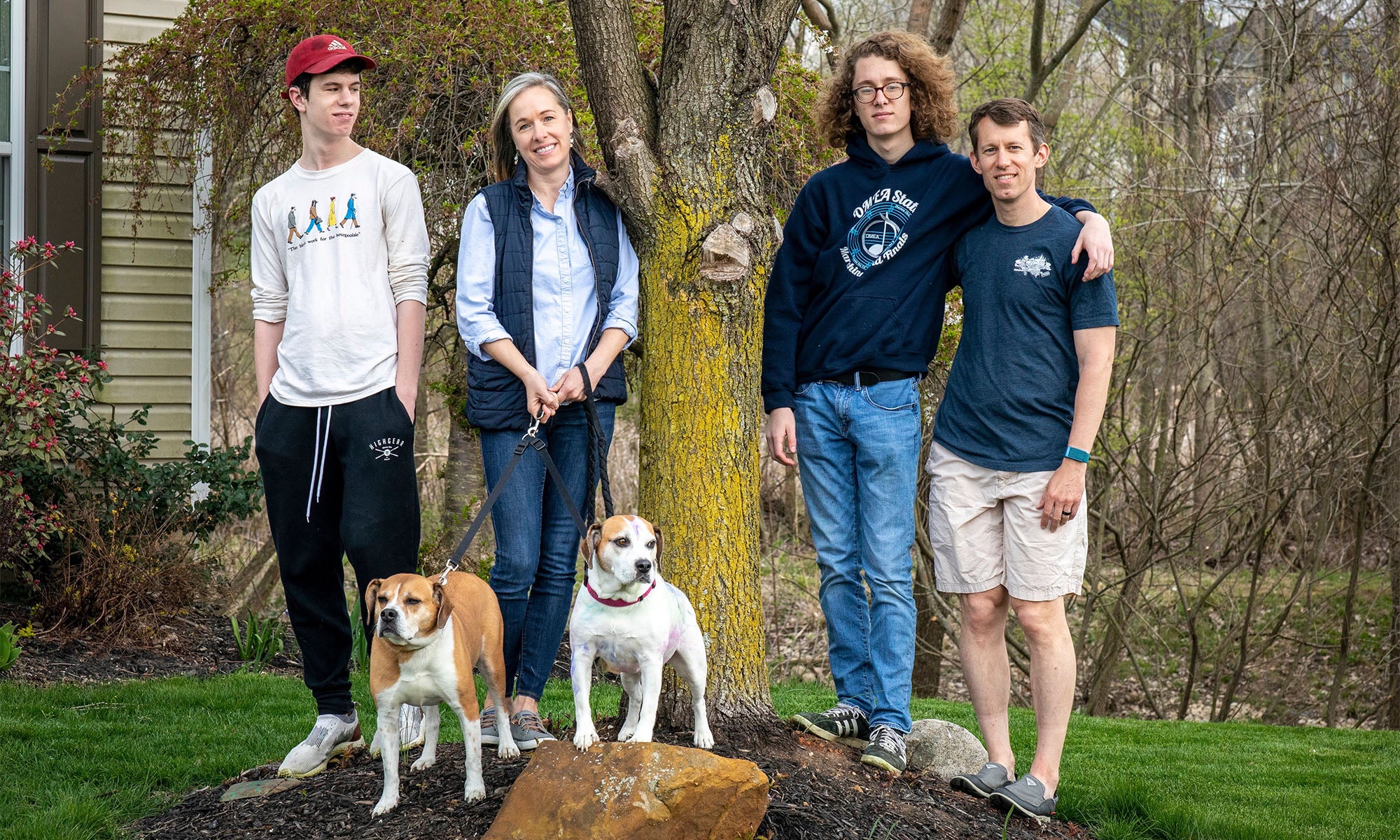
The Moores at home. From the left, Cam, Deanna, Nolan, and Geoff.
When Deanna attended Cam’s first piano lessons, she was astonished by what she heard.
“I listened to him with the teacher, and it was like, ‘Oh my gosh,’ he has an amazing natural talent for this.’” Deanna recalls. “It was evident from the first time he sat down at the piano.”
Cam was intrigued by his first lesson but knew it represented another challenge to overcome.
“Instilling discipline in a 7-year-old with ADHD can be very difficult,” he says. “But I enjoyed playing the piano so I was willing to stick with it.”
The family bought Cam a small digital keyboard. And then another one. And another one.
He played so often that Deanna had to remove the power plugs from the devices to get him to sleep at night. He wore out three keyboards.
Not even the global pandemic and his instructor’s move to Taiwan interrupted weekly lessons. Teacher and pupil worked out a schedule where one of them got up in the middle of the night so Cam could continue his studies.
He took lessons all through high school in Akron, Ohio, before arriving at a critical moment in his development. Where should he attend college? And what kind of college should he attend?
‘Balanced approach’
While music is his first love, Cam’s parents saw a practical side in their son from an early age.
“I thought about the conservatory route, but I think the education I got at Denison is what I really needed,” Cam says. “The music world, especially in terms of performance, is very limited if you’re a pianist.”
Denison prides itself on offering conservatory-quality training while allowing students to pursue other interests.
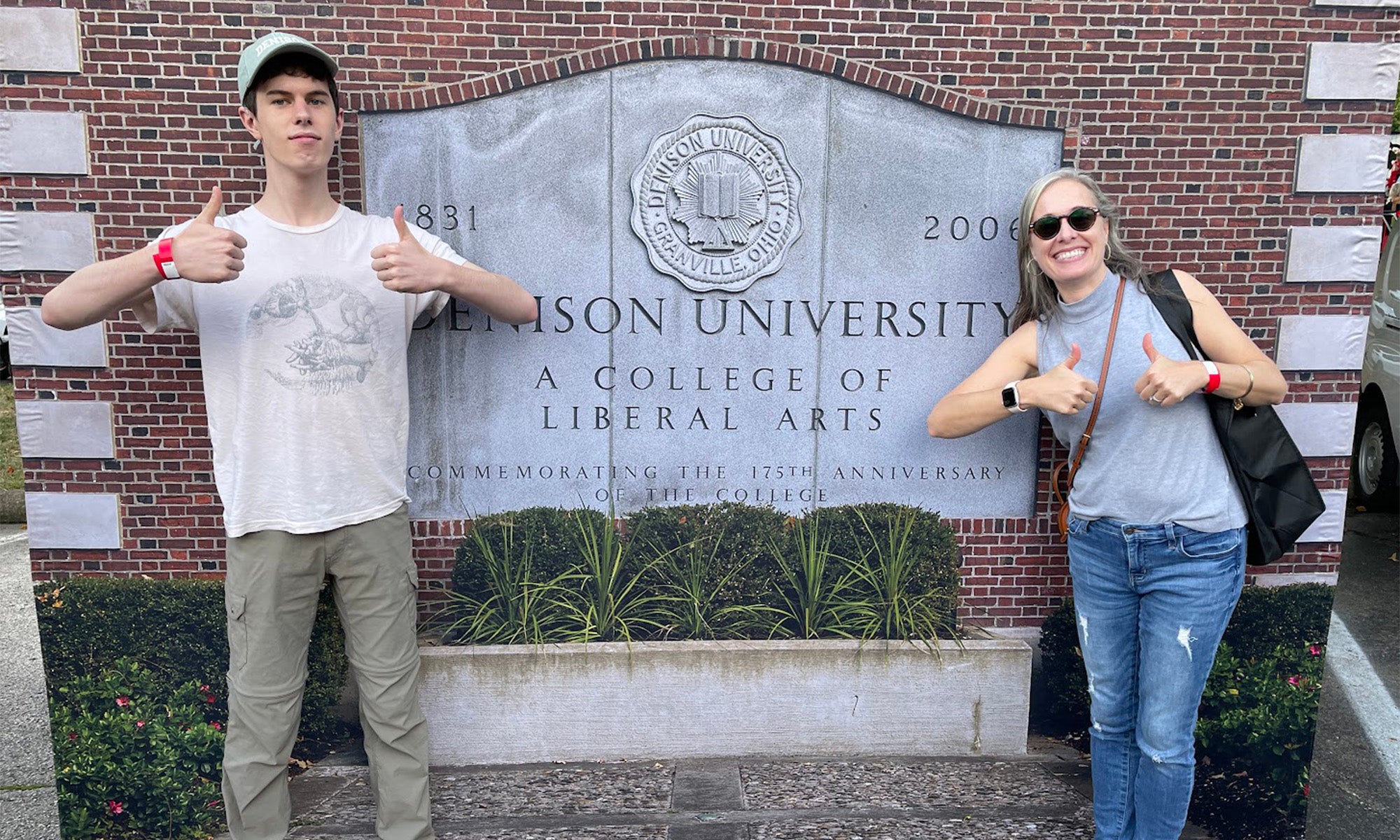
Cam excelled in his communication and media studies courses, and he also enjoyed the freedom of extracurricular activities like the debate team and the CrossFit club. He met students with similar interests who “helped rekindle a social aspect of my life I may have lost prior to college.”
He found membership on the debate team especially rewarding.
“You would have 30 minutes to write an entire debate about a particular topic,” Cam says. “So the fast-paced nature of it and just being able to immediately procure an argument on the spot was really fun to me.”
Deanna recalled her oldest son having to practice six to eight hours a day at the conservatory, leaving little time for exploration outside his discipline.
“I’d say Denison is a more balanced approach, and it was the right one for Cam,” Deanna says. “His musical training was outstanding. He had regular access to extremely talented teachers, and they pushed him and made him a much better player.”
Before they started working together, Visiting Assistant Professor San Sung Aum had heard Cam play at his weekly performance classes. She would have never guessed he had hearing issues.
Aum challenged Cam to expand his repertoire, introducing him to the works of more composers.
“Cam is fun, he’s spontaneous, and very self-motivated,” Aum says. “He’s an excellent pianist.”
Although trained in classical music, he grew up with a Velvet Underground poster on his wall. He’s also a fan of Radiohead, Adrianne Lenker, and System of a Down.
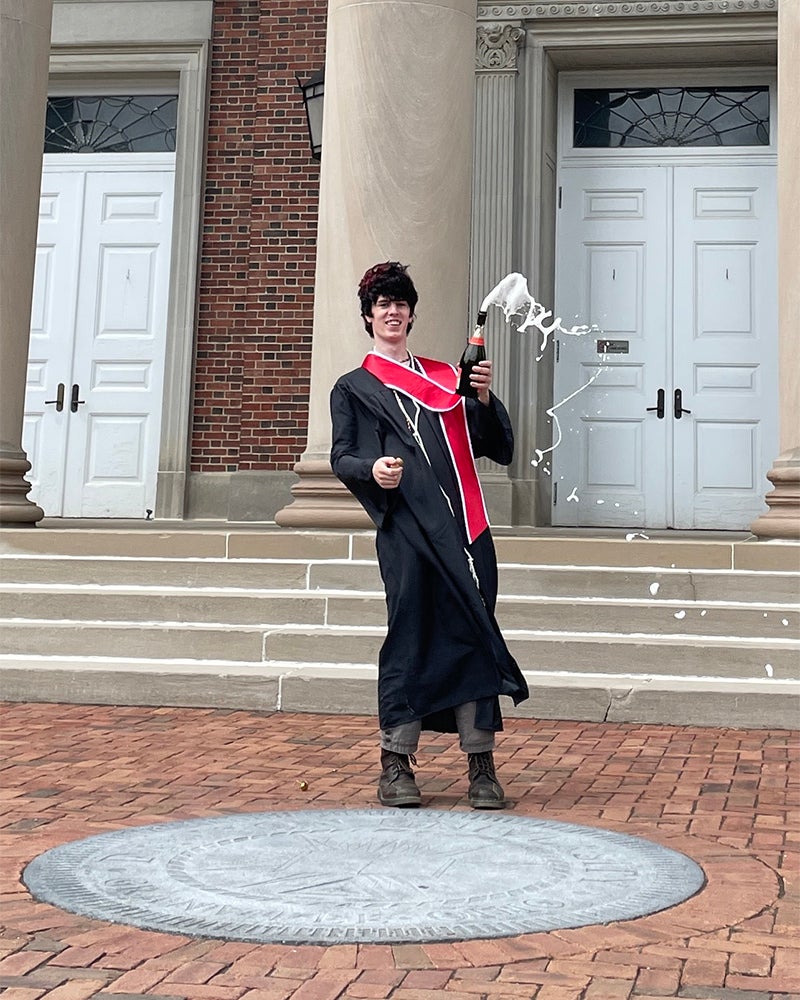
Cam is spending the summer looking for work that combines his communication and musical ambitions. He might end up moving to New York with his brother.
No matter where his career takes him, Cam’s favorite instrument will be part of his life.
“I remember going to a house show in Cincinnati and the piano was open after the band finished its set,” Cam says. “I sat down and started playing, and a crowd formed. I’d never experienced anything like that outside of a formal event. It’s one of those moments that reminded me how much I love to play and perform.”