Denison Magazine
“There’s something deeply symbolic about meeting to honor Martin Luther King Jr. as the first thing we do together this semester,” Denison President Adam Weinberg said, welcoming several hundred students, faculty, and staff to the 2026 MLK celebration brunch in the Mitchell Center on Monday, Jan. 19.
“We are taking time as a community to reflect together on King’s vision of living together, working together, and building a democracy together across our differences,” Weinberg said.
This year’s MLK Day theme, “Hidden Figures: Honoring Past and Present Civil Rights Leaders Who Moved MLK’s Legacy Forward,” honored lesser-known civil rights leaders for their significant contributions to King’s life’s work.
It was appropriate for the day’s celebrations to open with students joining together to help others. As they worked on service projects with Emily Vermillion, associate director of the Alford Center for Service Learning, students were also learning how to build community and civic capacity.
“Align your values with where you spend your time,” Vermillion said. “Be thoughtful about where you spend your money and support organizations that are supporting missions that you care about.”
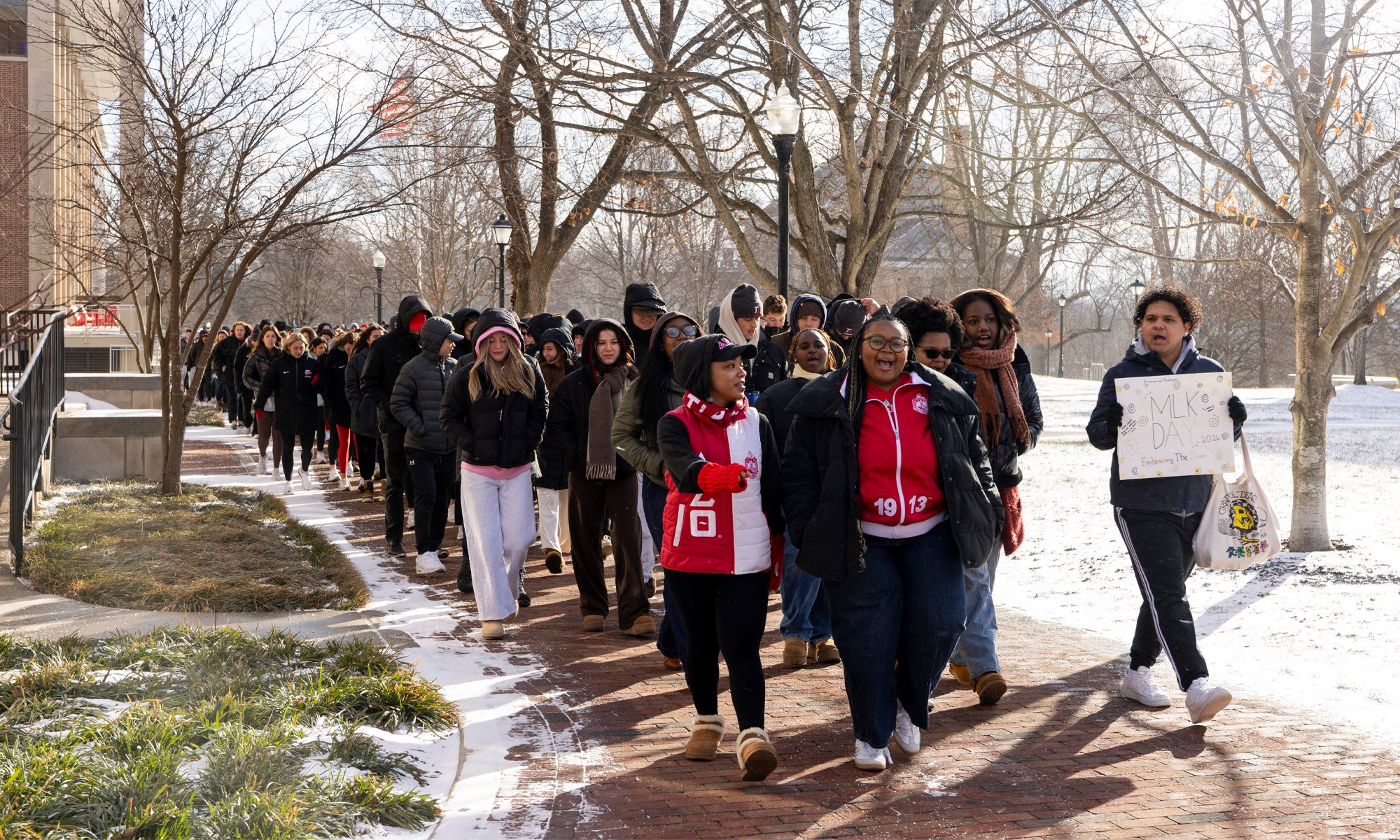
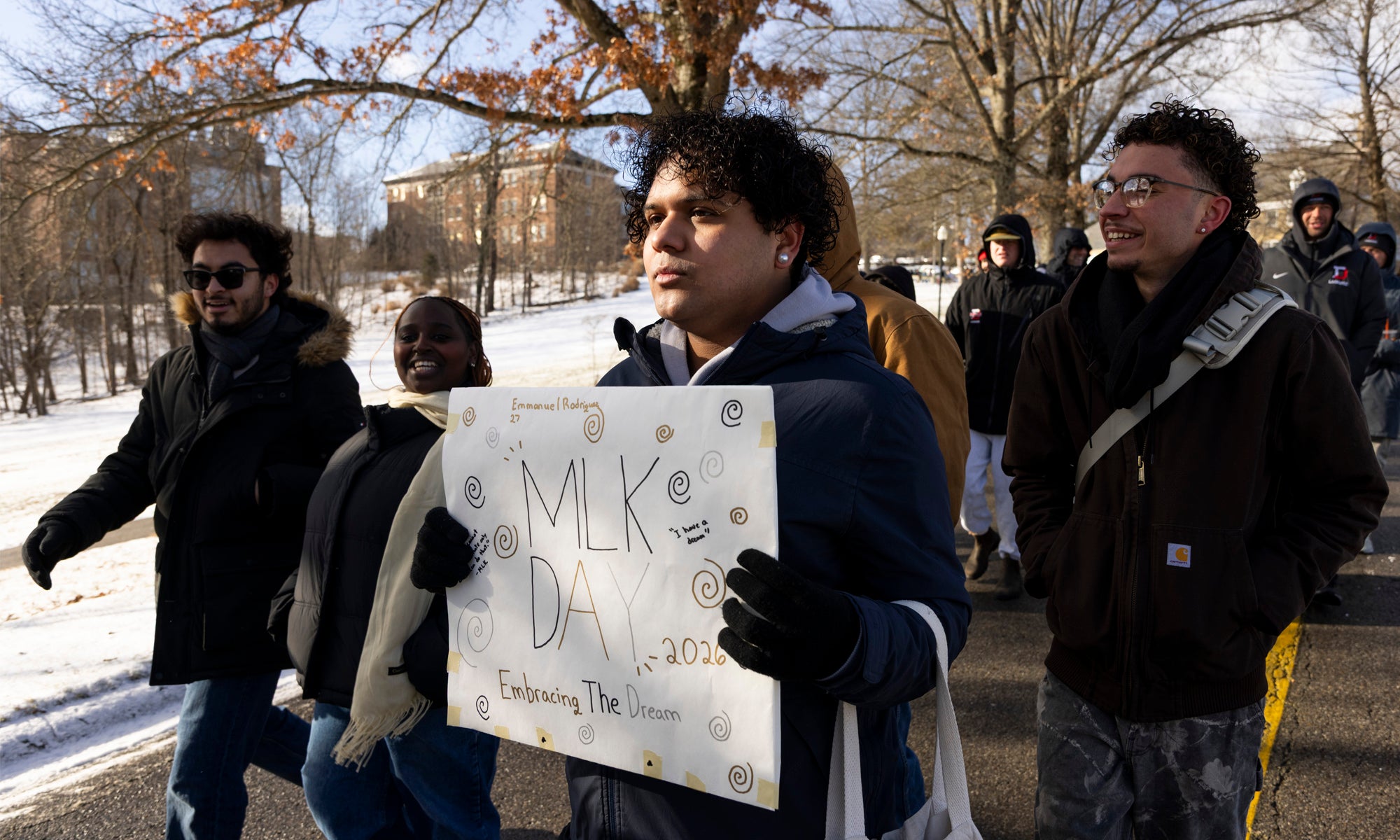
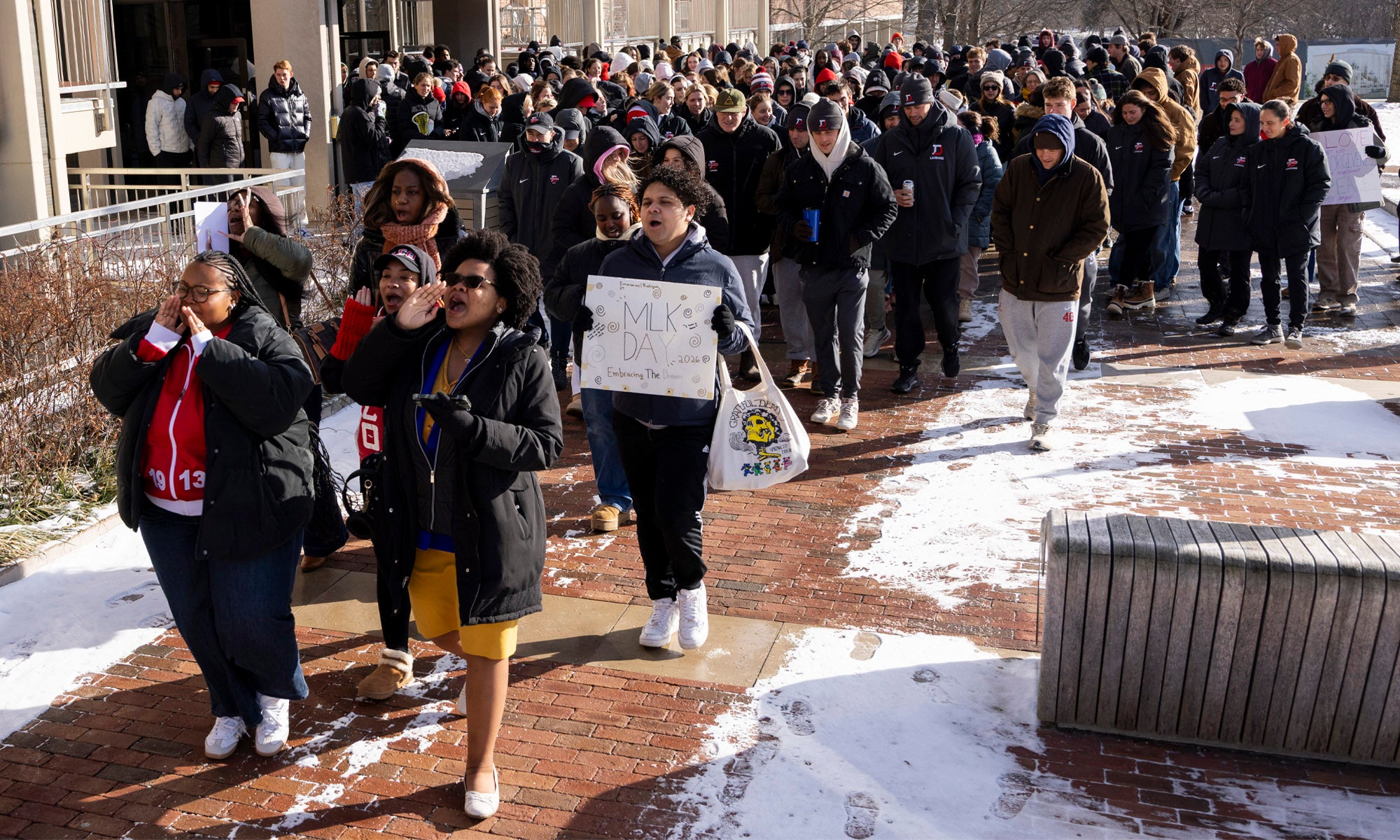
After projects were completed, students gathered at Denison’s flagpole for the traditional march to the MLK brunch in Mitchell. Sunshine helped offset the cold temperatures. The community carried signs that said, “Choose love over hate,” and chanted in unison to a call-and-response.
At Mitchell, they were greeted with the savory smells of sausage and eggs. The poignant sounds of artist Stephen Stringz’s electric violin serenaded the crowd as he augmented well-known standards such as “Stand By Me” with his musical improvisations.
Richard Brown, associate dean of student life, Ayana Hinton, professor of biology, and Ric Hall, vice president for student life, joined President Weinberg in offering comments.
“Today, we’re lifting up the power of dialogue,” Brown said. “In a world shaped by polarization, rapid change, and diverse perspectives, strong dialogue skills are essential for leadership, collaboration, and civic engagement.”
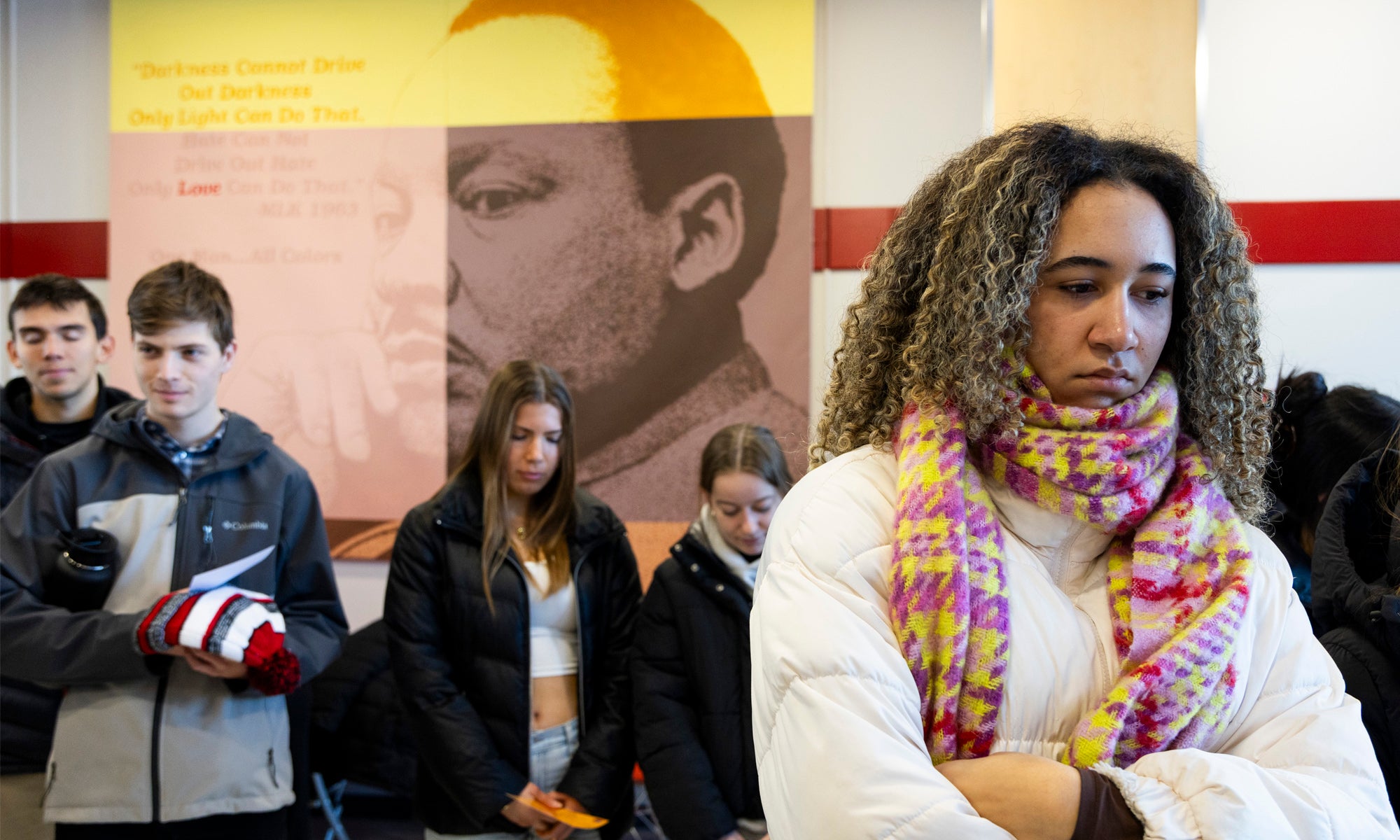
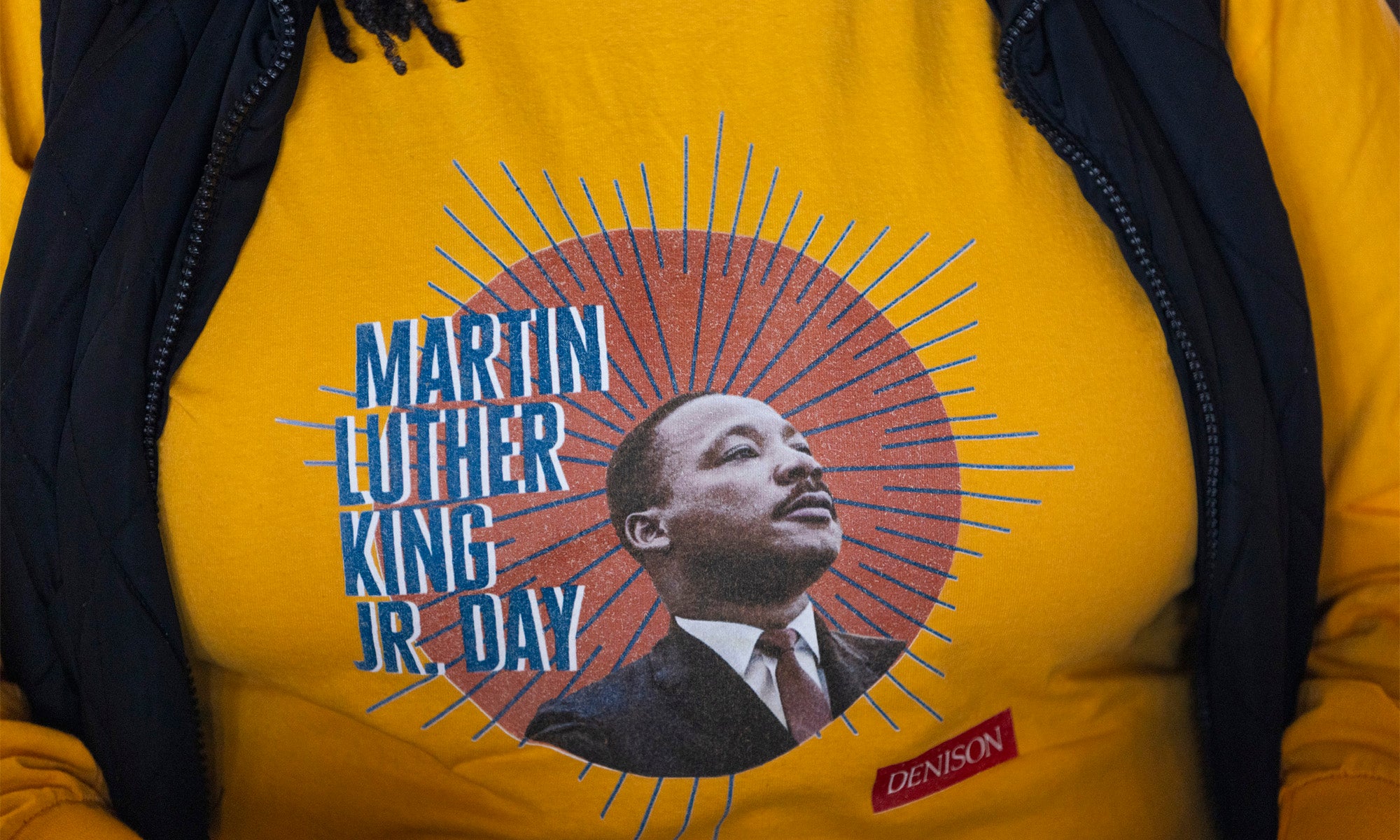
Immanuel Mamphey ’28 shared reflections from a student perspective. “We need to recognize the many figures that shaped and brought King’s message forward,” he said. “That includes the ordinary people who wrote the letters, cooked the meals, and opened their doors. This can never be the work of one person alone.”
That afternoon, many in the community attended a series of workshops, from “Chicago Hip Hop as Cultural Archive” to “Fighting for Fair Pay in the WNBA.”
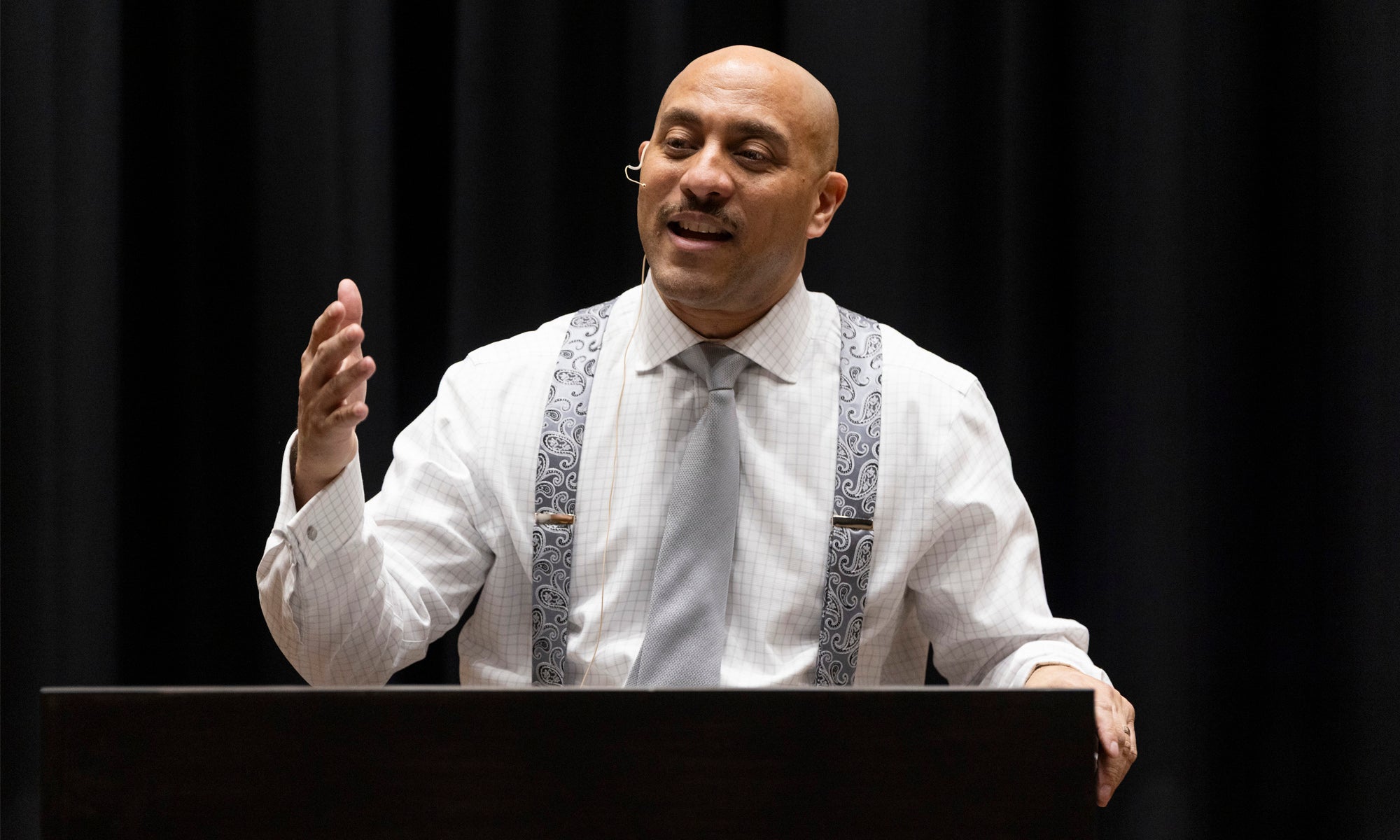
The celebrations reached a crescendo when author and historian Hasan Kwame Jeffries took the stage in Herrick Hall as the keynote speaker.
“The truth is, hidden figures are not just behind us in archives,” he said. “They are the people who see injustice and confront it all around us — those who speak when silence is safer, who act when the outcome is uncertain.”
“The most important figures are not those we name,” said Jeffries, an associate professor of history at Ohio State University. “They are those we become.”
Young people have always been the ones to move movements forward, he said.
“Democracy is not something you inherit — it is something you must build and remake,” he said. “Movements advance because people decide to take responsibility for the moment they are living in.
“Students, this moment belongs to you.”
January 26, 2026