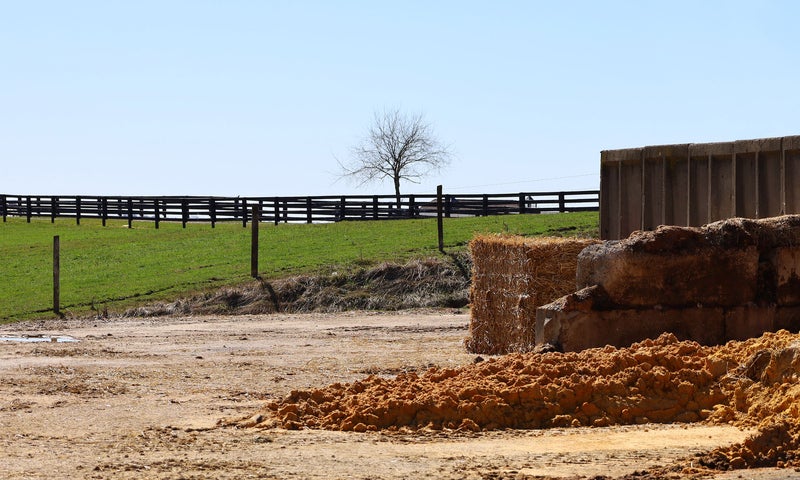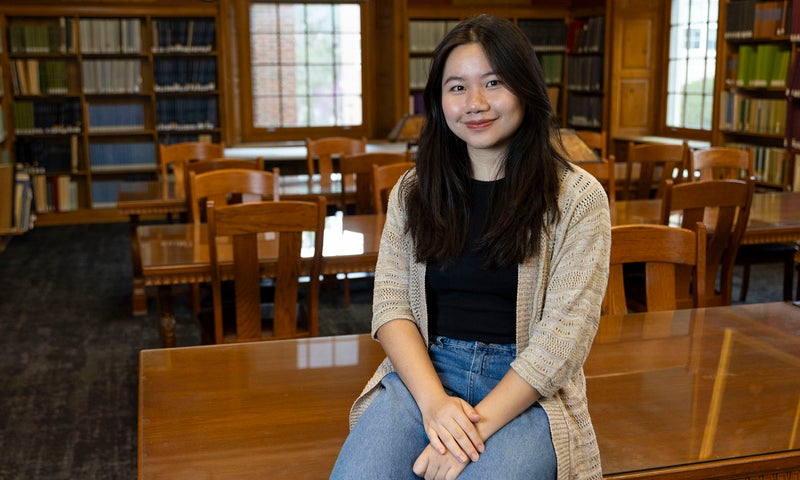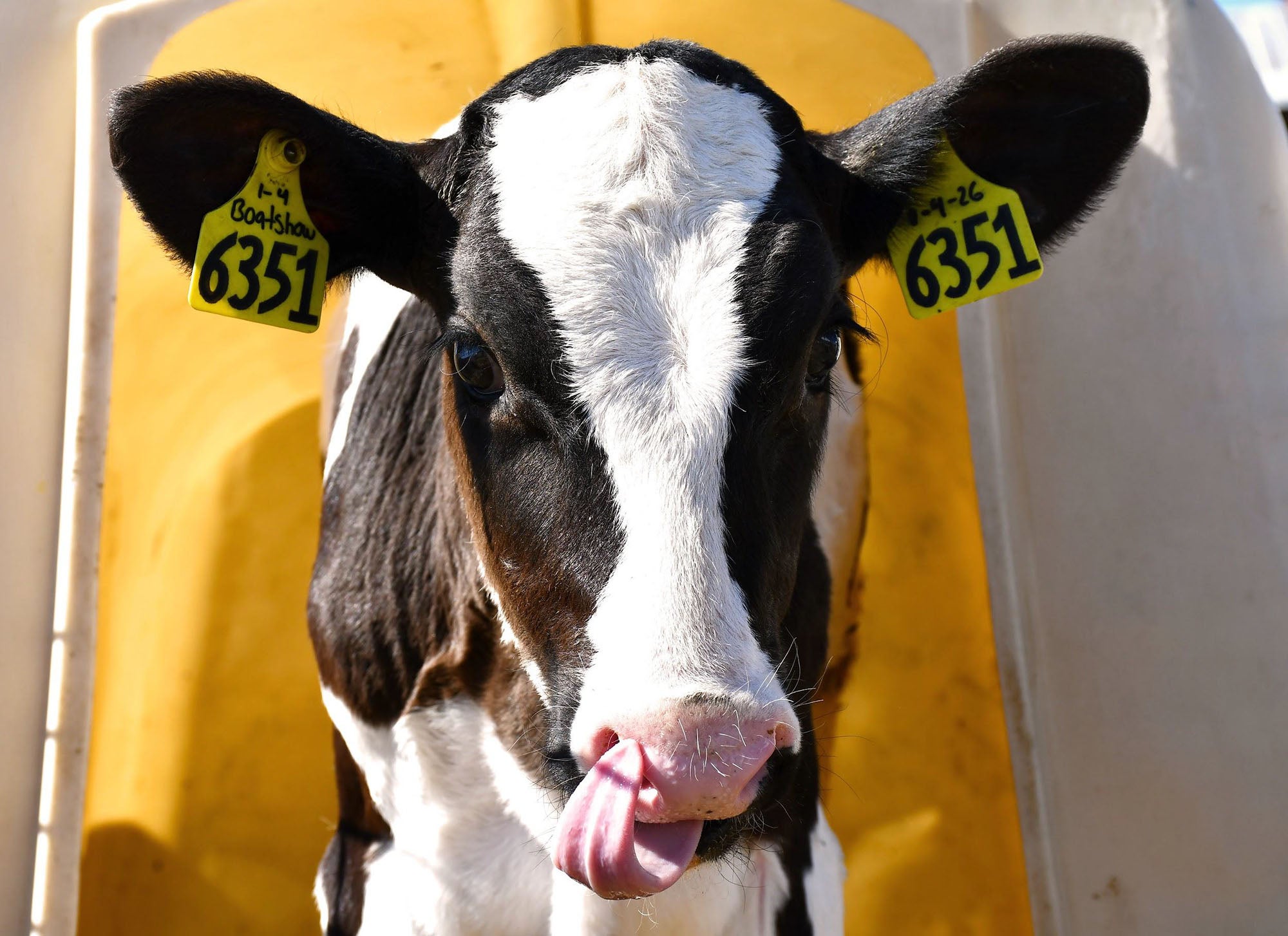
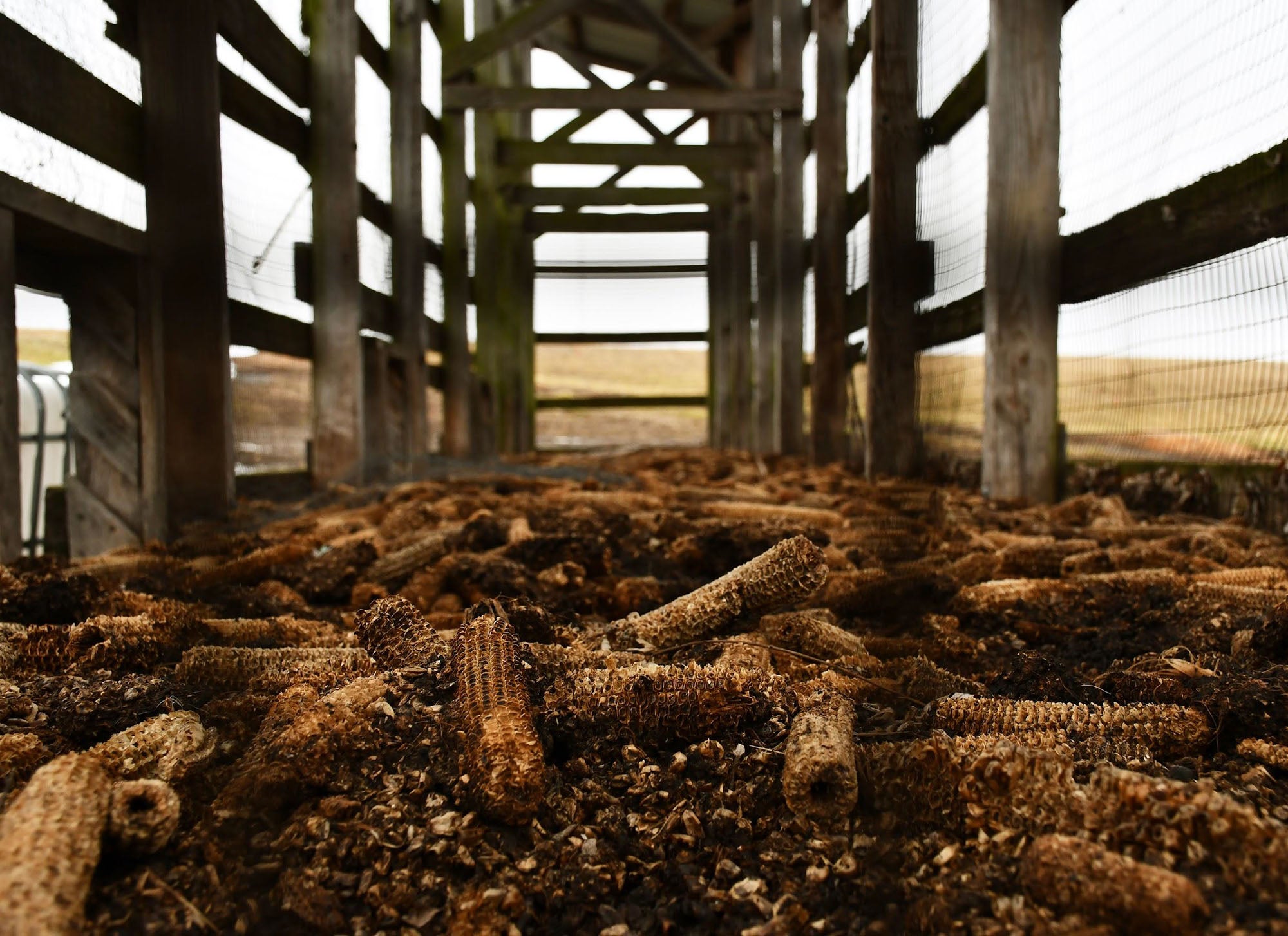
Photos by Sydney Schlatter (first photo) and Clarissa Paiz Garcia (second photo).
Some classes ask students to study systems from a distance. Denison Professor Abram Kaplan’s Farmscape course asks students to step inside them.
Offered through the Sustainability & Environmental Studies (SES) program, Farmscape blends research, art, and fieldwork into an immersive exploration of how the American food system works.
Using photography and visual storytelling, students investigate big questions. How is food produced? What do these processes look like? How does this affect our consumption?
The course emphasizes an arts-based research approach that emphasizes creativity as a way of understanding. This turns typical research approaches upside-down: sometimes instead of finding questions to be answered, we may learn more from questioning the answers we always thought were “truth.”
Much of the learning happens off-campus during the lab portion of the class. Each week, students visit different parts of the local food system — a local produce farm, conventional dairy, Amish organic dairy, Amish grain mill, produce-processing facility, meat-packing company, and even a coffee roaster.
They also examine aspects of the food system closer to home, with visits to Denison’s Huffman Dining Hall, connecting what they see in the field to their everyday experiences on The Hill.
These visits become the foundation for creative work. Throughout the semester, students use photography both as an artistic medium and a documentary tool, building visual narratives that reflect their questions and insights. Along the way, they rethink what research can look like and how to communicate it to others.
Students engage in critiques throughout the semester, where they apply their oral communication and photography knowledge.
The course culminates in two final projects. At 7 p.m. Monday, April 27, students will present their work in a juried exhibition in the Knapp Performance Space. Juried by Nannette V. Maciejunes ’75, former executive director of the Columbus Museum of Art, students experienced a real-world jurying process. Students also create individual art books, designing and organizing their work around themes they develop over the semester.
For students in the SES program, Farmscape is a unique chance to experience a course that brings together creativity, fieldwork, and environmental study in a way few others do.