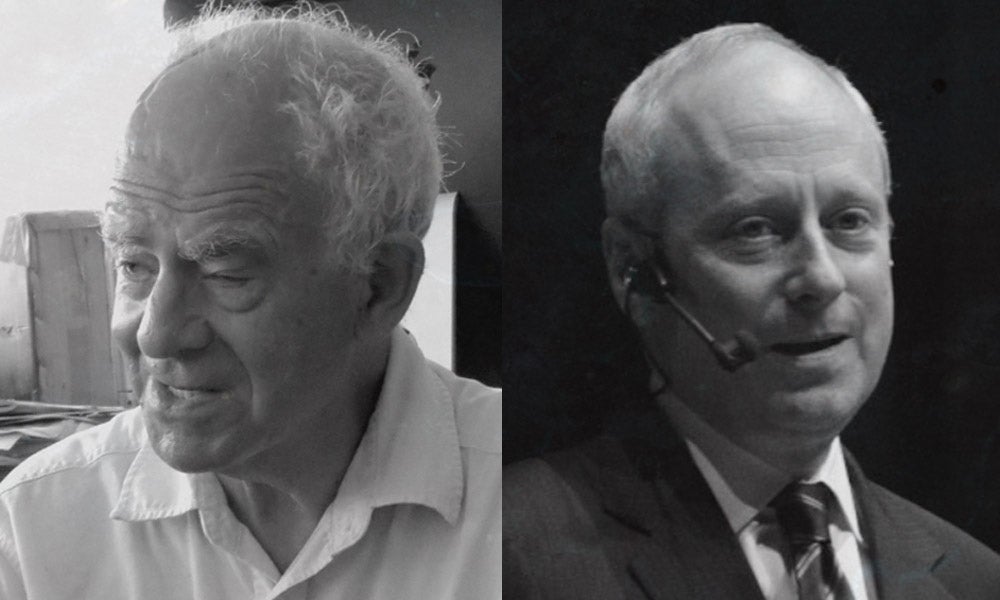
We are excited to announce a special Titus-Hepp event, a discussion on liberalism by political and social theorist Steven Lukes and political philosopher and professor Michael Sandel.
Join us from 4:30–6 p.m. Thursday, April 23, at Herrick Hall for the virtual discussion on liberalism, its problems, and what it might mean in an increasingly polarized political climate.
Optional, but recommended readings:
The Tyranny of Merit: What’s Become of the Common Good?
(PDFs available with Denison login.)
About Steven Lukes and Michael Sandel
Steven Lukes is a British political and social theorist, best known for his influential work Power: A Radical View. A professor of politics and sociology at New York University, Lukes has written extensively on moral relativism, individualism, and the legacy of Émile Durkheim. His work sits at the intersection of political philosophy, sociology, and moral theory, and has been foundational in debates about how power operates in liberal democracies, particularly through mechanisms that are invisible to those subject to them. Lukes has recently published The Diversity of Morals, further extending his long-standing engagement with questions of moral pluralism and the challenges of navigating ethical disagreement across cultures and traditions.
Michael Sandel is an American political philosopher and professor at Harvard University. He is widely known for his critique of liberal individualism and procedural justice, most fully articulated in Liberalism and the Limits of Justice, as a response to Rawls’ A Theory of Justice. Sandel is a leading voice in the communitarian tradition, arguing that political theory cannot be divorced from substantive moral commitments and conceptions of the good life. His “Justice” course became one of the most popular in Harvard’s history and was adapted into a widely viewed public television/web series and bestselling book, Justice: What’s the Right Thing to Do? In 2025, Sandel was awarded the Berggruen Prize, a recognition of thinkers whose ideas have profoundly shaped human self-understanding, underscoring the global reach and significance of his philosophical contributions.