Many global commerce majors fulfill their off-campus requirement with a study abroad experience. Phoebe Beckwith ’26 chose to study abroad for a semester in Peru.
While there, she assessed her economic research project under real-world market conditions and learned to prioritize curiosity over certainty. Beckwith shares insights from her experiences in this Q&A.
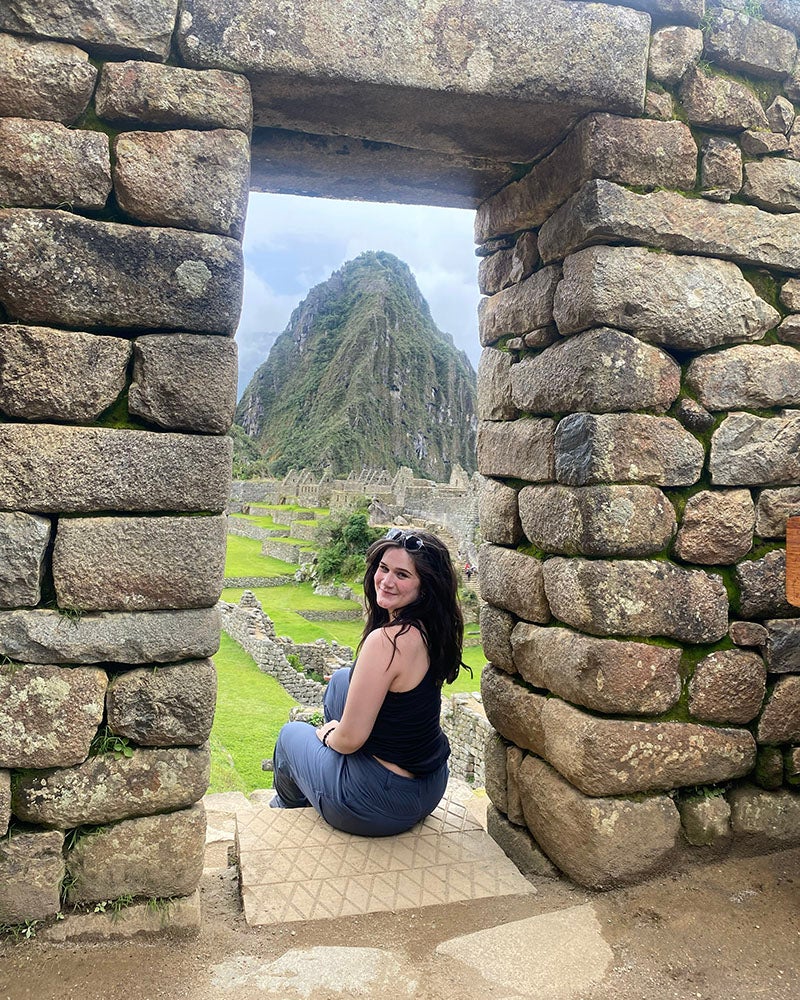
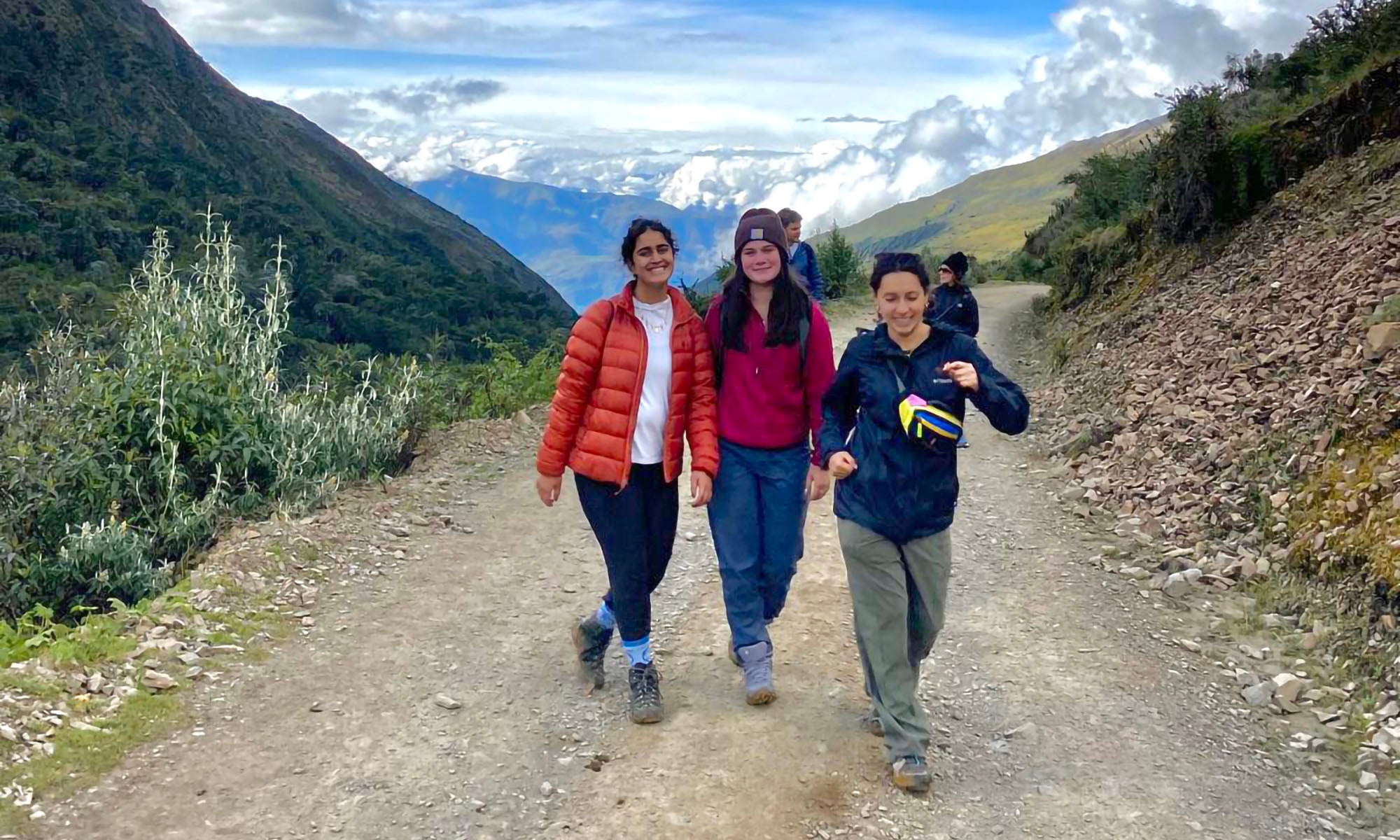
Beckwith visiting Machu Picchu.
Why did you choose to study in Peru?
Initially, I was pretty set on Spain. However, taking “Postcolonial Criticism and Literature” and the “GC Sophomore Seminar” changed my perspective on what I wanted to get out of my semester abroad.
The School for International Training’s Indigenous Peoples and Globalization program gave me an opportunity to be immersed in a culture where I could learn about global commerce and the impacts of globalization from an indigenous perspective.
What did you enjoy most about the program?
Every other week we visited a new city and met a new community. Some of the highlights were Machu Picchu, Madre de Dios in the Amazon rainforest, and the beautiful colonial city of Arequipa.
Over the span of the program, I lived with three different host families, in the city of Cusco, on Taquile Island, and in Chinchero. By the end of the program, I realized that each place and family I encountered had shaped me in ways I’ll carry with me for the rest of my life.
Were there any difficult times during your study abroad experience?
The most difficult part of adjusting for me was definitely the strain on my body from the effects of living in such a different area. I rarely get sick, so it was a bit of a shock to me, but factors like new bacteria in food, altitude sickness, drastic climate changes from travel, and the stress of adjusting to a new rhythm of life definitely presented their challenges. (I think I pretty much became notorious in my program for having food poisoning!)
To combat this, there was a telehealth doctor on call 24/7 who I could consult, and they would arrange for any needed medication. Plus, I always had the support of my wonderful host families.
How did your Denison studies prepare you for being abroad?
The global commerce major teaches you how to use a cross-disciplinary approach to examine the world around you. The courses I took towards my regional focus in Latin America and the Caribbean set me up to excel academically in an anthropology-based, experiential language immersion program.
In addition, the skills stressed in global commerce, such as understanding global markets with cultural anthropology, intercultural communication, ethical analysis, and contextualizing economic change within local traditions helped me complete a 50-page research paper on how new modes of production and marketing tactics impacted the textile market of Chinchero and the Indigenous weavers that made up the labor force.
What were your takeaways from the experience?
My biggest takeaway is to always remain curious. When immersing yourself in a new culture, language, or even family dynamic, approach every experience with open eyes and an eagerness to understand why things are the way they are. This rings true in personal life abroad, but also in research and academics.
When I first started my research project in Chinchero, I had a hypothesis that made sense on paper. However, after a few interviews with local artisans, I realized that my assumptions about the local economy didn’t align with the Chinchero context. I found the most success when I let the experience guide me, taking time to sit with people, listen to their stories, and learn what truly mattered to them.
By prioritizing curiosity over certainty, I uncovered a gap in the existing literature and produced research that more authentically represented the voices of the Chinchero community.
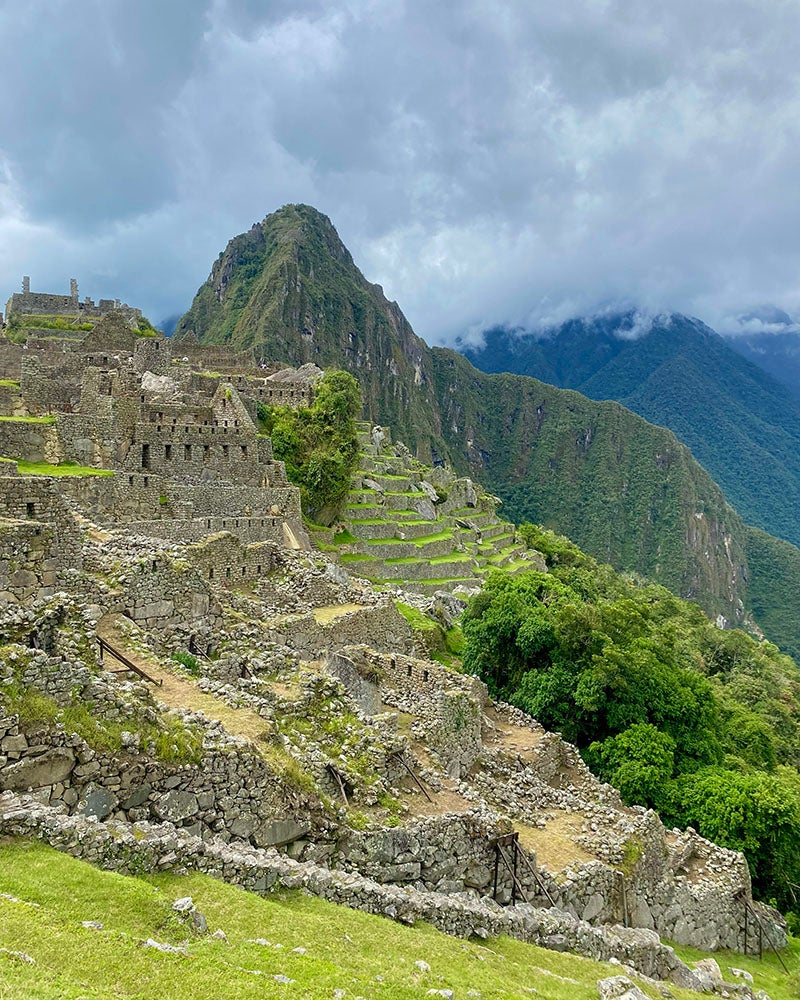
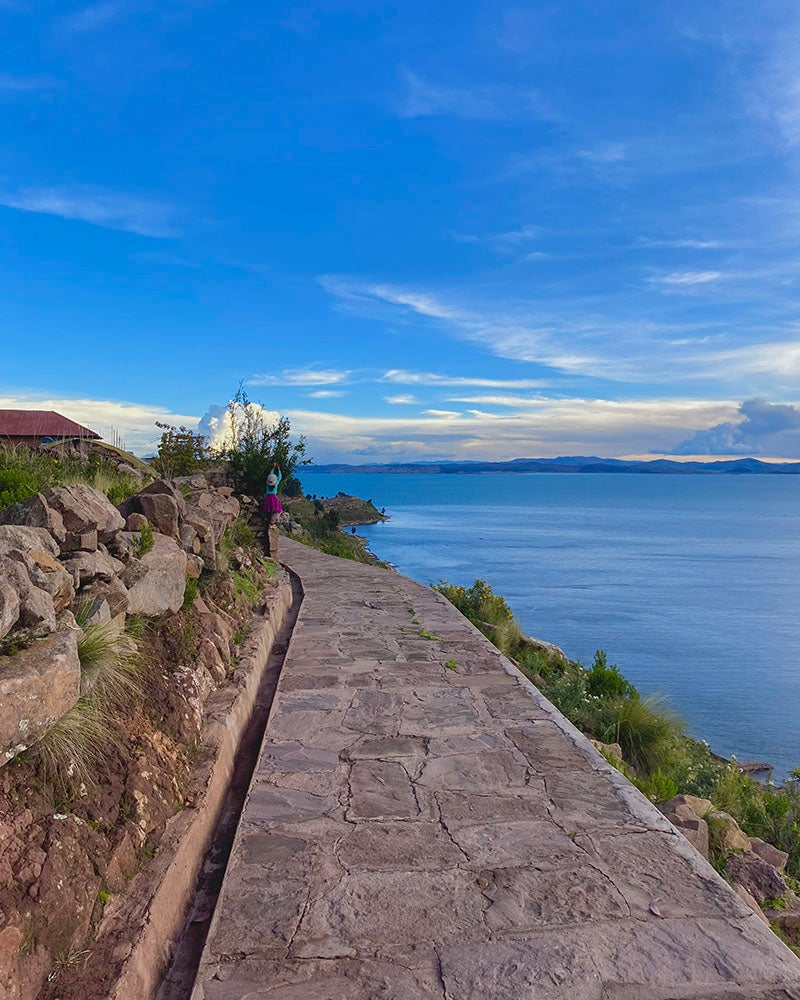
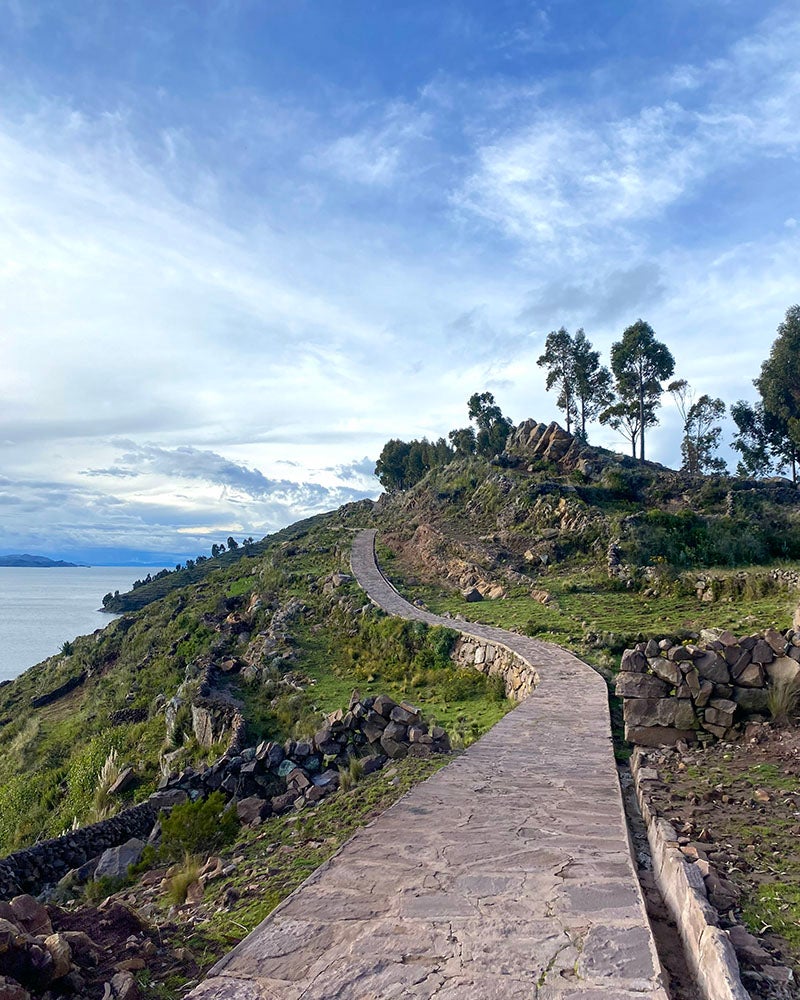
Machu Picchu (pictured left) and a walking path on Isla Taquile, an island on the Peruvian side of Lake Titicaca. (Photos courtesy Phoebe Beckwith)