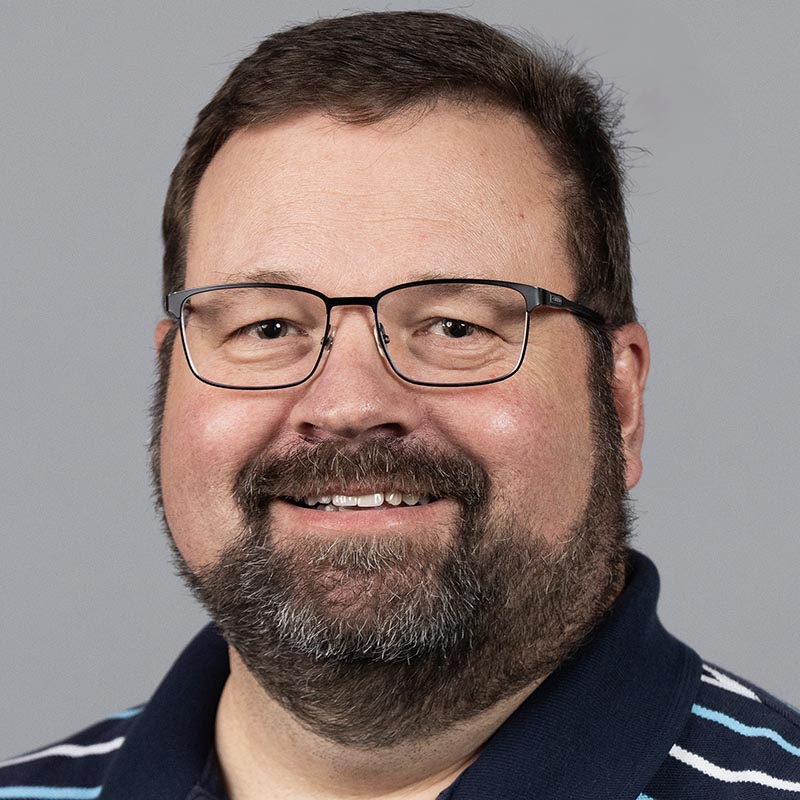


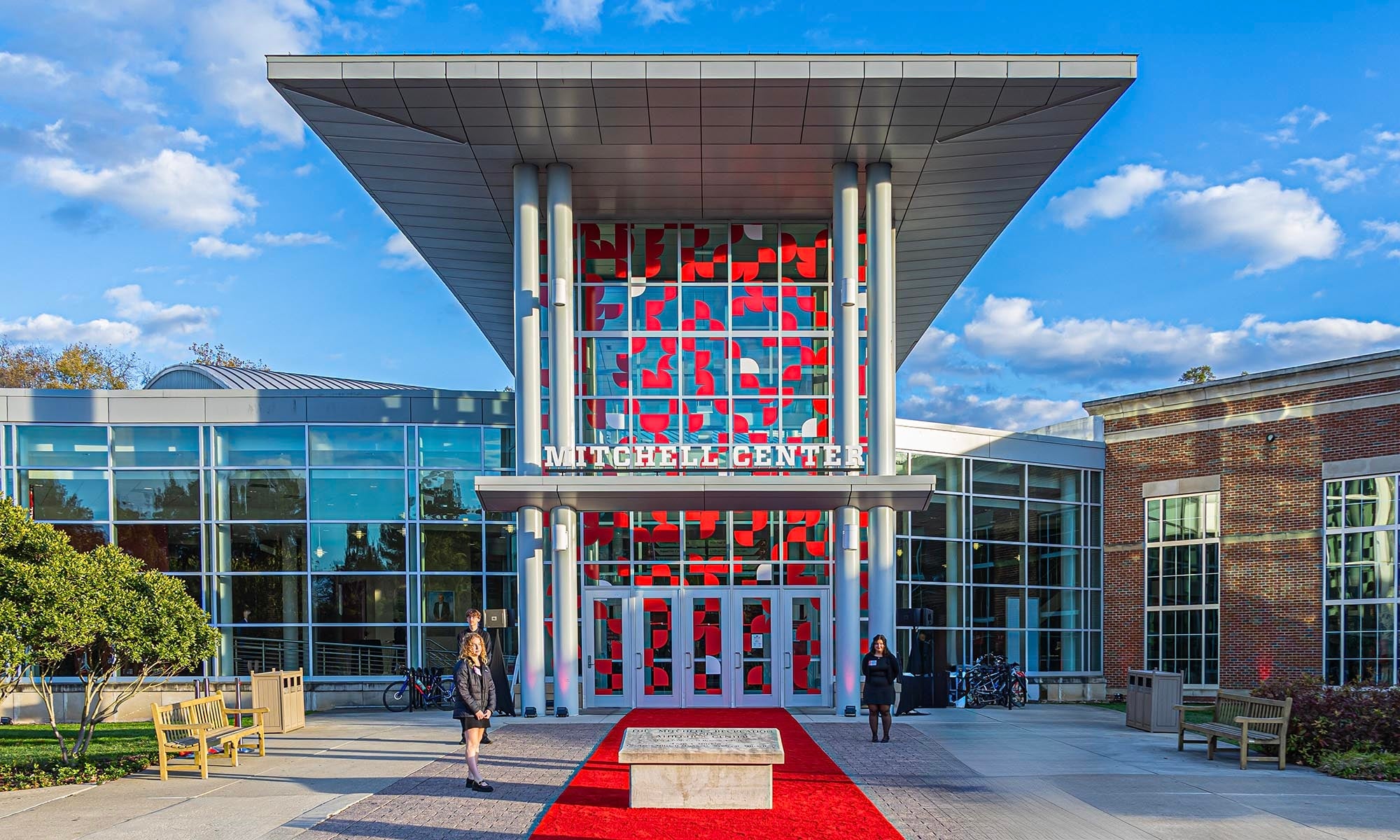

As Denison prepared for the October launch of its new campaign, What We Can Be, Tori Robbie ’27 sat on a bench in one of her favorite campus spots, under the trellises on Reese~Shackelford Common.
In the mind of Robbie, a data analytics major from Canfield, Ohio, What We Can Be takes the form of a question, and a very personal one:
What can I be?

For Tori Robbie ’27 (above), a data analytics major from Canfield, Ohio, Denison is where her confidence and optimism have taken root.
When she was an exceptional but disillusioned high school student, questions like this loomed. She had little support and few resources. But she did have agency. She began looking for answers.
She found Denison.
Three years later, she admits that she still doesn’t answer with 100% certainty when someone asks her, “So, what do you want to be?”
But the difference, to Robbie, is a big one.
The question no longer feels overwhelming, or limiting. In her three years on The Hill, Robbie has come to realize that she is not boxed in. That with her hard work, her ambition, and her curiosity, the many possibilities in front of her don’t feel unattainable. The challenges don’t look insurmountable.
That change in confidence — that sense of optimism — would never have come about without Denison.
“I get all these opportunities that I never would have had otherwise,” Robbie said. “If I had stayed in Canfield and didn’t go to Denison, none of this would have happened.”
Building on its growing momentum as one of the nation’s preeminent liberal arts colleges, Denison has launched a call to invest in students like Robbie, in future students, in alumni, and in the next chapter of the college’s storied history.
The campaign goal is to raise $400 million to advance the university’s focus on meeting the demonstrated financial need of every student and launching them quickly and successfully into lives, careers, and an alumni network that is second to none.
The theme, What We Can Be, distills into four words a bold vision: to position Denison as a national leader in delivering a life-shaping liberal arts education, one that is defined by exceptional experiences, proven career outcomes, and meaningful relationships.
“Denison’s enduring commitment is to prepare students not only to launch quickly and succeed, but to lead and thrive in a changing world,” said President Adam Weinberg. “What We Can Be gets to the heart of what makes Denison extraordinary: an education that unlocks endless possibilities and enables students to become the architects of their own lives. These investments will fuel our ability to pursue opportunity, meet students’ evolving needs, and continue our momentum for decades ahead.”
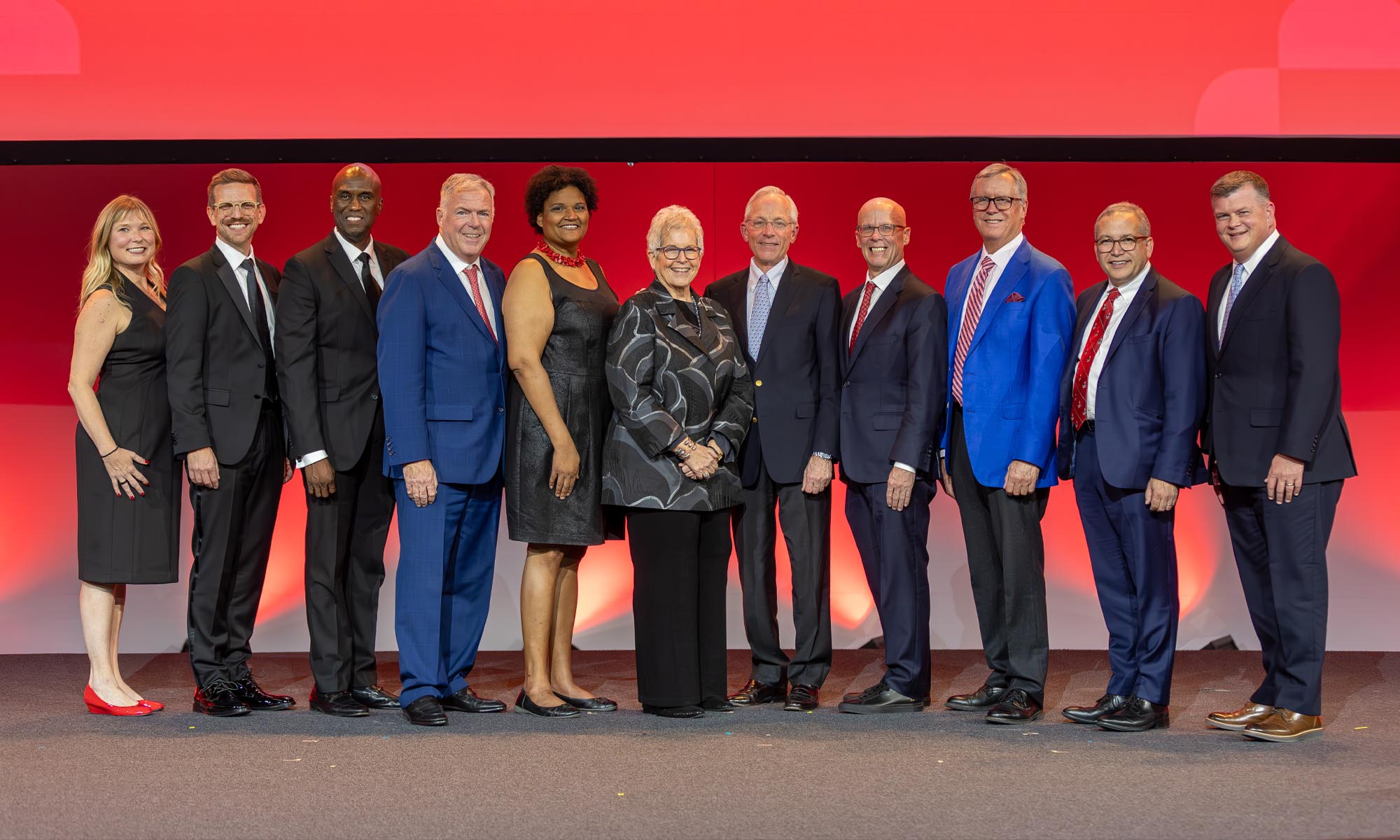
Members of the Campaign Executive Committee.
Pictured (from left to right): Billie Handa, associate vice president and campaign director; Nicholas C. Covey ’04; James L. Anderson ’85, co-chair; Matt Harrington ’84; Jeryl D. Hayes ‘04; Dana Hart ’76, co-chair; William C. Mulligan ’76; Marcus R. Colwell ’84; Stephen R. Polk ’78, co-chair; Adam Weinberg, president; Greg Bader, vice president of institutional advancement.
Not pictured: Campaign Executive Committee honorary chairs Sharon Martin ’65, David ’62 and Weezie Reese, Don ’54 and Teckie ’56 Shackelford, and Jonathan ’89 and Natalie Silverstein; co-chairs Daniel Brickman ’80 and Suzanne B. Kriscunas ’72; and committee member Lauren S. Haarlow ’90.
More than $240 million was raised during the campaign’s leadership phase, reflecting solid support and belief in this vision for the future.
The campaign aims to build upon the tremendous gains of the previous one, Unlocking Potential, which expanded access, launched innovative programs, and reimagined the liberal arts. That campaign supported strategic goals in six critical areas: scholarships for students; robust support for faculty and curricula; development of an industry-changing approach to career exploration; enrichment and enhancement of the performing arts; wellness and co-curricular learning in residence communities; and ongoing support for the college’s annual fund.
The goal for Unlocking Potential was set at $225 million, and the generosity of more than 19,000 donors led the college to surpass it by nearly $20 million.
Leaders of the What We Can Be campaign are confident Denisonians will come through again.
“Denison alumni, and the Denison family as a whole, have always stepped up, even in challenging times,” said Greg Bader, vice president for institutional advancement. “Our donors have always believed in the power of education to transform lives. We have just had our third record-breaking fundraising year in the history of the college, with over $60 million raised.
“Denison is an institution people know, trust, and want to make an investment in,” Bader said.
An earned trust
That trust, Bader said, has been earned by Denison’s leadership, which has proven visionary in charting a course for the college, as well as careful stewards of its finances and donor funds raised in previous campaigns.
The successes of the Unlocking Potential campaign stand as proof. That campaign concluded in 2020 with more than $243 million raised. Some of the results:
- Donors funded 70 new named scholarships.
- New majors, such as data analytics; global commerce, and health, exercise, and sport studies, were introduced, driven by the desires of students and the needs of today’s employers.
- Academically enriching opportunities, such as Summer Scholars research and Denison Seminars, were bolstered. Summer internship stipends nearly doubled.
- Innovative career-readiness programs were created through a gift from the Austin E. Knowlton Foundation. Today, the Knowlton Center for Career Exploration is consistently ranked among the top programs in the nation.
- The world-class Michael D. Eisner Center for the Performing Arts was unveiled, housing facilities, including Sharon Martin Hall, Thorsen Dance Studio, and Hylbert Family Studio Theater.
- The construction of facilities and creation of programs enhancing student life, including the Ann & Thomas Hoaglin Wellness Center, Silverstein Hall, the sweeping Douthit Hall library renovation, and the Knetzer Family Institute geared toward Denison’s student athletes.
Others have taken notice.
The latest college rankings from U.S. News & World Report named Denison the fourth most innovative national liberal arts college and moved the college up to No. 34 among national liberal arts colleges — up 21 places since 2016 — and No. 1 in Ohio.
Among the 2,400 four-year colleges and universities in the U.S., Denison ranked second for best career services, second for happiest students, and fourth for best classroom experience in rankings released by The Princeton Review.
The gains keep coming.
Kienzle-Hylbert Stadium — a state-of-the-art lacrosse and soccer facility with a multi-use synthetic turf field, press box, permanent bleachers, lighting, and scoreboard — was dedicated in spring 2024.
In 2025, Big Red student-athletes achieved arguably the greatest year in Denison’s athletics history, including two NCAA national championships.
The college also broke ground on a new center for data and innovation, a first-of-its-kind campus hub devoted to integrating data across the curriculum and accelerating Denison’s leadership in developing a model for AI in learning and career preparation.
And building on its success in launching popular majors, Denison approved the creation of a finance major, set to launch in 2026.
“The last campaign, and the strategic elements that it hit — expanding on the arts, really digging into careers, looking at additional majors to expand our offerings, and addressing the mental health side of what goes on at any college campus — was really successful,” said Lauren S. Haarlow ’90, a Denison trustee and member of the campaign executive committee. “But I think we’re just scratching the surface of our potential. People understand that something is happening at Denison right now. We need to continue to level up.”
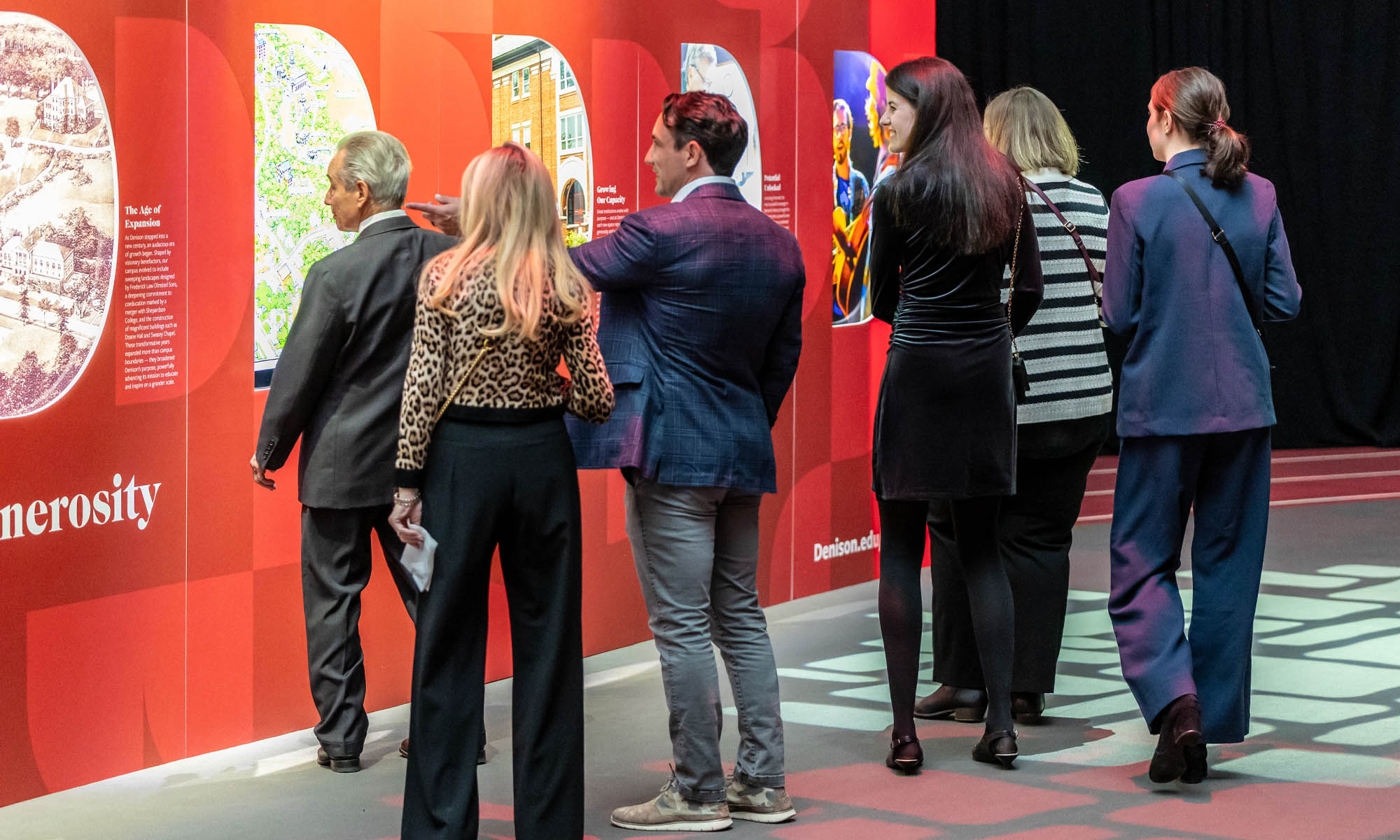
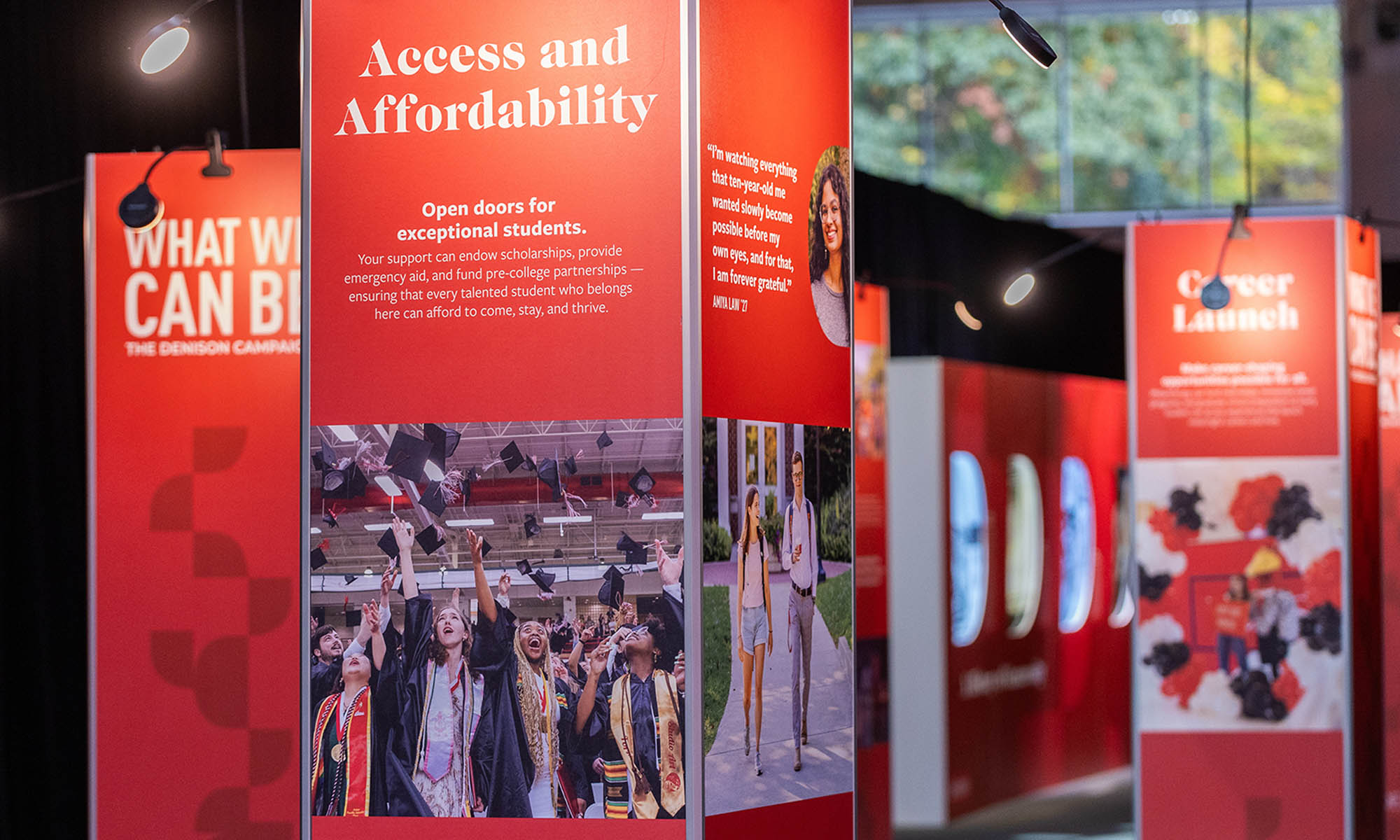
Denison alumni and friends learn more about What We Can Be at an event in the fall.
Leveling up
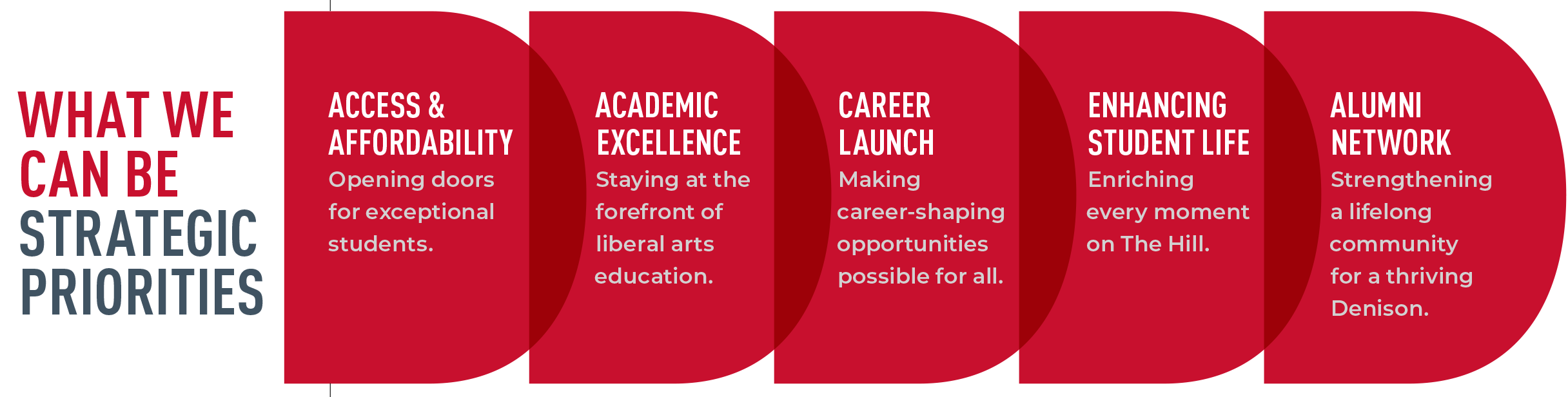
What We Can Be doubles down on five key priorities: access and affordability, academic excellence, career launch, enhancing student life, and the alumni network.
“These are the priorities that the president, the board, and our community feel we need to achieve, to continue to improve the student experience here, invest in that experience, launch students successfully post-college, and maintain our commitments after college,” Bader said.
“The resources and the philanthropic dollars that are going to be provided by this campaign will help our students embrace the whole Denison experience,” he said. “They will be successful, they will learn, they will grow, and they will add to the community while they are here, in their own way.”
Suzy Kriscunas ’72, a Denison trustee and co-chair of the campaign executive committee, said trustees talk about their interactions with current students, marveling how the latest Denisonians are “accomplished across the board.”
“If there’s anything that has deepened my appreciation for what Denison can do, it is seeing the students and talking to them and hearing their experiences,” she said. “These are students who have taken advantage of the power of ‘and’ at Denison. It’s really quite unique, and it’s a wonderful investment we’re making.”
It begins with affordability
Bolstered by the successes of the Unlocking Potential campaign, Denison is now one of only 80 colleges, out of roughly 4,000 U.S. institutions, to meet students’ full demonstrated need. What We Can Be seeks to go further.
“Everything begins with affordability,” Weinberg said at the campaign launch. “Together, we can ensure that cost is never a barrier to a Denison education.”
Abigail Pringle ’96, P’25, a Denison trustee, often reflects on her personal growth at Denison and how it shaped her life. She spent more than two decades in various roles at Wendy’s, including a year as its U.S. president, and credits her successes to many of the things she learned on The Hill.
“I think of the transformation I went through as a student, becoming an adult, figuring out my own volition — what I believed in, my values,” she said. “Denison facilitated that in a really powerful way.”
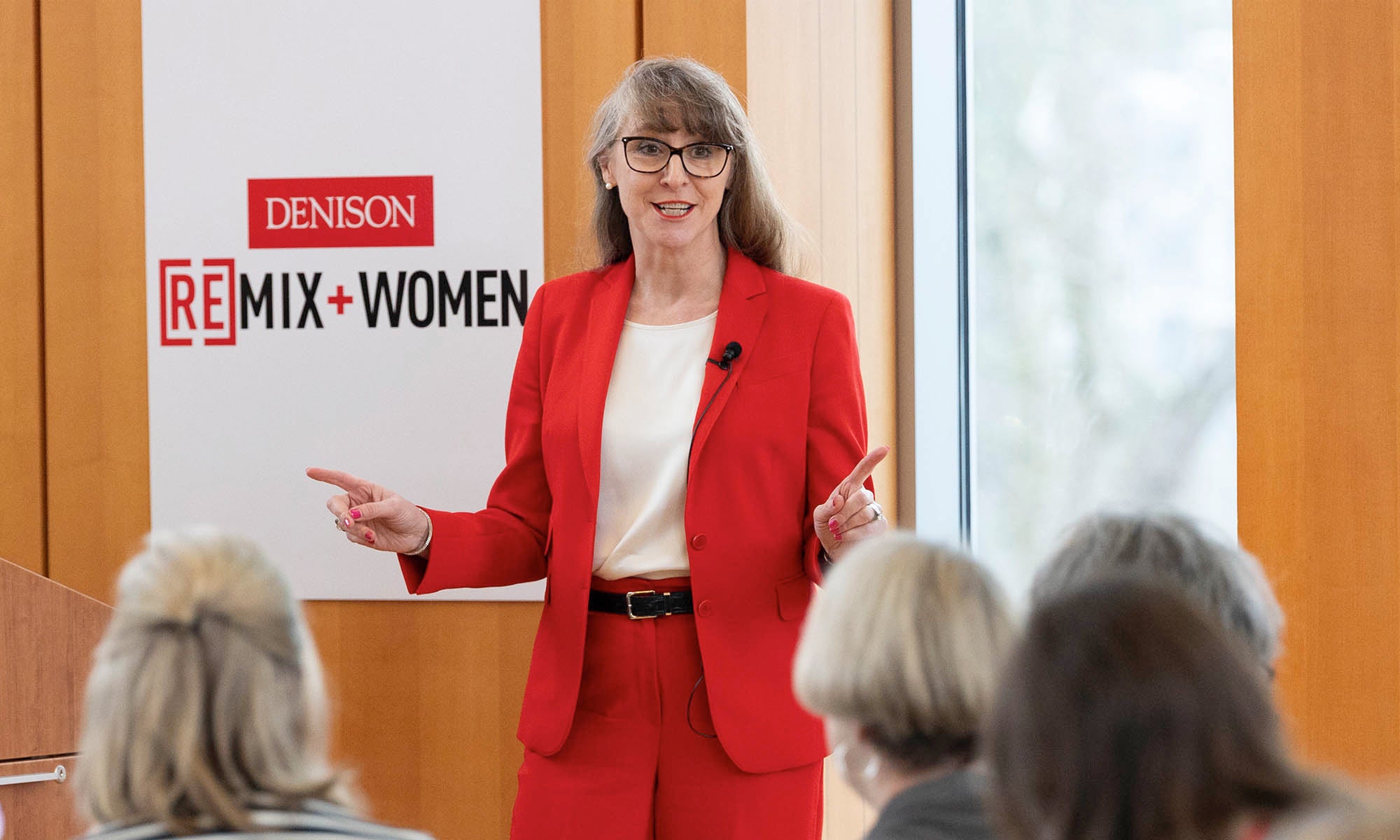
(Top) Abigail Pringle ‘96 addresses the audience at a 2024 ReMix + Women event that brings together alumni and current students.
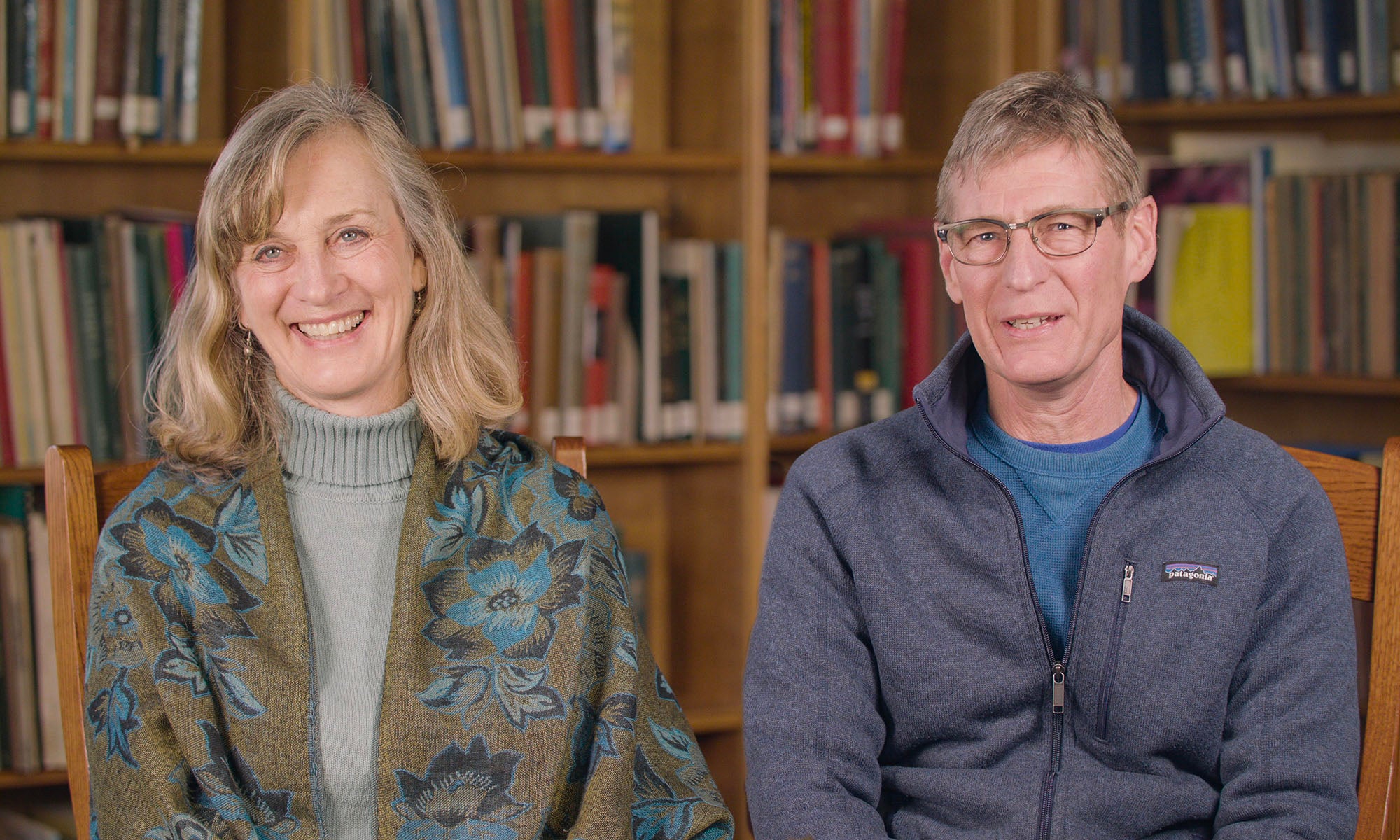
(Bottom) Suzanne and Gary Baker say an endowed scholarship is a win-win.
Pringle’s husband, David, made his own college decision largely based on cost. Now, the couple want to help ensure that no accepted students have to turn down a Denison education because of cost.
“We just made a major contribution to the campaign, and it was all about helping students and families who feel they cannot afford something as special as Denison,” Pringle said.
“This campaign is important right now because it will allow Denison to continue to lead. I don’t think Denison has it in its DNA to follow. It needs to lead.”
Professor Emeritus Gary Baker came to Denison in 1989 to teach German. He had been a first-generation college student, and his wife said his personal experience drove them to start an endowed scholarship.
“His parents didn’t really know what college was,” said Suzanne Baker, who worked in Denison’s education department for 26 years as an instructor and a field service coordinator.
“They weren’t able to support me monetarily because they didn’t have the means,” Gary Baker said.
Suzanne Baker turned and spoke directly to her husband. “You grew into the person you are because of Denison, the resources, the professional development,” she told him. “Denison saw your potential, just like you saw your students’ potential. I think that is why Denison is so dear to your heart.”
Gary Baker couldn’t disagree.
“I would love to see student debt obliterated — gone,” he said. “An endowed scholarship is a win-win. It funds the student, and the money comes right back to the institution. That’s why we just keep putting our couple bucks in there every year and growing it.”
An easy ‘yes’
Jeryl Hayes ’04 was in the thick of her college search when her high school advisor suggested giving Denison a look. She did, and what she found changed her life.
“Sometimes you make decisions at 17 that are boneheaded and terrible,” she said, laughing. “And then sometimes you make some pretty amazing decisions that impact the rest of your life. Choosing Denison was one of the best decisions I’ve ever made.”
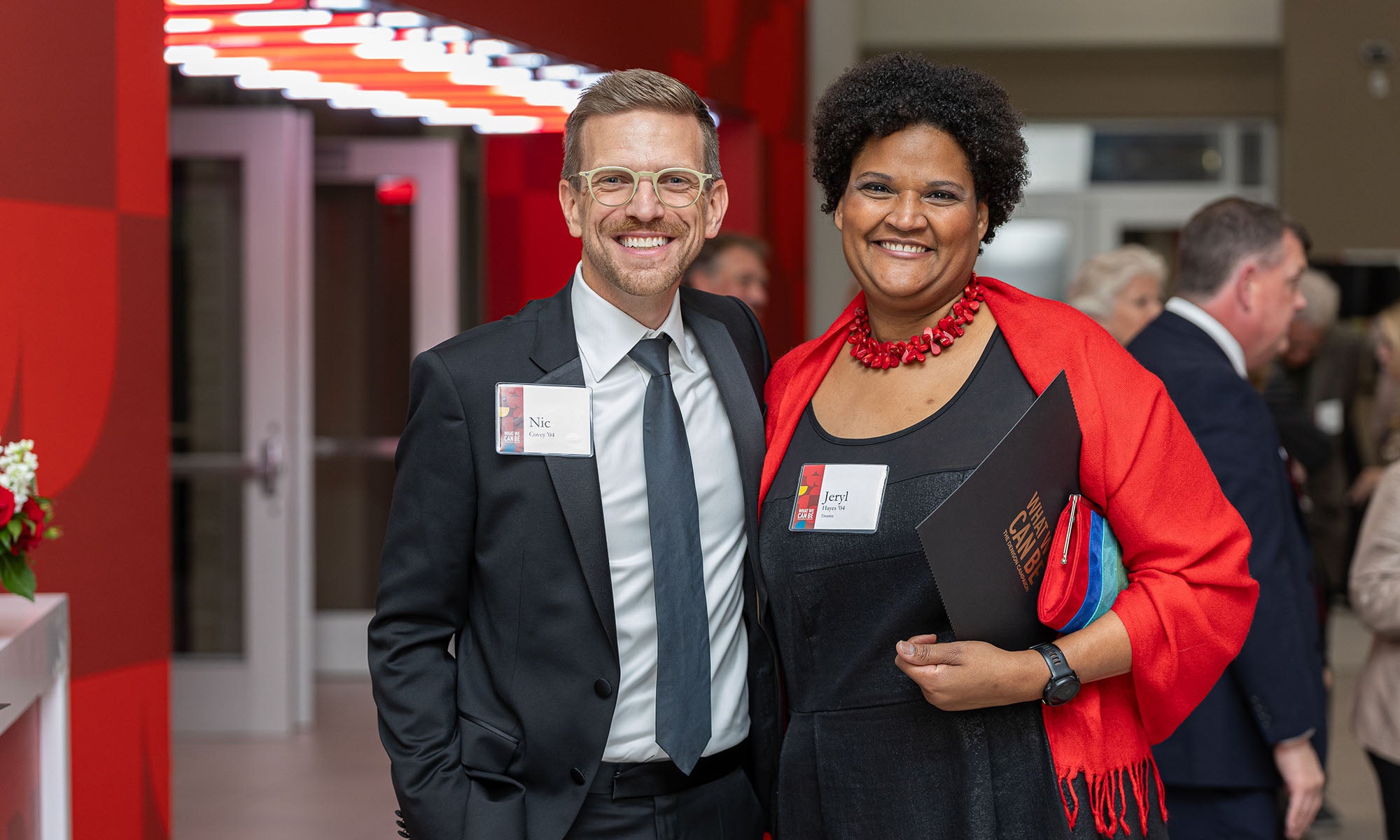
Jeryl Hayes (right) and Nic Covey are members of the Class of 2004. Hayes was Covey’s RA in Stone Hall their senior year.
She was one in a long line of driven Denison students: involved in student government, a resident advisor (RA), performed in Lady’s Night Out, a DJ for the college radio station, an intramural athlete.
For her, lasting relationships — with classmates like Nic Covey ’04, with faculty, and staff — are at the heart of Denison.
It’s why this campaign’s goal of markedly increasing alumni engagement of all kinds is important to her. Denison’s alumni network is a tremendous asset that goes beyond financial support. It takes the form of mentorships, intern opportunities, and professional wisdom volunteered at events like ReMix.
“Our alumni are living testaments to what a Denison education can do,” said Hayes, a Denison trustee and member of the campaign executive committee. “Denisonians really love helping other Denisonians.
“Denison invested in me as a student and as a young alum,” she said. “So whatever they ask of me, it’s an easy, ‘yes.’”
Covey, also on the campaign executive committee, agreed with Hayes, his onetime RA in Stone Hall.
“My everyday experience of the world has been made richer by the way Denison prepared me to engage with the world,” he said. “Giving to Denison is a way for my wife, Meghan, and me to diversify our philanthropic support across a lot of different areas that we are passionate about, because we know within a class of Denisonians, there will be people who do incredible things for their communities, for the environment, for the sciences, for the arts.
“A gift to Denison is almost a portfolio play across all the things that make life worth living and make the world great,” he said.
The next chapter, for Tori Robbie and Denison
So how does Tori Robbie fit into all of this? And her classmates, and future Denisonians?
Robbie is the winner of a QuestBridge scholarship, awarded to high-performing high school students from low-income backgrounds. It covers her full four years at Denison. Without it, she wouldn’t be here.
Thanks to Denison’s commitment that all students should have the chance to study abroad, she is spending her spring 2026 semester in Australia.
She is a data analytics major, one of those innovative majors introduced during the last campaign.
When she isn’t working 20 hours a week at a local Raising Cane’s restaurant, she is putting in hours at the Knowlton Center for Career Exploration, where she works and has received guidance on everything from internships to possible career paths.
She has found mentors there and in her academic department. Last summer she took part in a microinternship to write a film grant proposal for an animation studio founded by Denison alum Tom Richner ’97, a storyboard artist for The Simpsons.
Robbie is a first-year fellow who helps new students on campus and, with like-minded peers, belongs to the Denison Grant-Writing Group, in which students assist local nonprofits with their grant submissions.
While she may still not have nailed down a career, there may be something to this grant writing, she said. It strikes a chord within her.
“Being at Denison, I’m fully funded,” she said. “If I was able to accomplish my dreams through people funding me, why can’t I help other people fund themselves? Even if I don’t have that money, I can help find people who do.
“This is a way, logistically, that I can give back in a meaningful manner,” she said.
She doesn’t get overly philosophical about all this, though. She sees her curiosity through a pragmatic lens.
“I just want to figure out what I like and what I don’t like,” she said. “I’m not one of the people who was like, ‘I’ve wanted to be a doctor since the age of five,’ or ‘I have a parent that I want to follow in their footsteps.’ I don’t really have that. It’s more or less, let me try out all these different things. What works will stick, and what doesn’t won’t. I’m trying to explore every option I can. Denison encourages me to do that.”
Listen to her talk about this, and you hear shades of stories told since the founding of Denison. It is that tale of personal but profound transformation, shared by the likes of Jeryl Hayes, Abigail Pringle, Nic Covey — just a few names from an alumni network 40,000 strong.
“Coming to Denison has promoted me being independent and finding myself, having these opportunities to learn who I am as a person,” Robbie said. “It’s just opened a lot of doors, being a student at Denison.
“I’m a completely different person because I was able to go here,” she said. “Denison has been the stepping stone.”