Degree Requirements
Computer Science Major
Computer Science offers a Bachelor of Arts degree and Bachelor of Science degree as well as and a minor.
Bachelor of Arts Degree
| Code | Title | |
|---|---|---|
| MATH 130 | Essentials of Calculus | |
| or MATH 135 | Single Variable Calculus | |
| or MATH 145 | Multivariable Calculus | |
| CS 105 | Introduction to Computer Science | |
| CS 145 | Introduction to Algorithm Design | |
| CS 231 | Foundations of Concrete Structures | |
| CS 234 | Mathematical Foundations of Computer Science | |
| CS 237 | Foundations of Abstract Structures | |
| CS 281 | Introduction to Computer Systems | |
| CS 287 | Data Structures and Algorithms | |
| CS 395 | Technical Communication I | |
Ethics Requirement
| Code | Title |
|---|---|
| PHIL 272 | Ethics of Data and Information |
| PHIL 278 | Technology, People, and Power |
| Contact CS department for the most up to date list. | |
Electives
Students must complete three electives. At least one must be designated as a project elective, at most one can be at the 200-level. Examples of project electives:
| Code | Title |
|---|---|
| CS 314 | Game Design |
| CS 349 | Software Engineering |
| CS 372 | Operating Systems |
Experiential Requirement and Assessment
| Code | Title |
|---|---|
| CS 030 | Experiential Requirement |
| CS 050 | Computer Science Assessment |
Bachelor of Science Degree
| Code | Title | |
|---|---|---|
| MATH 130 | Essentials of Calculus | |
| or MATH 135 | Single Variable Calculus | |
| or MATH 145 | Multivariable Calculus | |
| CS 105 | Introduction to Computer Science | |
| CS 145 | Introduction to Algorithm Design | |
| CS 231 | Foundations of Concrete Structures | |
| CS 234 | Mathematical Foundations of Computer Science | |
| CS 237 | Foundations of Abstract Structures | |
| CS 281 | Introduction to Computer Systems | |
| CS 287 | Data Structures and Algorithms | |
| CS 371 | Algorithm Design and Analysis | |
| CS 372 | Operating Systems | |
| CS 395 | Technical Communication I | |
Ethics Requirement
| Code | Title |
|---|---|
| PHIL 272 | Ethics of Data and Information |
| PHIL 278 | Technology, People, and Power |
| Contact CS department for the most up to date list. | |
Electives
Students must complete four electives, at most two can be at the 200-level.
Experiential Requirement and Assessment
| Code | Title |
|---|---|
| CS 030 | Experiential Requirement |
| CS 050 | Computer Science Assessment |
Computer Science Minor
A minor in computer science consists of:
| Code | Title | |
|---|---|---|
| MATH 130 | Essentials of Calculus | |
| or MATH 135 | Single Variable Calculus | |
| or MATH 145 | Multivariable Calculus | |
| CS 105 | Introduction to Computer Science | |
| CS 145 | Introduction to Algorithm Design | |
| CS 231 | Foundations of Concrete Structures | |
| CS 234 | Mathematical Foundations of Computer Science | |
| CS 237 | Foundations of Abstract Structures | |
| Complete one additional 200-level CS course | ||
Additional Points of Interest
Students who intend to continue with graduate study in Computer Science should pursue the Bachelor of Science degree.
Computer Science students should be adept at not only solving problems through the implementation of computer programs, but also in communicating those solutions to a wide variety of audiences. Students should learn the proper use of documentation to share their programs with users and other computer scientists, be prepared to compose proofs and analyses of their algorithms, and have opportunities to write formal papers.
Research at Denison
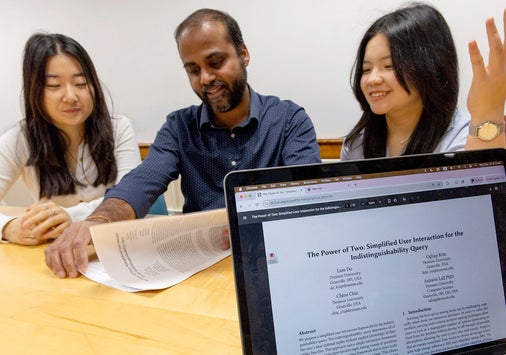
Denison offers a number of research opportunities, including funding for summer research projects. The Anderson Foundation and the Denison University Research Foundation (DURF) support qualified students conducting summer research. For off-campus research opportunities in Computer Science, see various National Science Foundation Research Experience for Undergraduates experiences. Interested students should consult a faculty member as early as possible in the fall semester.
Off-Campus Study
The Department of Computer Science strongly encourages students to globalize their education by completing some portion of their undergraduate education abroad. A majority of Denison students spend a semester abroad during their junior year and many more spend a summer (or two) abroad. Denison offers a wide range of opportunities to study off-campus that are highly relevant to your Denison experience.
Going abroad allows students to enhance their knowledge while experiencing another culture and way of life. Students gain valuable experience that will benefit future career goals and/or graduate school opportunities. Computer Science majors who are fluent in another language will have special advantages in the job market.
Students may take up to two classes outside the department to transfer towards the major at Denison. Additional courses taken outside Denison may accrue credit hours towards graduation, but will not contribute to requirements in the major. Courses taken outside the university must be pre-approved for acceptance towards major requirements. Students should provide the department chair syllabi for the intended courses for department approval. Students may petition the department chair for exceptions to this policy. In particular, transfer students may be eligible to transfer additional courses towards major requirements.