
Ojeya Cruz Banks and Marion Ramírez, professors of dance at Denison, had been working together on choreography when the Eisner Center for the Performing Arts, in a very real sense, spoke to them.
A project they were calling Mareas, Spanish for “tides,” was growing into an exploration of the importance of oceans and the common threads in their separate island heritages — Ramírez’s in Puerto Rico and Cruz Banks’ in Guåhan|Guam and the African diaspora.
“We had said, ‘Let’s explore these things together,’” said Ramírez, an assistant professor.
The Department of Dance is housed in the Eisner Center, along with other creative disciplines across the performing arts.
“I was walking down the corridor, and I heard the jazz ensemble playing, and a few of the professors were jamming,” Ramírez recalled. “I was like, ‘Oh my God. It’s all right here.’”
“We were constantly crossing paths with our music colleagues and listening to their amazing music, and we said, ‘You know what, there is a lot of fantastic artistry in this space,’” Cruz Banks said. “‘Why don’t we create some collaboration?’”
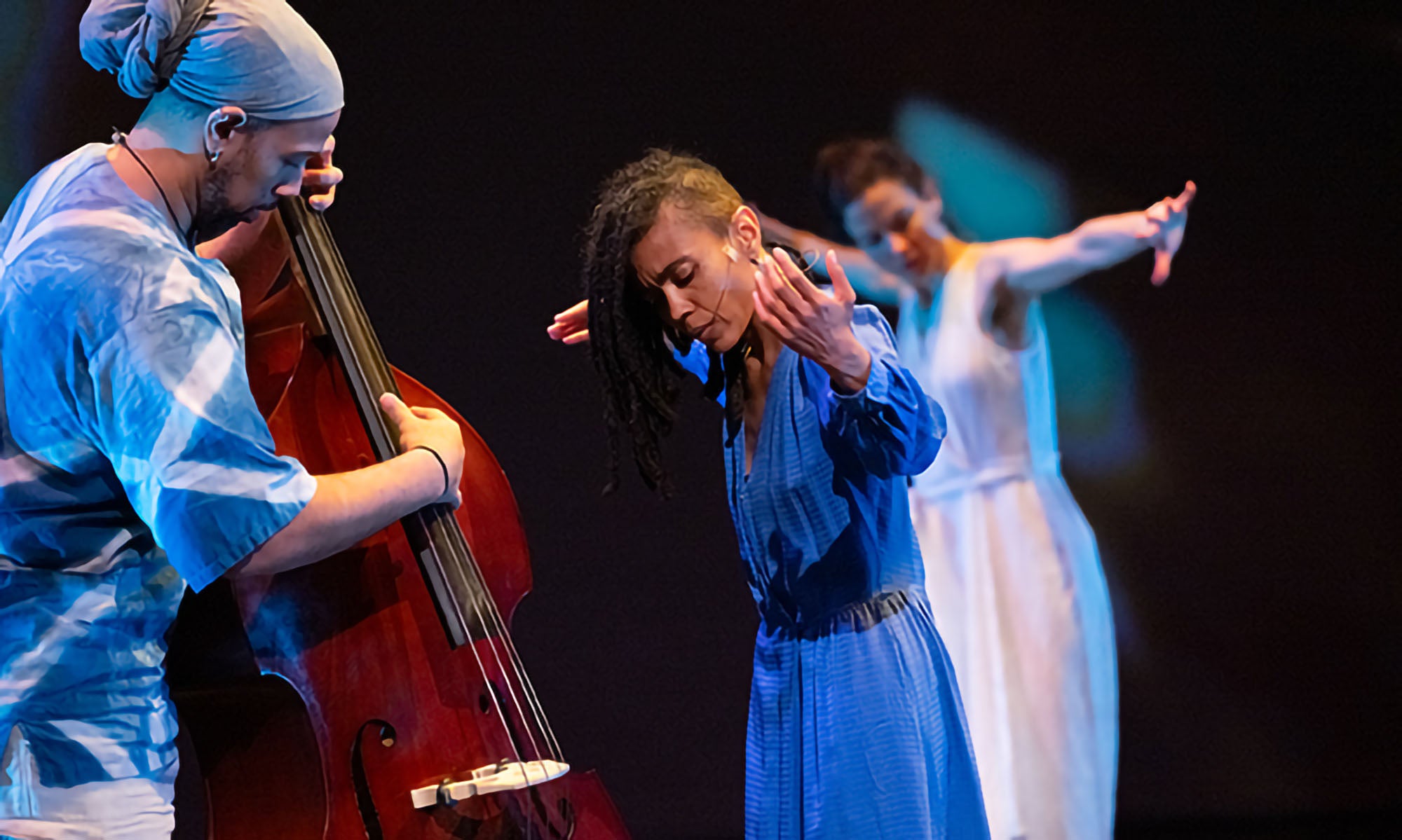
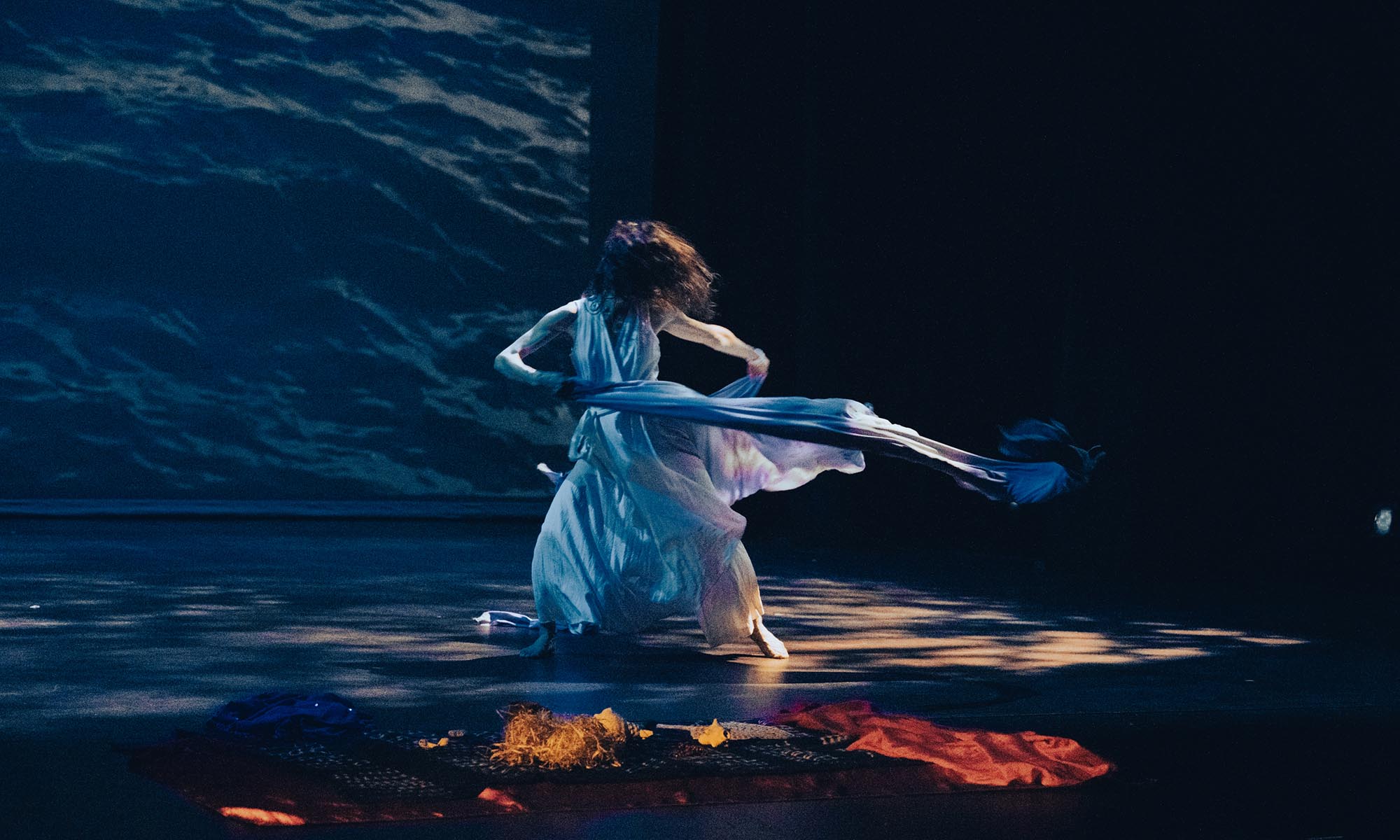
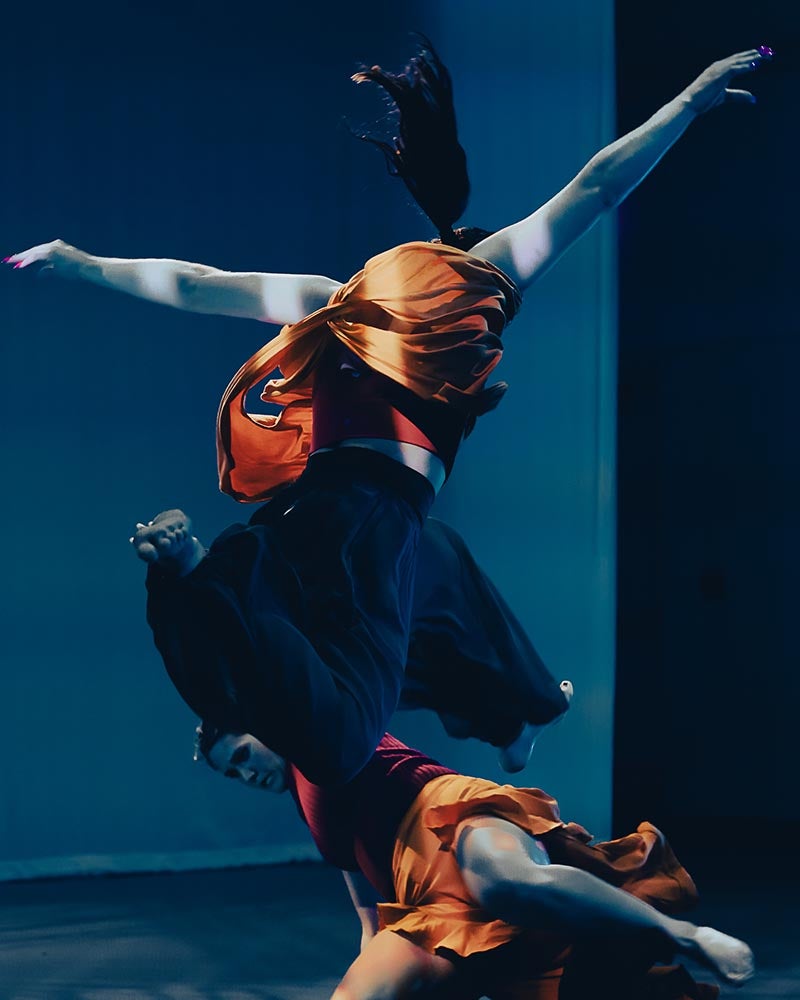
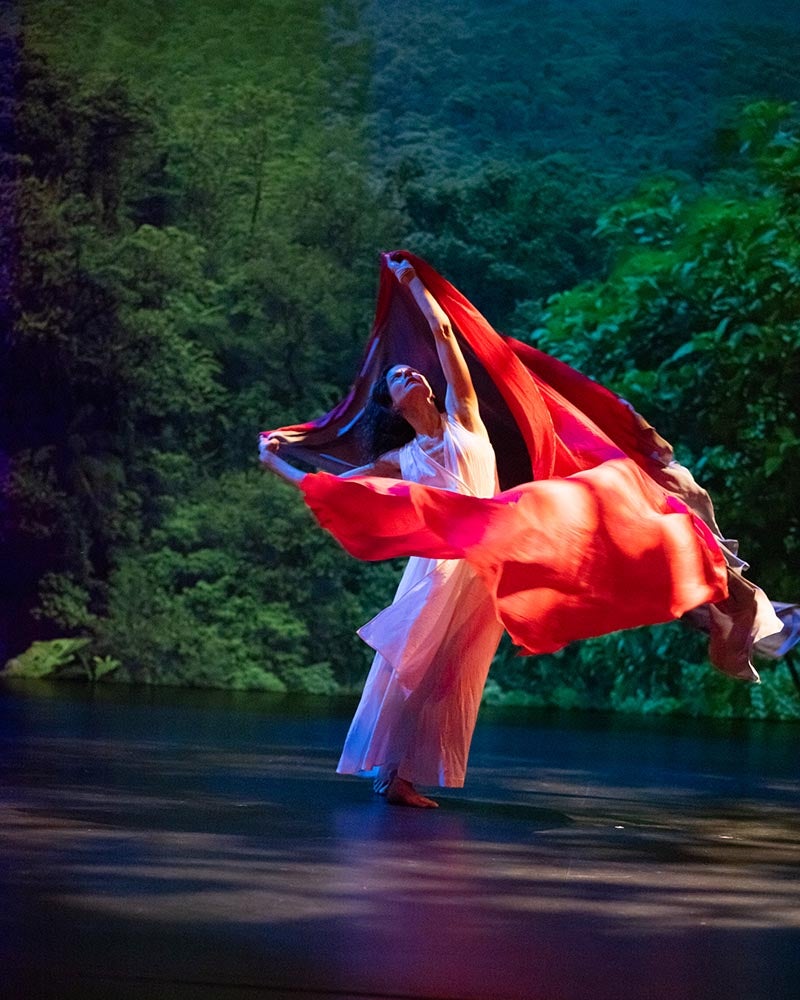
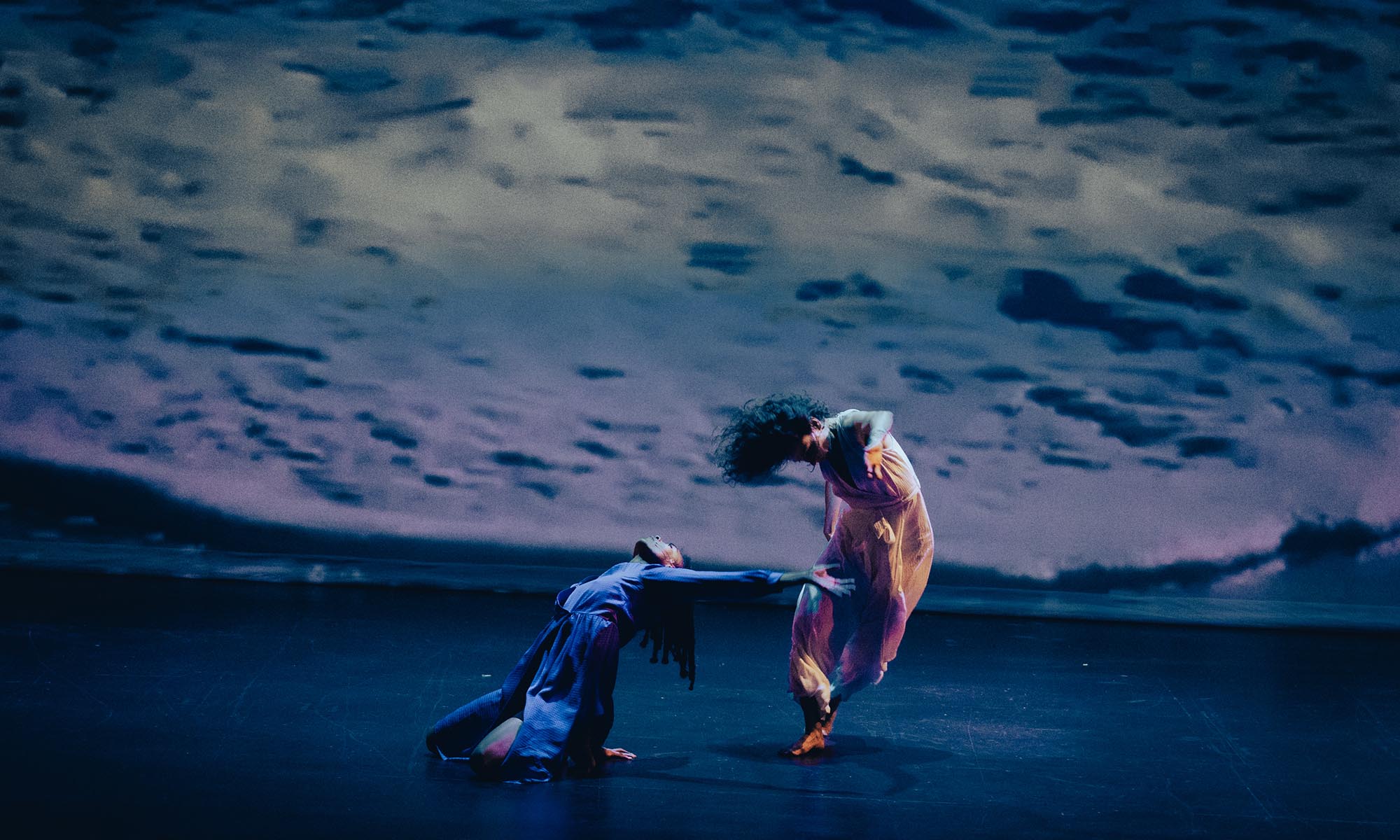
That spark of inspiration resulted in Mareas/Tides, a 50-minute interdisciplinary performance that combines dance, storytelling, singing, music, visual imagery, and improvisation. The performance traces island cosmologies and diasporic geographies of the Caribbean, Atlantic, and Pacific seas, as well as the gravitational power of the moon.
Cruz Banks and Ramírez are the two dancers in the performance, which also taps the talents of Denison music instructors — saxophonist Pete Mills, pianist/vocalist Timothy “Rev” Carpenter, and bassist Dean Hulett — and drummer and Denison collaborator Mathiessen Nisch Quan. In the early stages of the project in 2023, they also worked with Matthew Patton-Dixon, who has been the resident musician of the dance department.
Chris Faur, Denison’s director of collaborative technologies for the fine arts, brought his unique multimedia wizardry to the mix with stunning visual projections.
“The images that Chris Faur added to our collaboration really put this over the top,” Mills said.
The artists have performed the piece at Barbados’ New Wave Festival, Duke University, University of Richmond, and Antioch College. In fall 2025, they staged the work at Ohio State University’s Wexner Center for the Arts, where Columbus arts critic Richard Sanford called it, “the best fusion of various dance styles and live jazz I’ve ever seen in my life, bar none.”
The glowing reviews were personally fulfilling for the Mareas/Tides performers, who also see them as proof points that the spirit of collaboration, foundational across Denison, works magic — for faculty and students.
“We wanted to put into practice community, collaboration, and creative process,” Cruz Banks said. “The three Cs. These are virtues we promote in our Denison classes to elevate artistic practice and develop leadership skills.”
“From the moment we entered the room for our first rehearsal, I could tell that this was going to be different,” Carpenter said. “Each of us was able to explore our personal sonic and physical spaces, but also the collective space that we had created. The result was a positively amazing expression of sound and movement that evolved spontaneously, from note to note and movement to movement.”
“This opportunity to work with my colleagues across almost every area in Eisner couldn’t happen without us having this incredible arts center,” Mills said. “It allows us to physically be in the same space, to informally and formally collaborate. Our success is a wonderful testament to the power of collaboration across the arts here at Denison.”
Dance as ‘an interdisciplinary powerhouse’
Denison’s embrace of collaboration was a refreshing change for Ramírez, who came to the university in 2022 after teaching at other colleges.
“I realized in the liberal arts college environment, professors have an appetite and willingness to collaborate across disciplines,” she said.
“One of our superpowers as a dance department is that ethos of collaboration,” Cruz Banks said. With creative process and a sense of community, she said, it anchors the curriculum.
The department strives to champion dance’s capacity to create a learning environment for students to connect dance to other fields of study.
When that happens, Cruz Banks said, students build professional versatility, performance innovation, and thought leadership in and through dance. That holds true not just for dance majors but for any students willing to explore the discipline. She and Ramírez have worked with departments as disparate as global health and environmental studies, saying such collaborations have strengthened their own work as dance artists and educators.
“Dance training is not just for the studio or the stage,” Cruz Banks said. “It’s for life. Dance has the power to build confidence, conviction, and community connection. Those qualities are so important to our well-being, to our family life, to our career trajectories, and our quality of life. Dance is an interdisciplinary powerhouse.”
Denison students often pursue more than one major and minors, and Cruz Banks and Ramírez encourage them to pursue other academic interests along with dance.
Fallon Brackley ’25 majored in dance and biology and minored in chemistry, with her initial plan to pursue veterinary medicine after Denison. She is keeping that in her back pocket for now and is pursuing a career with a dance company.
Looking at colleges, she said, “I knew I couldn’t go to a conservatory because then I couldn’t do biology, and I wanted to keep both options open. At Denison, I was able to blend my biology and dance degrees into my senior research, where I studied the kinematics of improvisation.”
Brackley packed her time at Denison. She was president of the hip-hop club, a teacher’s assistant for biology, chemistry, and dance, and lead singer of the student band, The Cuties.
She also received Denison’s prestigious Osborne arts scholarship, which gave her the opportunity to study dance in Europe the summer before her senior year.
“When I look back at my college experience, I am so happy because I did everything I wanted to do,” she said.
Her positive experience with the dance department persuaded her twin sister, Portia Brackley ’25, a religion major at Denison, to leap back into dance as a junior. She had stepped away from dance as a teen, but at Denison she added a dance major and worked as a teaching assistant and department fellow.
“Everyone in the department just has a love and a passion for it, and you can feel that tangibly when you’re there,” she said. “Whether it’s the teachers or the other students, everybody is committed to doing their part. It makes a difference.
“If I hadn’t joined the dance department, I wouldn’t be the person I am today,” she said.
The spirit of collaboration can invigorate any creative process, both in and outside of dance, Cruz Banks said.
“The idea is that two minds, three minds, four minds, are often better than one,” she said. “Expertise and knowledge generation happen faster when we’re helping one another, and also when we have a mindset that is flexible to taking in new information and other people’s perspectives.
“We see that as a very important career skill that our students will have,” Cruz Banks said, “no matter what their major is.”